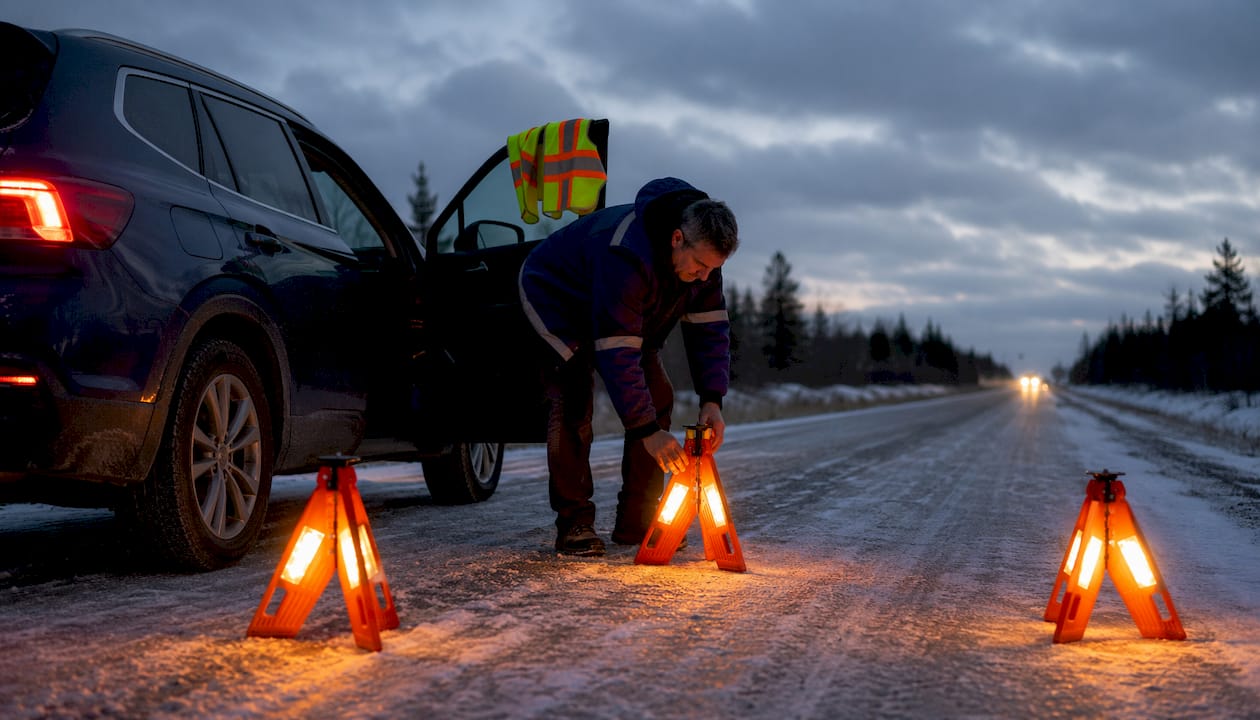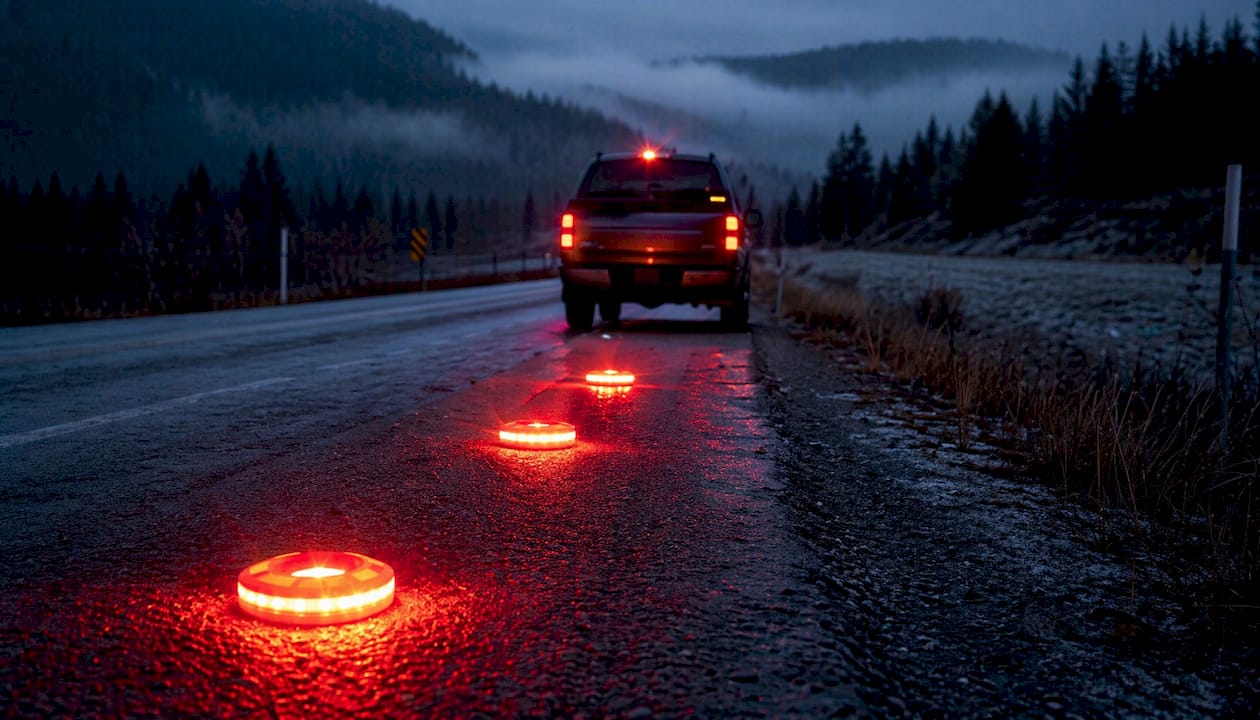


A truck on the shoulder in blowing snow has about one job before any tool comes out - be seen early. That is why choosing the best warning lights for work trucks is not about looks, and it is not about buying the cheapest kit online. It is about giving your operators enough visibility to create space, reduce close calls, and keep the truck working through a Canadian winter instead of sitting in the shop with failed lighting.
For most fleets, the right answer is not one light. It is a setup built around how the truck works, where it stops, and what kind of traffic it faces. A municipal pickup doing stop-and-go road work has different needs than a tow truck on a 400-series shoulder, and both are different from a contractor truck backing into dark sites before sunrise.
What makes the best warning lights for work trucks?
Brightness matters, but it is not the whole story. The best warning lights for work trucks are visible in full daylight, cut through snow and spray, and survive vibration, salt, washdowns, and long duty cycles. They also need to match the job. A single beacon might be enough for a landscaping truck that only stops briefly on side streets. It will not be enough for heavy roadside exposure where rear warning and directional signalling are critical.
Compliance is part of the conversation too. Professional buyers should be looking at SAE ratings, proper flash patterns, and product categories that make sense for the vehicle class and duty cycle. Cheap consumer-grade lights can look bright in a warehouse and still perform poorly where it counts - in rain, glare, dust, and traffic.
Then there is install reality. Some fleets want permanent hardwired gear that becomes part of the truck. Others need plug-and-play solutions, especially on leased vehicles or mixed fleets. The best system is the one your team will actually install properly, maintain easily, and trust every day.
Beacon lights: simple, proven, and still effective
A good beacon is often the starting point. Rotating or strobe-style LED beacons give you 360-degree warning from a high mounting point, which makes them useful on service bodies, pickups, plow trucks, and utility units.
For lower-risk applications, a single Class 1 beacon can be enough to mark the vehicle while stopped or moving slowly through work zones. They are straightforward, relatively affordable, and easy to standardize across a fleet. If you manage mixed truck types, that simplicity has value.
The trade-off is coverage and command presence. A beacon says, "there is a vehicle here," but it does not always provide the forward punch or rear directional warning you get from a full bar or dedicated traffic advisor. On taller vehicles, roof position helps. On pickups with ladders, racks, or equipment on top, sightlines can get blocked fast.
Light bars: the best fit for higher-risk roadside work
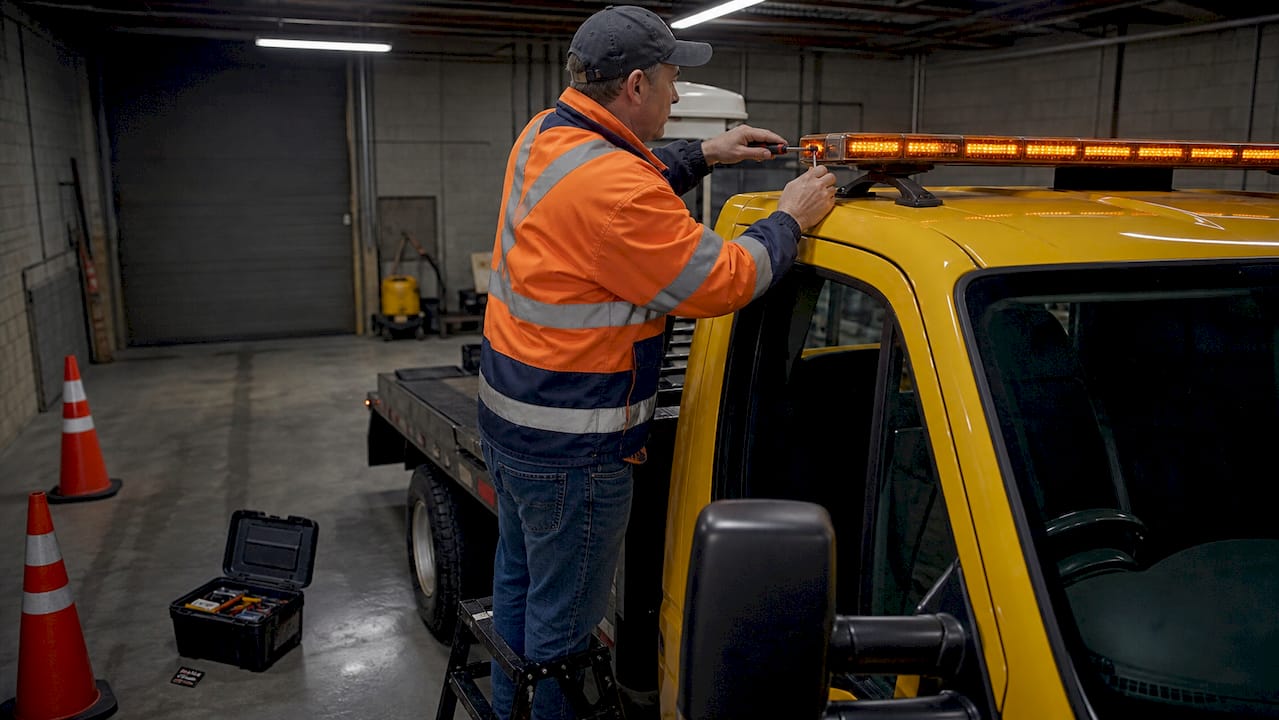
If your trucks spend real time exposed to moving traffic, a proper LED light bar is usually the stronger choice. Light bars give broader warning coverage, more diodes, better off-axis visibility, and room for combinations like takedowns, alley lights, and rear flash patterns.
This is where many fleets stop wasting money on half-measures. A serious bar mounted cleanly on a work truck gives the vehicle a much stronger visual footprint in traffic, especially in daylight and ugly weather. That matters for tow operators, municipal crews, highway maintenance, snow contractors, and anyone working on the shoulder.
The catch is cost and fitment. A bar costs more than a beacon and demands more thought around mounting, wiring, roof clearance, and possible interference with racks or equipment. But if the truck works in high-risk conditions, the extra performance is usually worth it. Visibility is cheaper than a collision.
Surface mounts and grille lights: small lights that do real work
Surface mounts, grille lights, and compact warning heads are often the best upgrade per dollar in a truck build. Used properly, they fill dead zones that a roof light alone cannot handle.
Front-facing warning in the grille helps approaching traffic identify the truck earlier. Rear-facing surface mounts on a headache rack, tailgate area, or service body improve visibility when the truck is parked or backing into a live lane. Side warning matters too, especially for trucks that work at angles or block partial lanes.
These lights are also useful when roof mounting is limited. If the truck already carries ladders, pipe tubes, or snow equipment, low-profile warning heads can give you strong output without fighting for roof space. They are not a complete replacement for every application, but they are often the difference between a basic setup and a properly thought-out one.
Hideaways: clean installs with some trade-offs
Hideaway strobes appeal to fleets that want a factory-style look. Installed in headlight or taillight housings, they keep the truck clean and reduce exterior hardware.
They can work well, especially as supplemental warning. The issue is that performance depends on the vehicle housing, lens design, and install quality. On some trucks, hideaways punch hard. On others, they are just acceptable. They also will not replace a roof-mounted primary warning system for serious roadside exposure.
If your priority is discreet warning on supervisor trucks, utility pickups, or volunteer response vehicles, hideaways can make sense. If your crews are routinely parked in live traffic, rely on them as part of a system, not the whole system.
Traffic advisors: essential when the rear of the truck does the talking
Rear-end risk is where many basic setups fall short. A traffic advisor gives clear directional signalling that tells approaching drivers where to go around the truck. For shoulder work, lane closures, towing, and road service, that is not a nice extra. It is often the most useful warning tool on the vehicle.
A rear bar or directional advisor does two jobs at once - it warns drivers that a vehicle is ahead, and it guides them past the hazard. That second part matters because confused drivers are dangerous drivers.
For operators working highways, arterials, or busy municipal roads, rear directional lighting should be high on the list. It is one of the fastest ways to improve real roadside safety, especially when paired with roof and rear flashers.
Matching the light to the truck and the job
There is no single winner for every fleet. The best warning lights for work trucks depend on duty cycle.
For contractor pickups, a beacon with grille lights and a pair of rear surface mounts is often a practical setup. It keeps cost under control while covering the key angles.
For plow trucks and municipal units, a full light bar plus rear warning heads usually makes more sense because those trucks operate in poor visibility and spend more time around moving traffic.
For tow trucks and roadside service, a stronger package is the right move - roof bar, rear traffic advisor, additional rear flashers, and work lighting that does not wash out the warning pattern.
For fleet managers, the right question is not "what is cheapest?" It is "what gives this vehicle enough warning performance for where my people actually work?"
What Canadian buyers should watch for
Canadian conditions punish weak gear fast. Cold starts, road salt, slush, vibration, pressure washing, and long hours expose every shortcut in a lighting system. Housings crack, cheap wiring corrodes, and bargain mounts loosen when the truck spends a season on rough roads.
That is why professional buyers should care about more than a spec sheet. Build quality, proper sealing, reliable modules, and parts support matter. So does buying from a Canadian source that knows the applications and can get product out quickly when a truck is down.
That is also where local stock can beat bargain shopping. Saving a few dollars on import-priced lighting does not look smart when you lose time on shipping, get hit with extra costs, or end up replacing junk mid-season. Strobe My Ride focuses on gear built for real work, with Canadian stock and fast Ottawa dispatch for buyers who need their trucks visible now, not eventually.
A smarter way to build your warning package
Start with the exposure level. If the truck rarely works around live traffic, keep it simple but professional. If it stops on shoulders, in work zones, or in winter low-visibility conditions, step up to a full warning package.
Then look at the blind spots. Front warning, rear warning, side visibility, and directional guidance all matter. Many trucks are overbuilt in one area and weak everywhere else.
Finally, think about service life. Good warning lights should survive the same abuse as the truck. If the gear cannot handle Canadian duty, it is not a deal. It is a future replacement.
The best setup is the one your operators trust when the weather turns bad, traffic is tight, and the truck has to be seen right now.