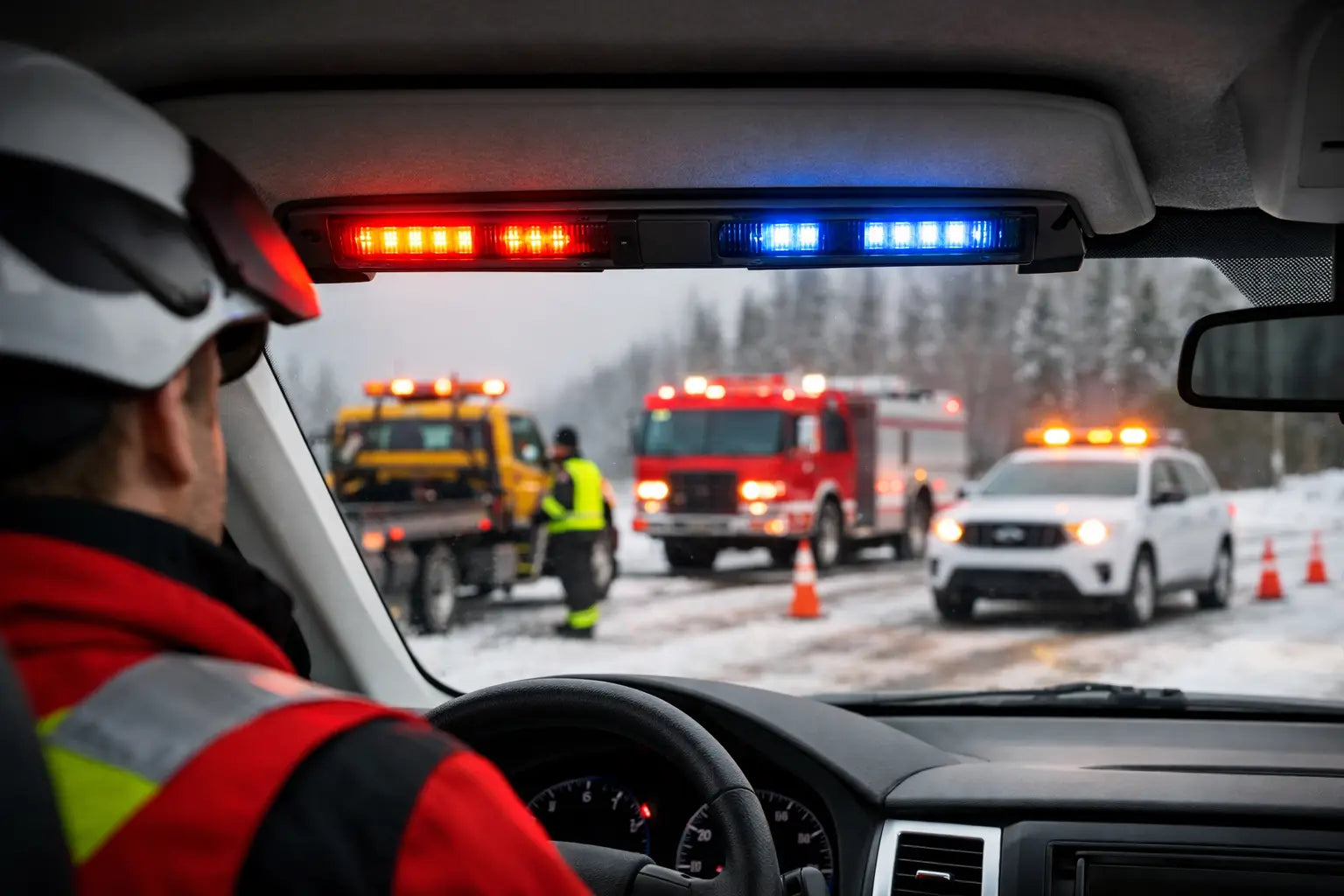


A traffic advisor light bar earns its keep when a truck is stopped on the shoulder, a plow is blocking a lane, or a tow operator is working with live traffic moving past the driver’s door. This is not dress-up lighting. It is a directional warning tool built to tell motorists where to go, fast, clearly, and from a distance that gives them time to react.
That matters more in Canada, where roadside work does not happen in ideal conditions. Rain, blowing snow, salt, grime, early darkness, and highway spray all work against visibility. If your crew depends on a traffic advisor to create a safer work zone, you need something built for real duty, not cheap imports that look bright in a warehouse and disappear the moment weather rolls in.
What a traffic advisor light bar actually does
A traffic advisor light bar uses directional flash patterns to move traffic left, right, or to split around a stopped vehicle. Unlike a standard warning light bar that mainly says "vehicle ahead," a traffic advisor adds instruction. That extra layer matters on highways, municipal roads, recovery scenes, utility work, and snow operations where drivers need a clear visual cue, not just more flashing light.
In practical terms, the bar is usually mounted at the rear of the vehicle where approaching traffic can see it cleanly. The pattern sequence creates motion across the light heads, which the eye picks up quickly even in poor visibility. When it is set up properly, the message is immediate - merge left, merge right, or use caution.
Where a traffic advisor light bar makes the biggest difference
Tow trucks are the obvious example, but they are far from the only application. Roadside assistance units, municipal pickups, highway maintenance trucks, arborist fleets, traffic control vehicles, utility service vans, and snow contractors all benefit from directional warning. Any vehicle that works near live lanes can use one.
The key is exposure. If your crew loads equipment from the shoulder, cones off part of a lane, services disabled vehicles, or stops in areas with limited sightlines, a traffic advisor can reduce confusion for approaching drivers. It does not replace proper scene setup, but it absolutely improves how your vehicle communicates with traffic.
For some fleets, the decision is straightforward. If the truck regularly stops where motorists must move around it, a traffic advisor is not a nice extra. It is part of the safety package.
Traffic advisor light bar vs standard rear warning
A lot of buyers start by asking whether they even need a dedicated traffic advisor if they already have rear strobes or a full-size light bar. Fair question. Rear warning lights provide attention. A traffic advisor provides direction. Those are not the same job.
A standard rear-facing warning setup can make your vehicle visible, but if every head is flashing at once, drivers still need to interpret the scene on their own. In busy traffic or bad weather, that hesitation costs time. A directional bar removes that guesswork.
That said, it depends on the vehicle and the work. A contractor who only makes brief stops on low-speed local roads may get by with strong rear warning and good scene lighting. A tow unit on 400-series highways, or a municipal truck closing a lane, should not rely on general flash patterns alone.
What to look for before you buy
Brightness is the first thing most people focus on, and for good reason. If the bar is not punchy enough to cut through daylight, road spray, or snowfall, it will not do the job. But brightness by itself is not the whole story. Optics matter just as much. A well-designed light head throws usable warning farther and more consistently than an overdriven low-quality unit that just creates glare.
Build quality is next. Canadian duty is hard on electronics. You want a housing that can handle vibration, moisture, salt, and temperature swings without fogging up, corroding, or failing at the connector. Ask how it is sealed. Ask what the wiring looks like. Ask whether the mounting hardware is built for fleet use or thrown in as an afterthought.
Control options matter too. Some operators want a simple left-right-centre-out function with a hardwired controller. Others need more flexibility, especially if the vehicle already has a multi-function warning setup. The right answer depends on the truck and the install. Simpler controls can be better in high-pressure work because there is less to fumble with. On more complex builds, integrated switching can clean up the cab and make the system easier to manage.
Then there is size. A longer bar usually gives you better visibility and stronger directional effect, but only if the mounting location allows a clear line of sight. On some service bodies or pickups with equipment racks, a compact unit mounted correctly will outperform a larger bar stuck in a bad position.
Mounting matters more than most buyers think
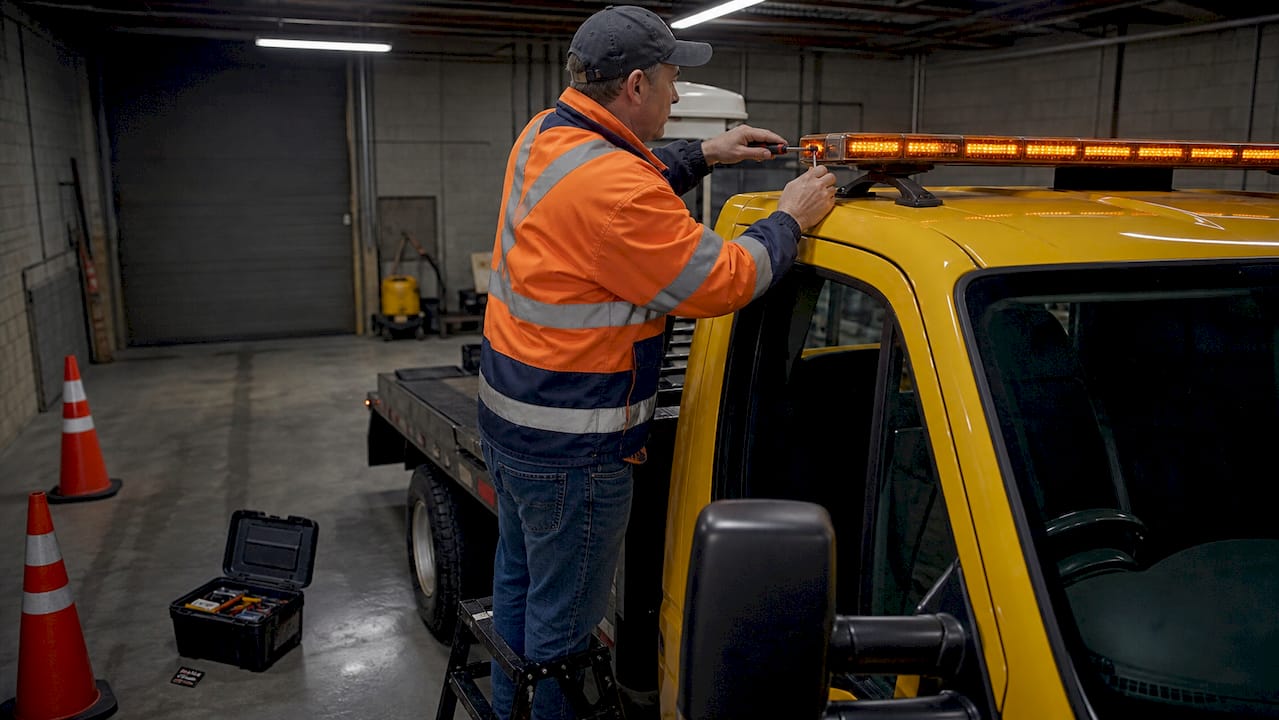
A strong traffic advisor can still underperform if you mount it poorly. Rear window installs are common on some vehicles and can work well, but tint, cargo, headrests, grime, and glass reflections can all cut output. Exterior mounting usually gives better visibility, though it exposes the unit to harsher conditions and may require more careful cable routing.
Height is part of the equation. Too low, and the bar gets lost in spray, slush, or the headlights behind you. Too high, and certain approach angles may not read as clearly, especially on uneven roads. The best placement is the one that gives approaching drivers an unobstructed view without interfering with other equipment.
Installers should also think about serviceability. If a unit needs to be replaced, cleaned, or rewired, can your shop access it without tearing half the truck apart? Fleets that plan for maintenance usually save money later.
Compliance, policy, and real-world use
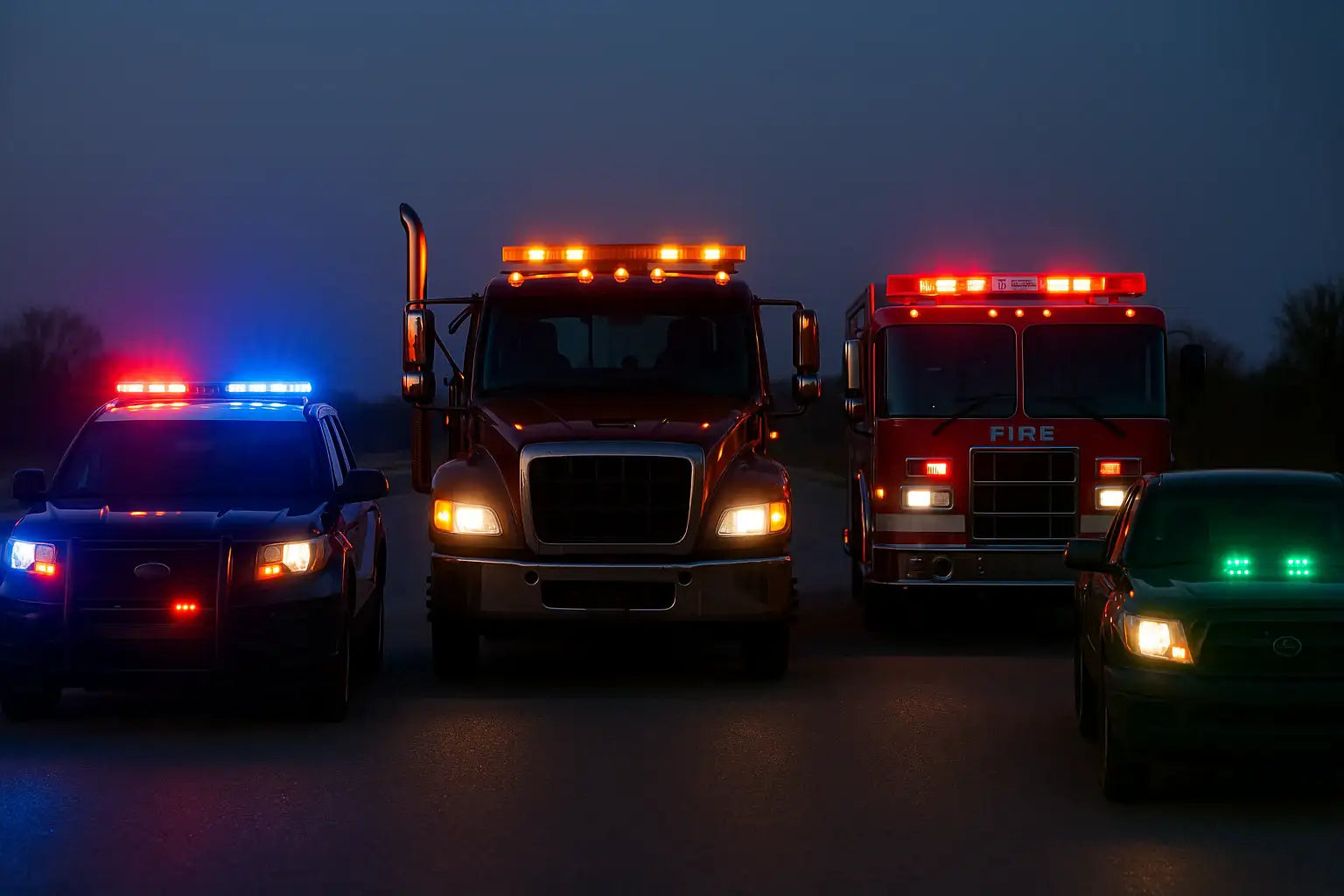
A traffic advisor light bar is a safety tool, but that does not mean every flash pattern or colour setup is appropriate for every vehicle or province. Buyers need to look at their operating rules, provincial requirements, internal fleet policy, and customer site standards. Municipal and contractor fleets often have their own written specs for warning equipment, and those specs should drive the purchase.
This is where cheap online lighting usually falls apart. It may claim all kinds of performance on paper, but when you start checking actual compliance, documented specs, warranty support, and durability, the value disappears fast. Professional buyers know that the cheapest unit is often the most expensive one after downtime, rework, and replacement.
If your operation has to meet formal roadside safety practices, documented compliance and dependable performance matter more than flashy marketing. Buy for the job, not for the photo.
Choosing for your fleet, not for a catalogue page
The right traffic advisor light bar depends on how the vehicle is used, who is driving it, and how often it works in live traffic. A tow truck running high-speed recoveries has different needs than a parks department pickup. A snow contractor dealing with whiteout conditions may need aggressive rear warning plus directional control. A municipal fleet may prioritize standardization across multiple vehicle types so parts, controls, and installs stay consistent.
That is why one-size-fits-all advice is usually useless. Good fleet buying starts with a few plain questions. Where does the truck stop? What speeds is traffic moving at? What blocks the rear view? How much space is available? Does the operator need a dedicated traffic advisor or a dual-purpose warning setup?
If you answer those honestly, the right product category becomes a lot clearer. And if you are sourcing in Canada, local stock and support matter. Waiting on cross-border shipments, surprise fees, or warranty runaround does nothing for uptime. Strobe My Ride focuses on gear built for real work and ships from Canada, which matters when a truck is down and the job cannot wait.
The bottom line on traffic advisors
A traffic advisor is one of those products that makes perfect sense the moment you see it used properly on a live roadside. It gives approaching drivers clearer direction, gives crews a better visual buffer, and gives fleet managers one more practical way to reduce risk where risk is highest.
If your vehicles work around moving traffic, buy for visibility, durability, and proper fitment - not for the lowest sticker price. The bar on the back of the truck is there to protect the people beside it. That is a job worth doing right.