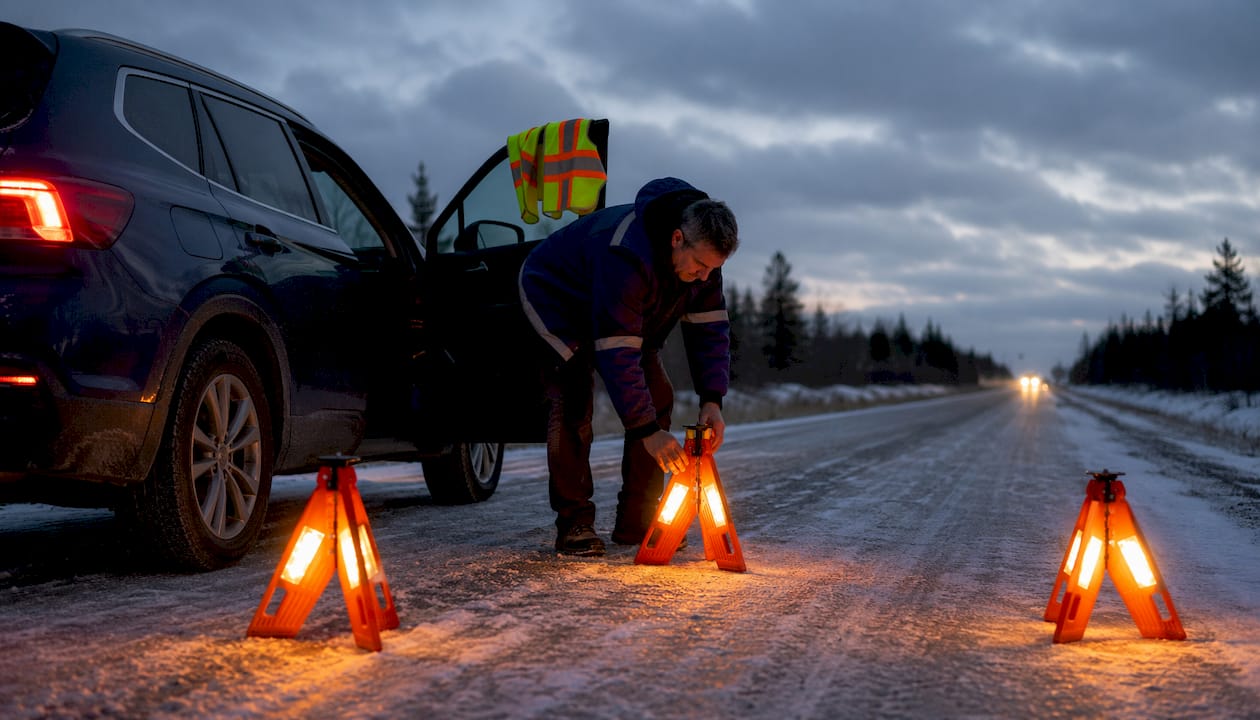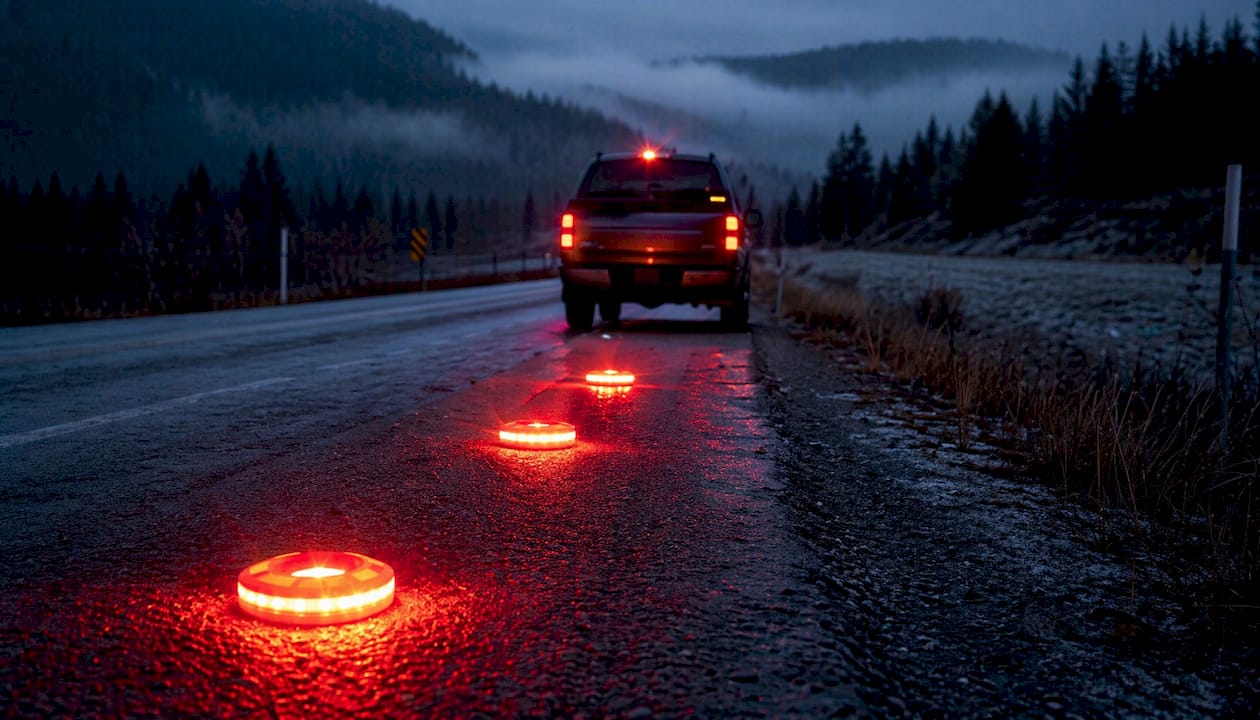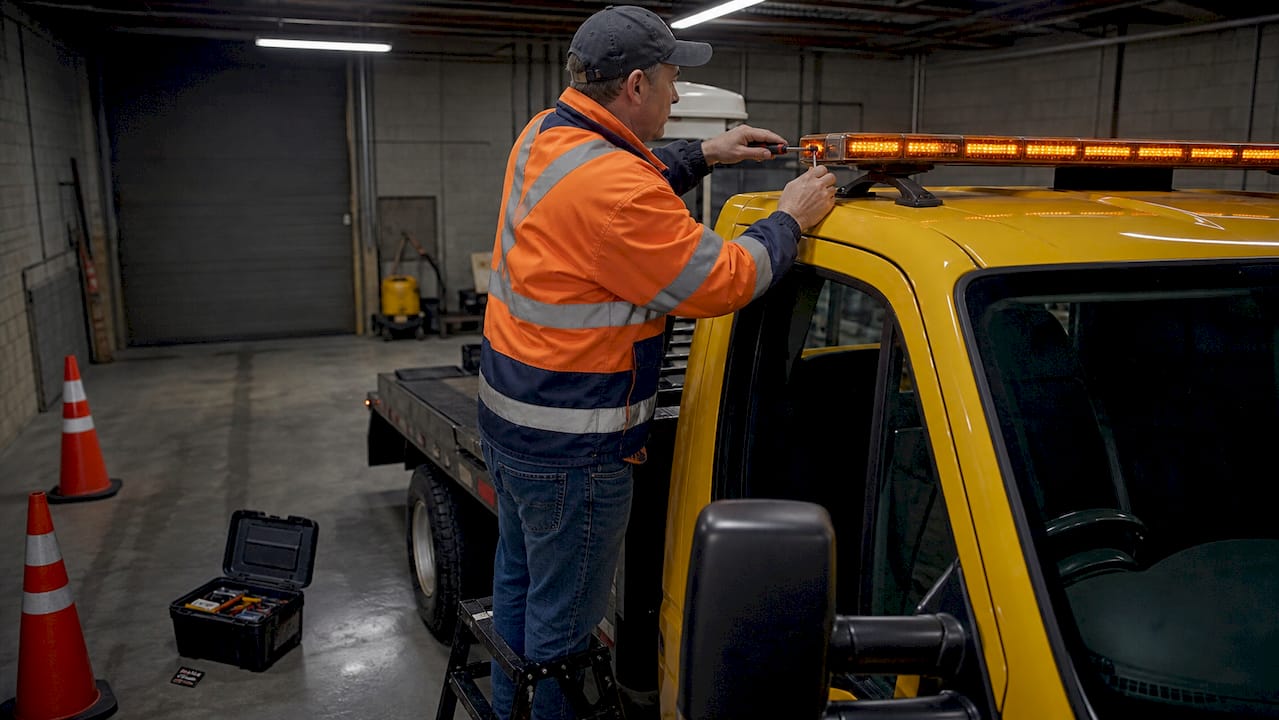


Every year, roadside workers are seriously injured or killed while doing their jobs — despite laws, signage, training, and awareness campaigns.
The message is clear: #SlowDownMoveOver alone is no longer enough.
For fleet managers responsible for workers operating near live traffic, this raises an urgent question:
How do we improve driver behavior when traditional warning lights are no longer effective?
The Hard Truth: Drivers Are Desensitized to Flashing Lights
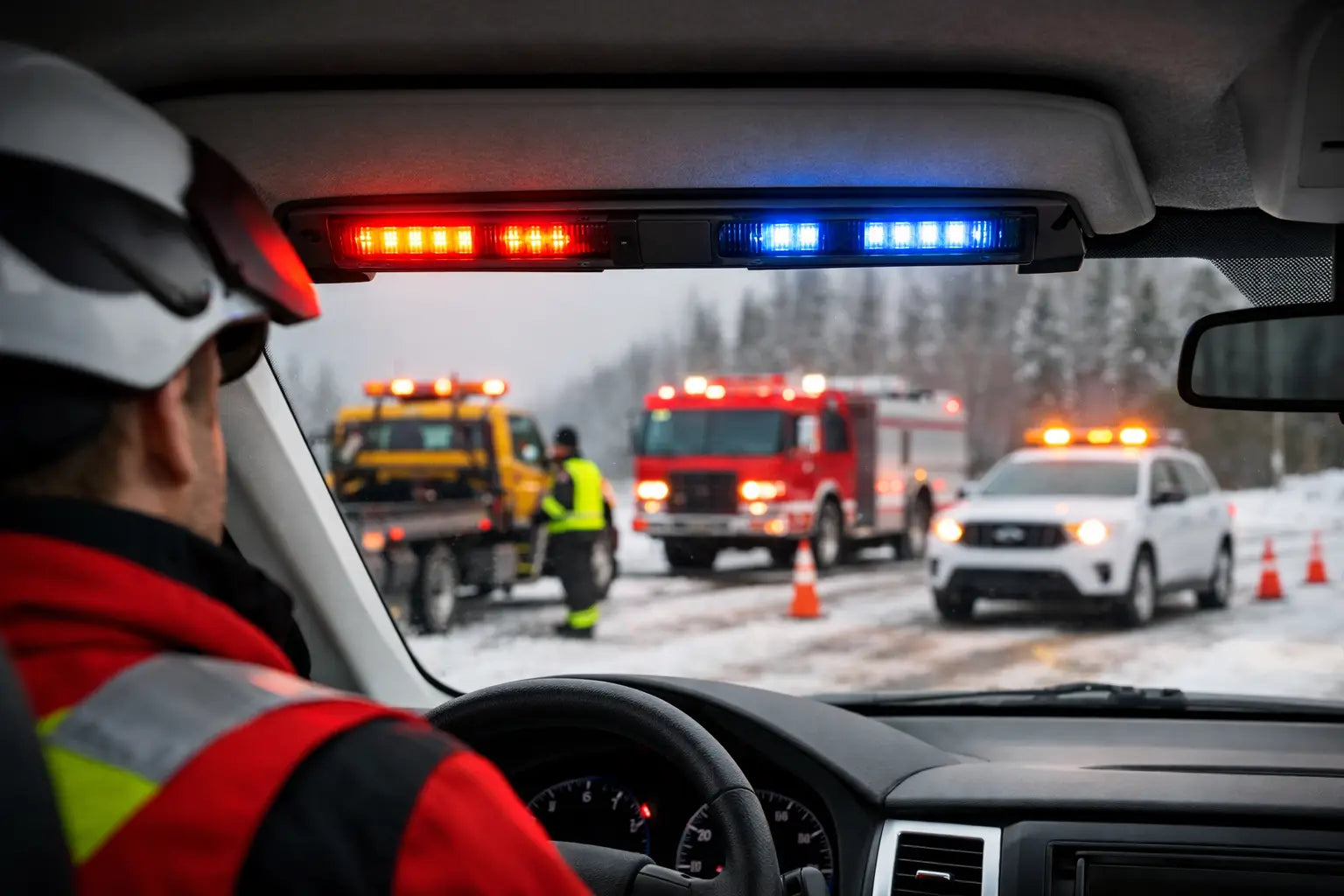
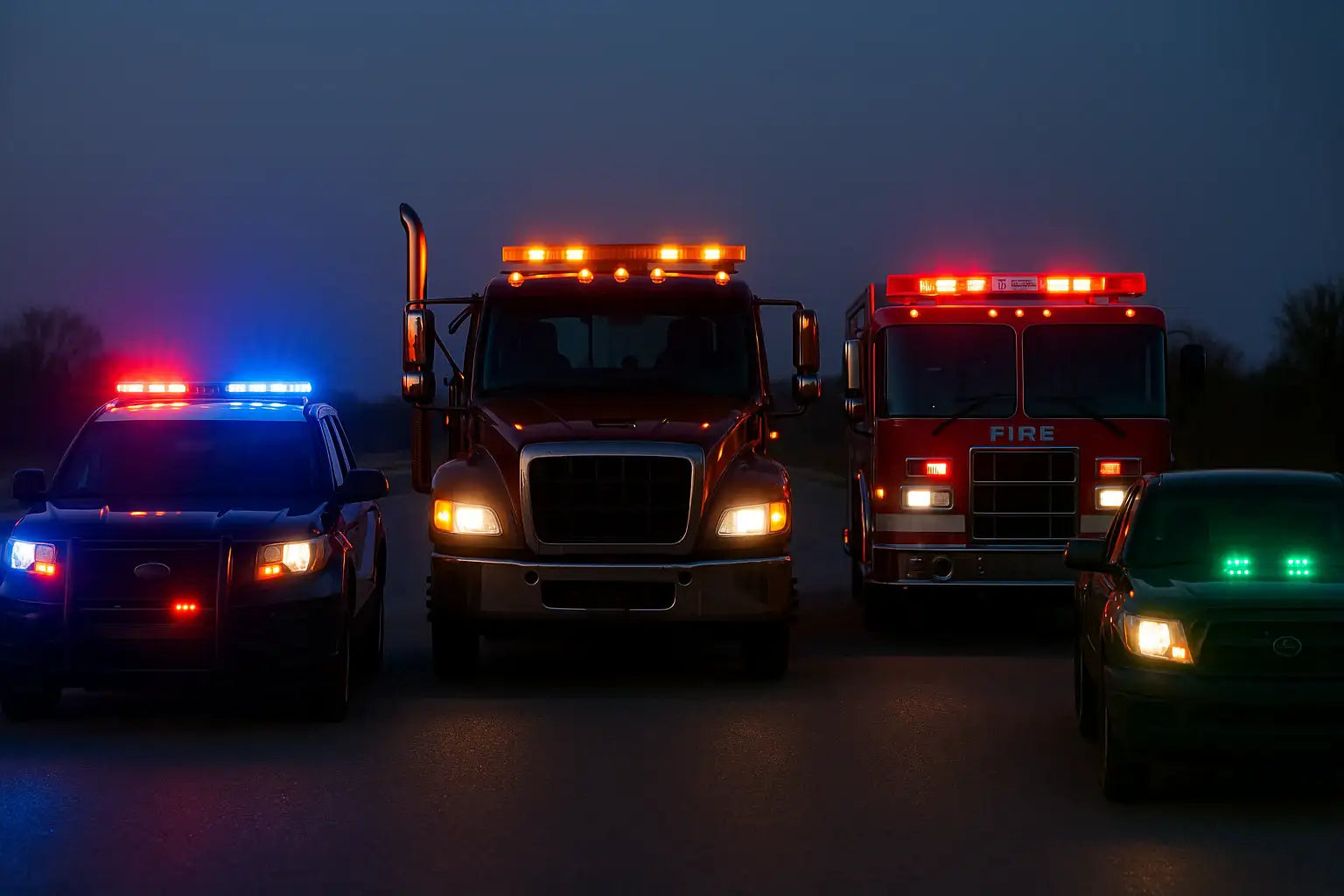
Flashing amber, red, and blue lights have been the backbone of roadside safety for decades. But modern roadways are saturated with visual noise:
• Digital billboards
• Vehicle infotainment screens
• Construction zones
• City lighting
• Multiple flashing vehicles in close proximity
As a result, motorists are increasingly complacent. Flashing lights signal “something is happening,” but they don’t always communicate where to move or how to react.
This gap between awareness and action is where many serious incidents occur.
Roadside Environments at Highest Risk
This visibility problem is especially dangerous in operations such as:
• Blocker trucks protecting work zones
• Tow trucks loading vehicles on highways
• Mobile tire repair and service units
• Highway maintenance and infrastructure crews
• Utility and telecommunications work
• Excavator swing zones adjacent to live lanes
In these environments, seconds matter — and unclear visual cues can be fatal.
The Next Evolution in Emergency Warning Lighting
To address this challenge, fleets are beginning to adopt next-generation visual warning systems that do more than flash.
Introducing Red Stripe LED Warning Lines
J.W. Speaker Red Stripe LED Warning Lights create a solid, continuous warning line projected into the adjacent lane of traffic. Instead of relying solely on flashing patterns, these lights:
• Visually guide motorists away from danger
• Create a lane-level boundary drivers instinctively respect
• Cut through visual clutter in high-speed environments
• Enhance existing emergency and warning lighting
The result is a clearer, more intuitive message to passing drivers:
“This lane is closed. Move over.”
Why Line-Based Warning Technology Works
Human vision responds strongly to lines, edges, and boundaries. While flashing lights grab attention, continuous illuminated lines influence behavior.
This makes Red Stripe lighting especially effective for:
• Night operations
• Poor weather (rain, snow, fog)
• Long-duration roadside work
• High-speed corridors
Rather than replacing traditional lighting, Red Stripe systems add a critical layer of directional communication.
Available Red Stripe Solutions
Strobe My Ride proudly offers J.W. Speaker Red Stripe LED Warning Lights, including:
✔ Model 529 Series
✔ Model 793 Series
✔ Multiple warning color options
✔ Designed for professional fleet and roadside use
These products are engineered for durability, consistency, and real-world safety performance.
A Smarter Approach to Fleet Risk Management
For fleet managers and safety leaders, investing in advanced warning technology is not just about compliance — it’s about risk reduction.
Every prevented near-miss:
• Protects your workers
• Reduces liability exposure
• Prevents downtime
• Preserves lives
Roadside work will always carry risk — but visibility strategies must evolve as driver behavior evolves.
Final Thought: Safety Is a System, Not a Sticker
Awareness campaigns matter. Laws matter. Training matters.
But effective visual communication saves lives.
If your fleet operates roadside, now is the time to reassess whether your warning lighting truly commands attention — or simply blends into the background.
👉 Explore J.W. Speaker Red Stripe LED Warning Lights and upgrade your fleet’s safety toolkit today.