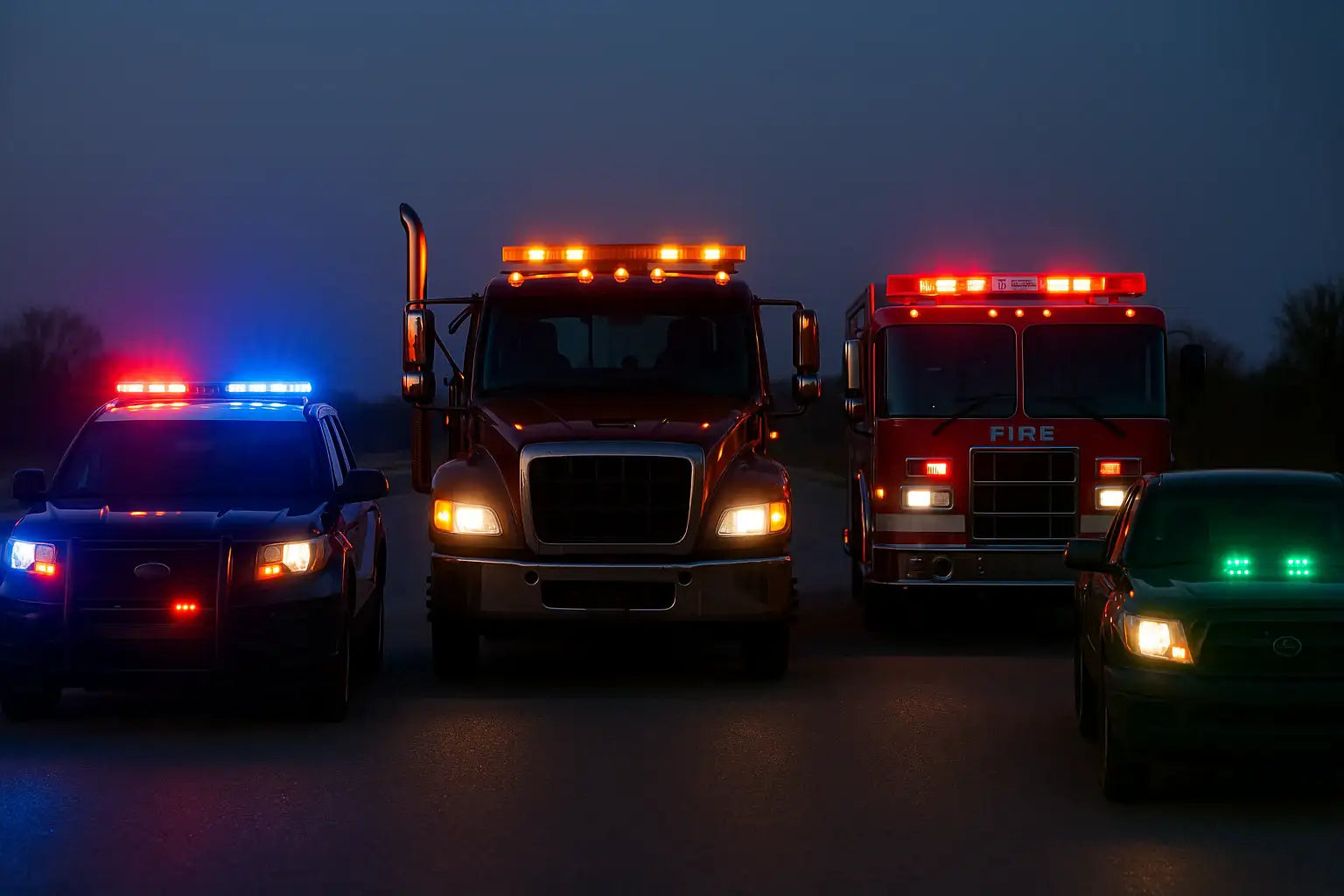

Emergency Warning Light Standards in Canada
Emergency Warning Light Standards in Canada (SAE & Compliance Guide)
Emergency warning lights play a critical role in roadside safety across Canada. For fleets, emergency vehicles, and roadside operators, choosing the correct warning lighting isn’t just about brightness it’s about compliance, visibility, and real-world performance.
This guide explains the key emergency warning light standards used in Canada, how they apply to fleet vehicles, and what operators should know before installing or using warning lights on public roadways.
What Are SAE Emergency Lighting Standards?
In Canada, emergency warning lights are commonly evaluated against SAE (Society of Automotive Engineers) standards, which define performance, brightness, and testing requirements.
The two most relevant standards for warning lights are:
-
SAE J595
-
SAE J845
These standards are widely referenced by fleet operators, municipalities, and safety professionals when selecting compliant warning lighting.
What Is SAE J595?
SAE J595 applies primarily to directional and auxiliary warning lights, such as:
-
Surface mount lights
-
Dash and visor lights
-
Auxiliary warning modules
J595 establishes minimum photometric performance and durability requirements to ensure warning lights are visible in real traffic conditions.
What Is SAE J845?
SAE J845 applies mainly to beacons and rotating-style warning lights, including:
-
LED beacons
-
Magnetic and permanent-mount beacons
J845 focuses on visibility from multiple angles and consistent light output.
What Does “Class 1” Mean?
Both SAE J595 and J845 are divided into performance classes.
Class 1 indicates the highest output level, typically used for:
-
Emergency vehicles
-
Tow trucks
-
Roadside service vehicles
-
High-speed roadway operations
Class 1 lighting is designed for environments where maximum visibility is required.
Are SAE Standards Required by Law in Canada?
SAE standards themselves are not laws, but they are often referenced by:
-
Provincial regulations
-
Municipal fleet policies
-
Industry safety guidelines
In Ontario, for example, warning lighting must align with Ontario Book 7 requirements for temporary conditions and roadside operations.
Fleet operators are responsible for ensuring that:
-
Light colour
-
Light placement
-
Flash patterns
comply with local and provincial regulations.
Choosing the Right Emergency Warning Lights
When selecting warning lighting for Canadian fleets, consider:
-
SAE compliance (J595 / J845, Class 1 where applicable)
-
Vehicle type and mounting location
-
Operating environment (high-speed vs low-speed roads)
-
Weather and temperature exposure
-
Visibility angles and light colour regulations
Professional-grade warning lighting designed for Canadian conditions helps reduce risk and improve roadside safety.
Learn More
If you’re unsure which emergency warning lights are right for your application, explore our Patrol & Fire Series emergency warning lights or contact us for guidance.