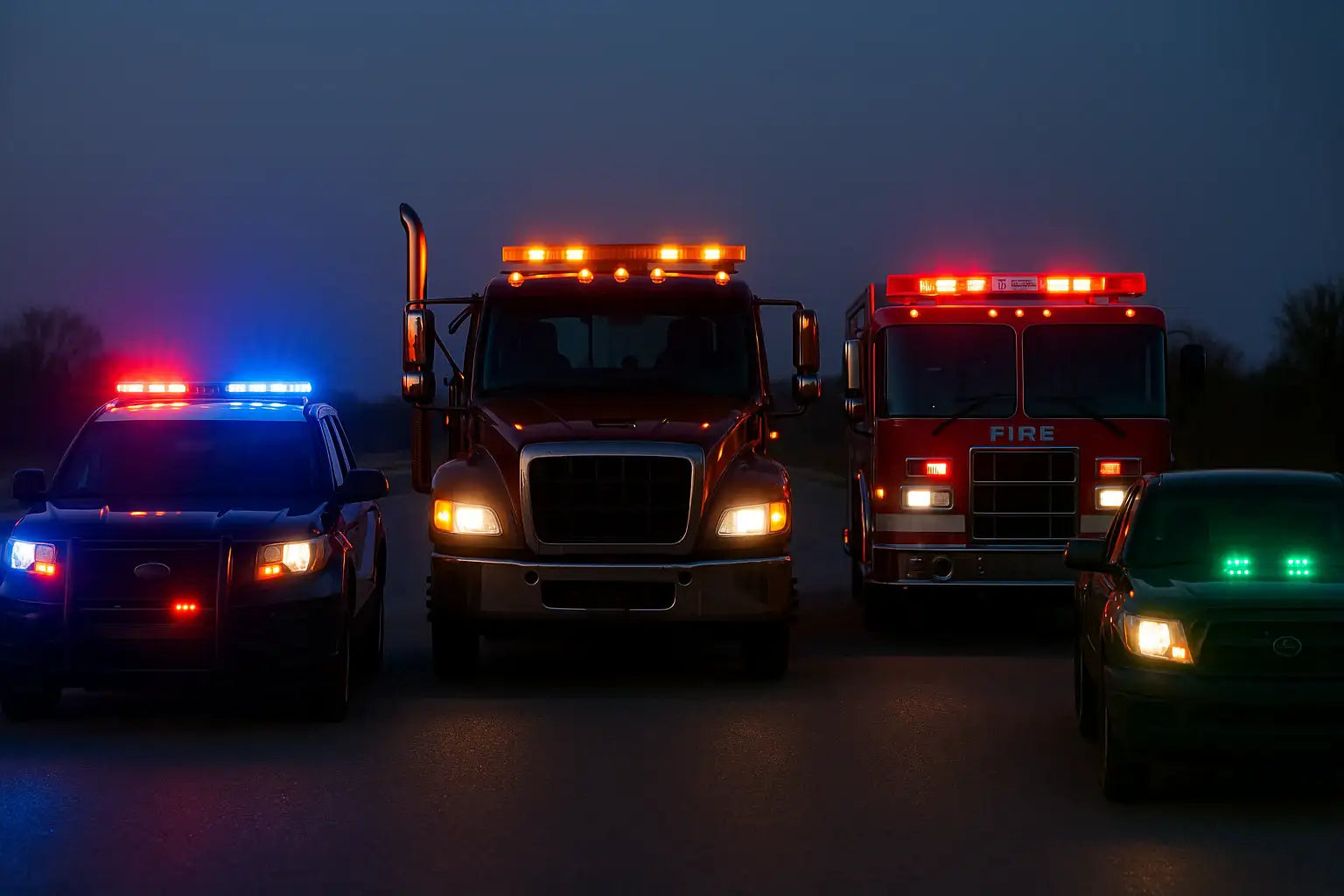

Warning Light Regulations Canada
Warning light regulations vary across Canada and can differ significantly between provinces, vehicle types, and operating environments.
Understanding applicable regulations helps fleet operators, contractors, emergency responders, and roadside workers improve visibility while remaining compliant with local requirements.
Why Warning Light Regulations Matter
Warning lights are designed to improve visibility and alert approaching motorists to the presence of vehicles operating in potentially hazardous environments.
Common applications include:
-
Tow Trucks
-
Volunteer Firefighters
-
Construction Vehicles
-
Utility Fleets
-
Municipal Fleets
-
Pilot Escort Vehicles
-
Snow Removal Equipment
-
Roadside Assistance Vehicles
Amber Warning Lights
Amber warning lights are among the most widely used warning devices in Canada and are commonly found on:
-
Tow Trucks
-
Utility Vehicles
-
Construction Equipment
-
Pilot Cars
-
Service Trucks
-
Municipal Vehicles
Amber lights are generally intended to improve vehicle visibility and alert motorists to roadside operations or slow-moving vehicles.
Green Warning Lights
Several Canadian provinces permit volunteer firefighters to display green courtesy lights while responding to emergency calls in their personal vehicles.
Rules and permissions vary by province and local fire service policy.
Blue Warning Lights
Blue warning light regulations differ significantly across Canada.
In some provinces, blue lights may be reserved for specific emergency services, while other jurisdictions permit limited use on approved vehicles.
Operators should always verify provincial requirements before installation.
White Warning Lights
White warning lights are often used for scene lighting, work lighting, takedowns, alley lights, and visibility enhancement.
Permitted use varies depending on vehicle type, mounting location, and operational purpose.
Provincial Differences
No single regulation applies across Canada.
Operators should review:
-
Provincial Highway Traffic Acts
-
Motor Vehicle Acts
-
Commercial Vehicle Regulations
-
Municipal Policies
-
Employer Requirements
-
Fire Service Policies
Choosing Compliant Warning Lighting
When selecting warning lights, consider:
-
Intended application
-
Vehicle type
-
Visibility requirements
-
Mounting location
-
Applicable regulations
-
SAE performance standards
Professional-grade warning lighting helps improve visibility while supporting safe roadside operations.
Strobe My Ride
Strobe My Ride provides professional-grade warning lighting solutions for customers across Canada.
Our mission is simple:
Be Seen. Be Safe.
We help fleets, contractors, emergency responders, and roadside workers improve visibility with reliable warning lighting and practical safety guidance.