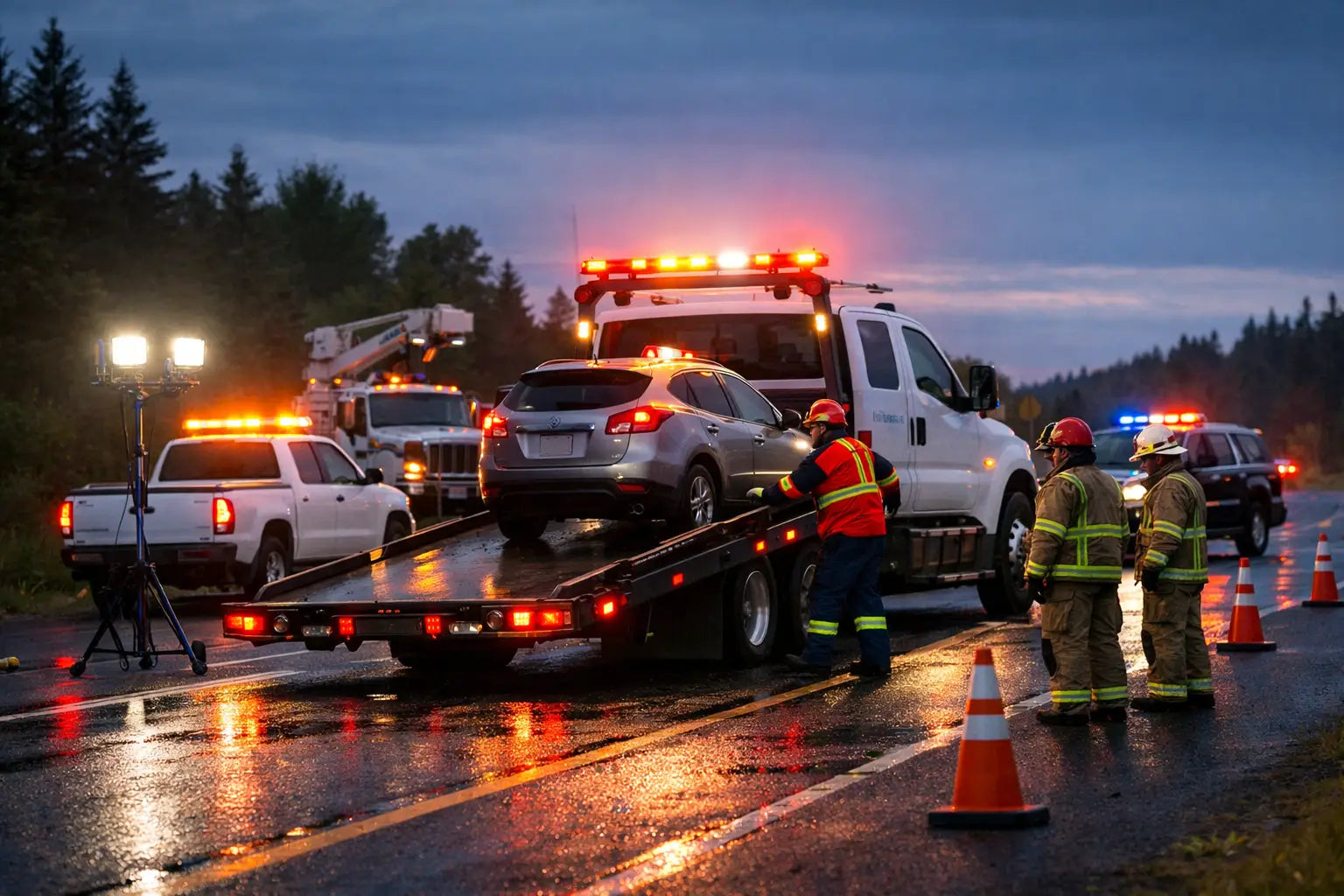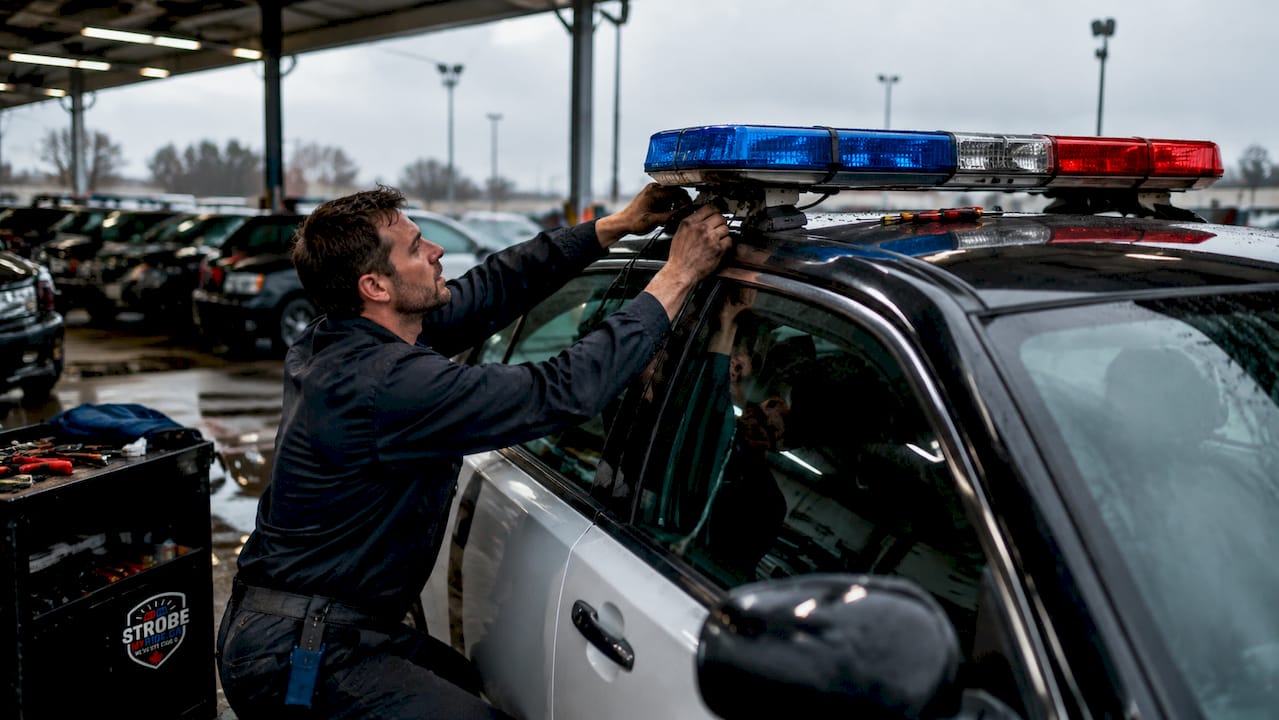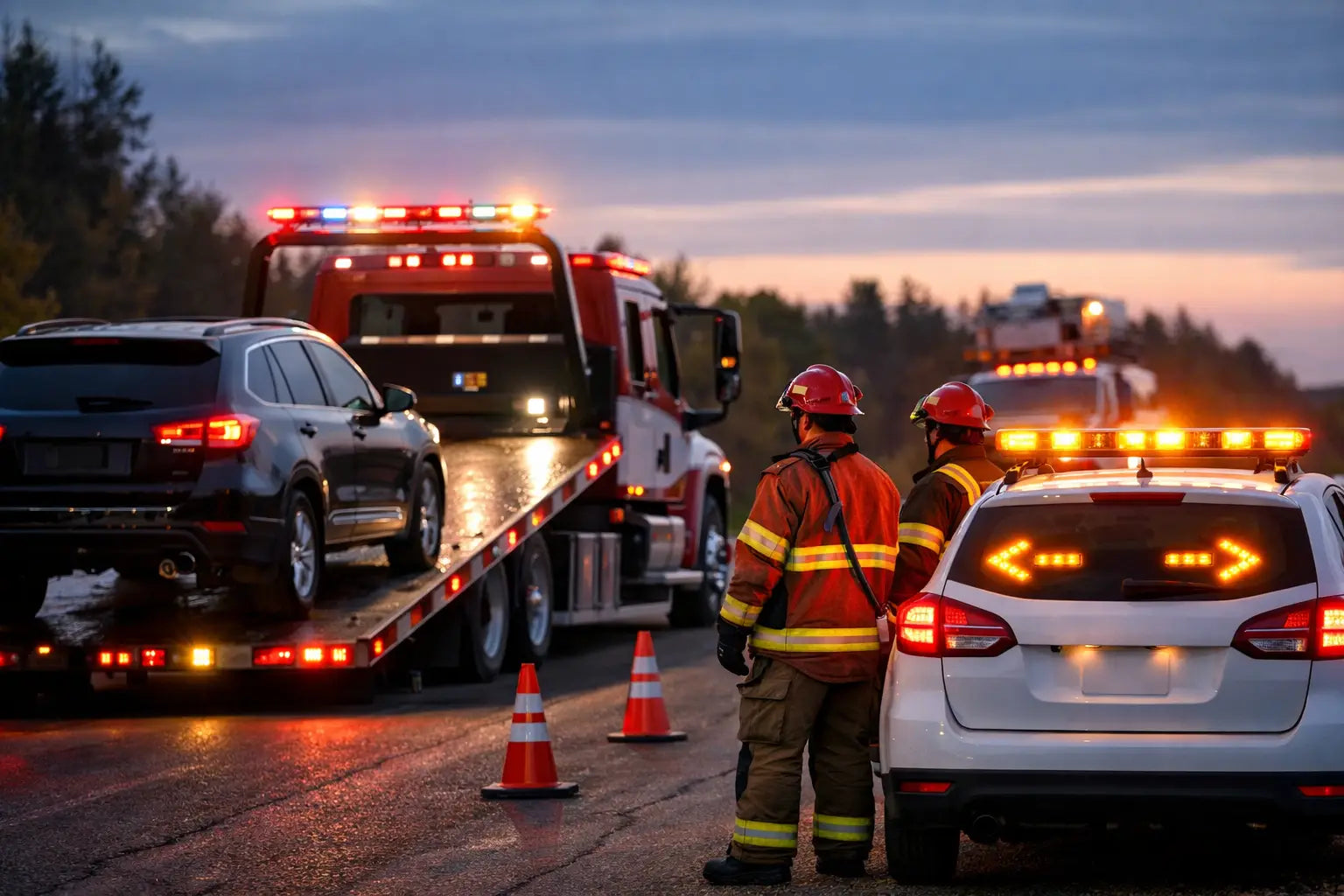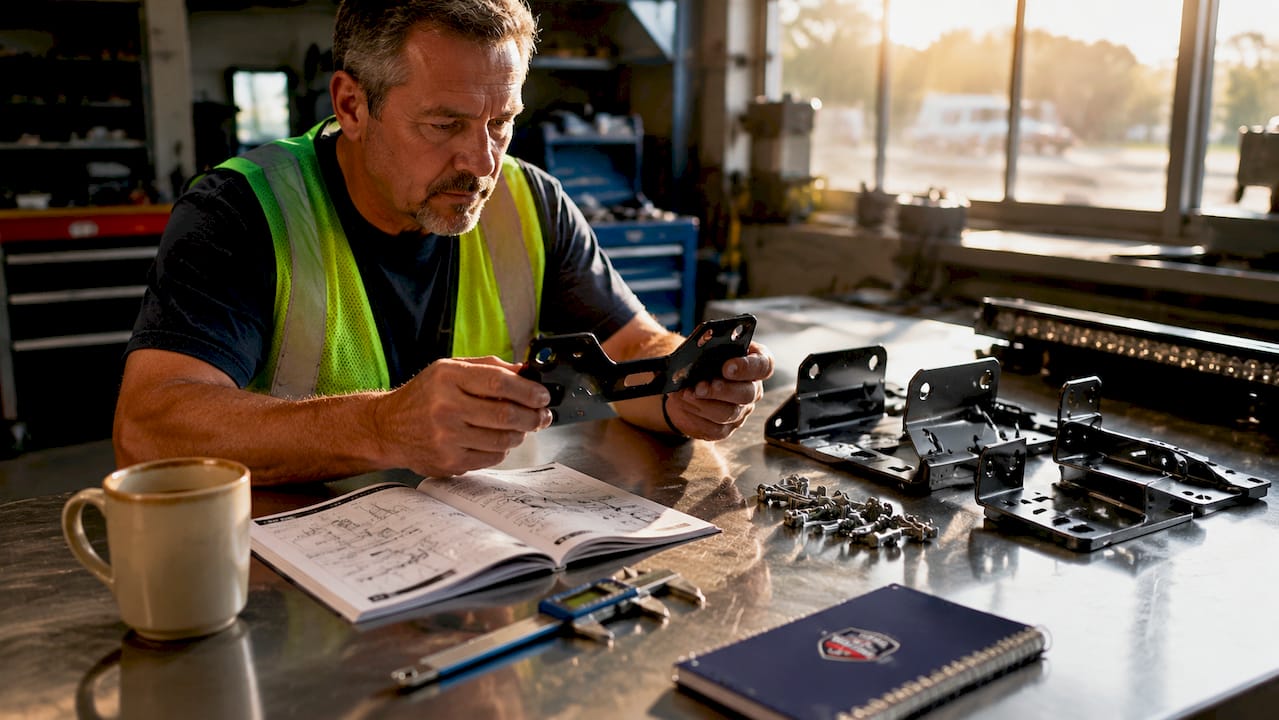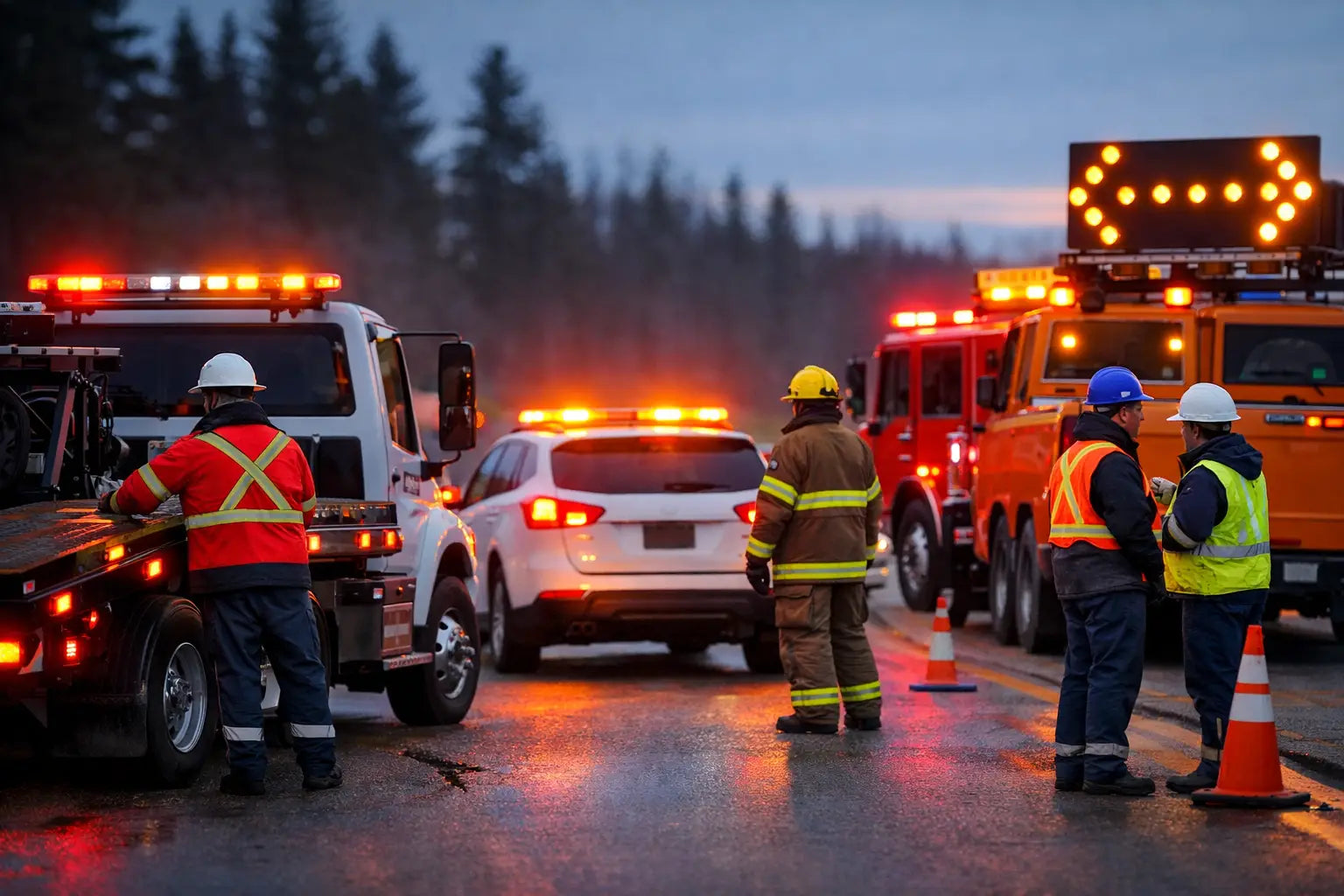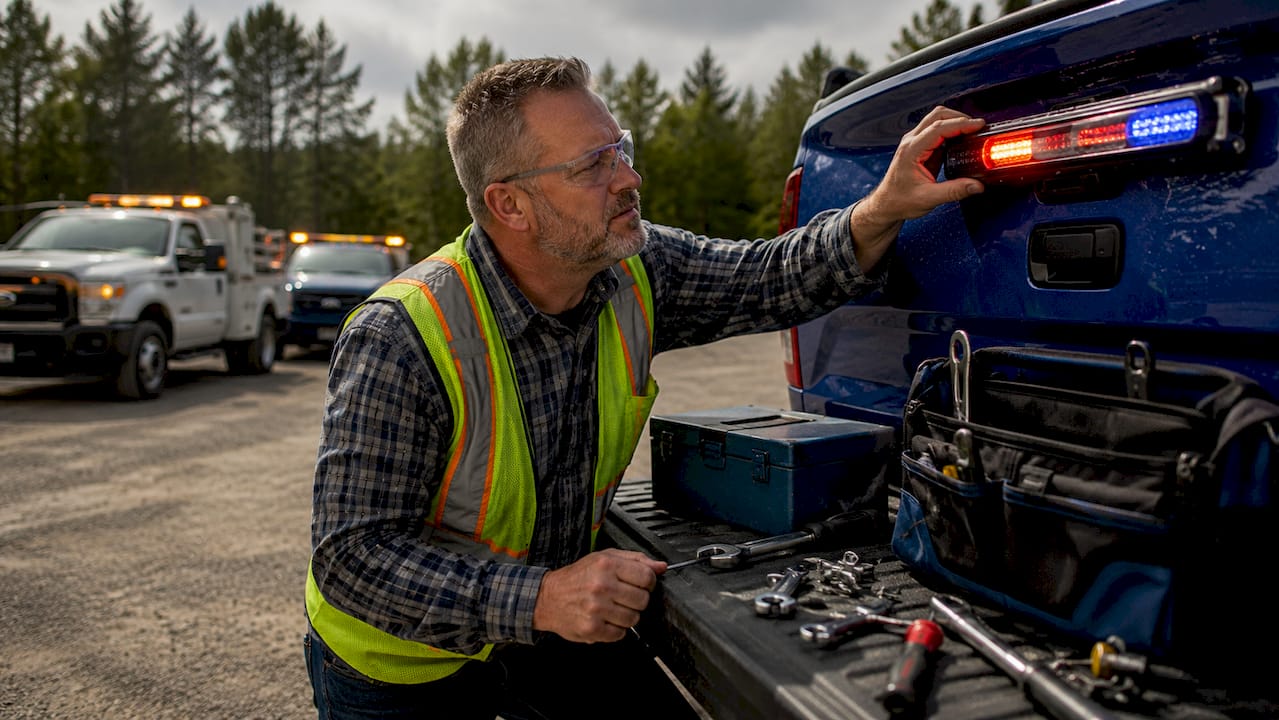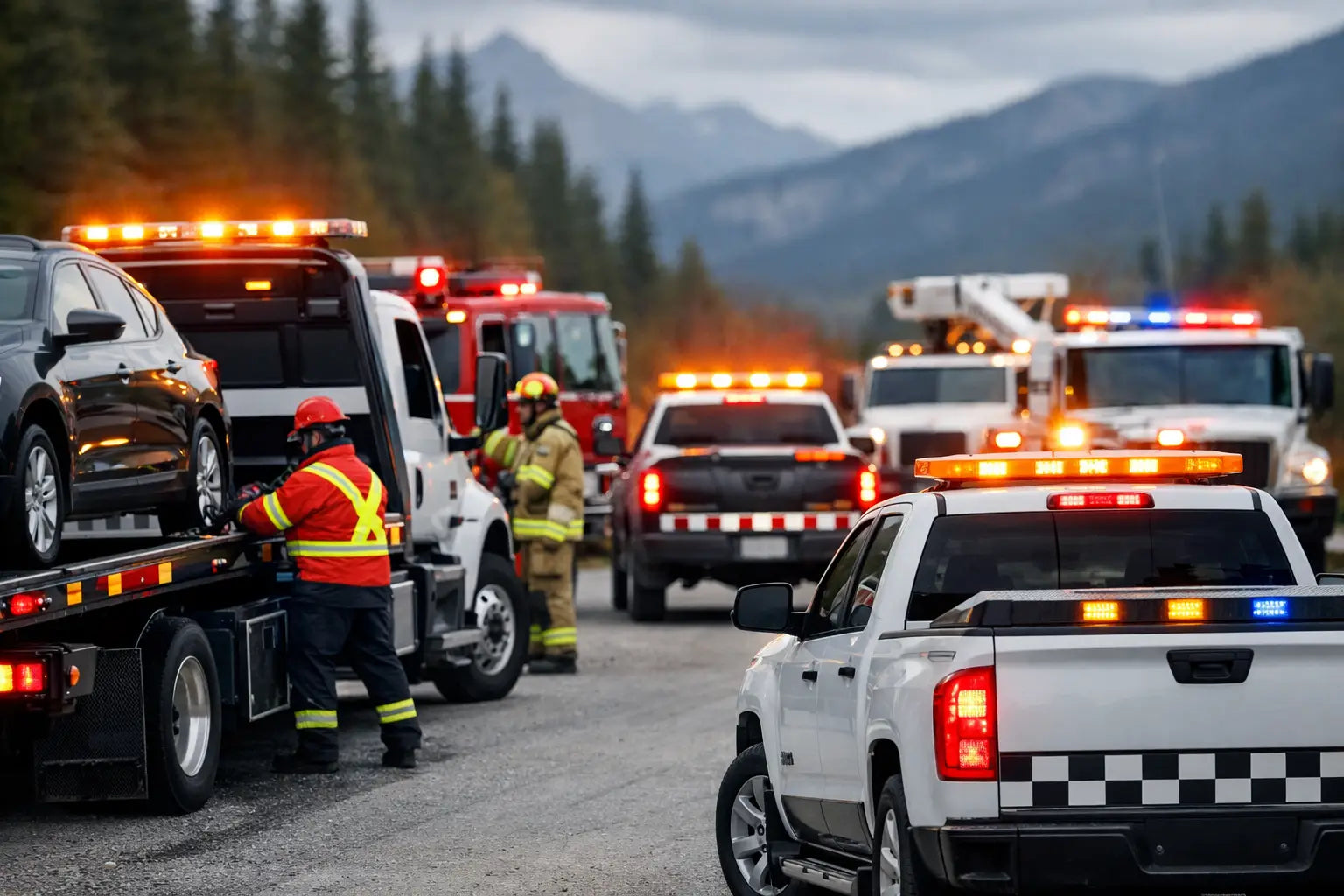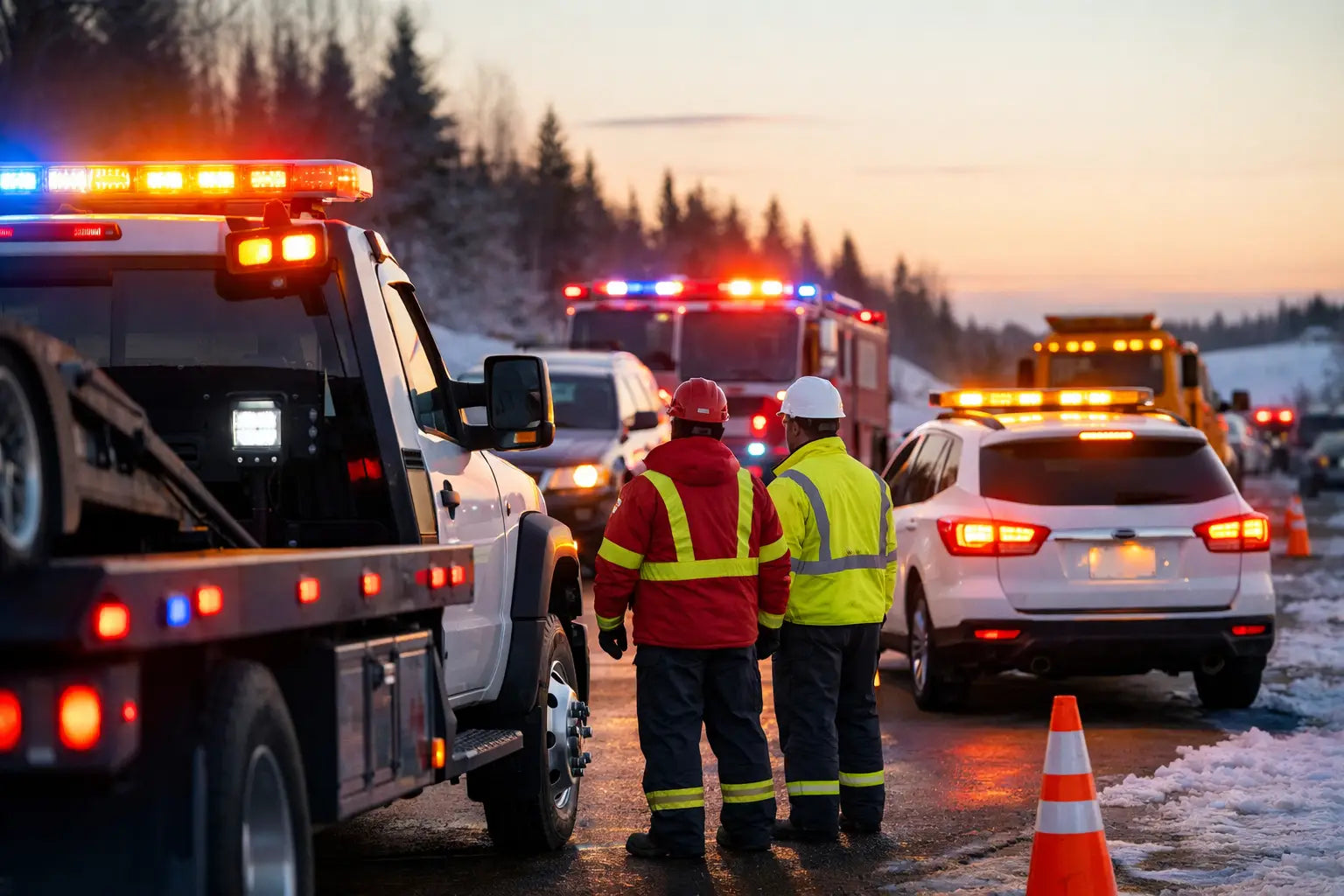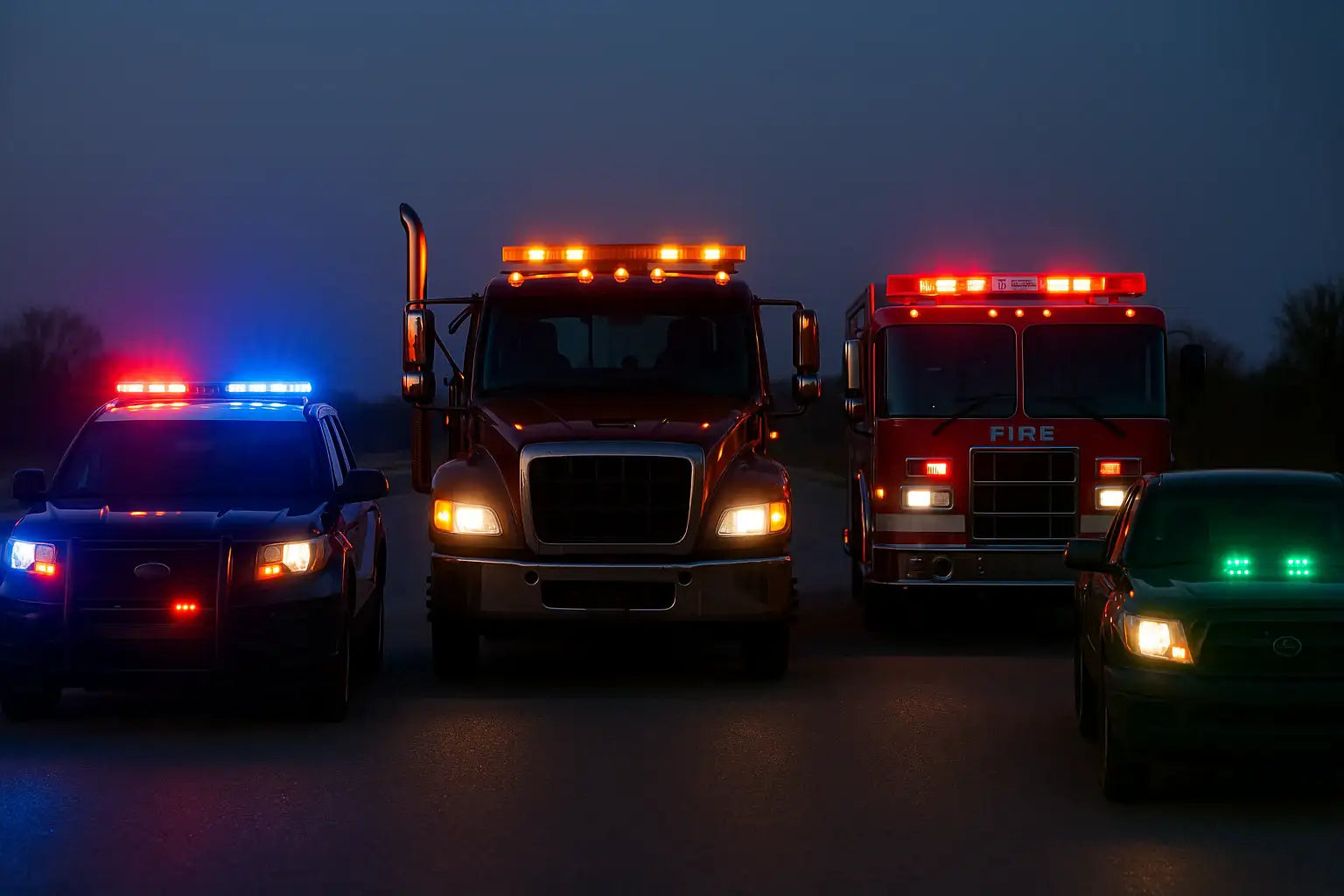

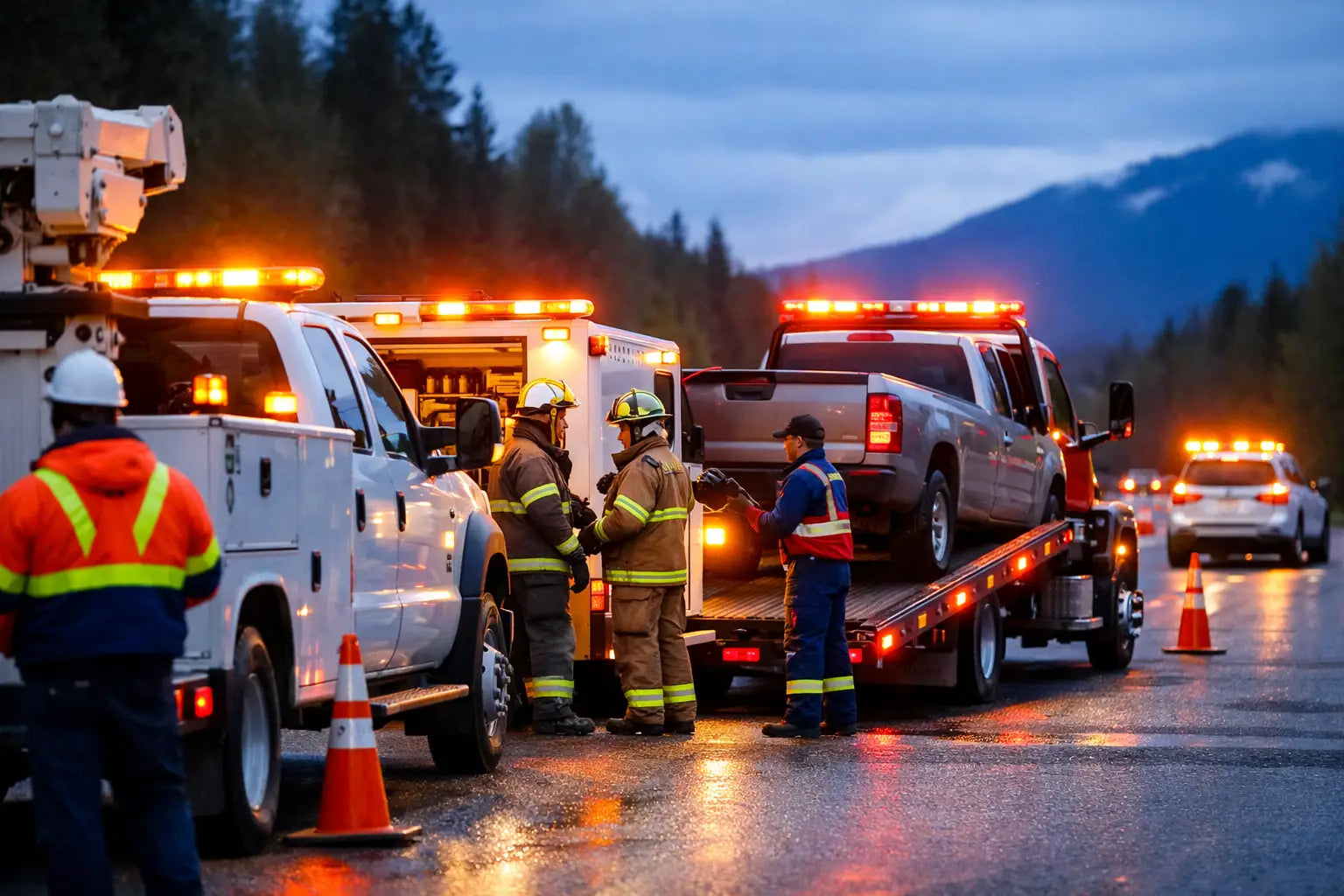
A service truck parked on a live shoulder with one cheap beacon on the roof is not a warning package. It is a false sense of security. Real service truck warning packages are built as systems - front, rear, sides, work area, controls, and traffic awareness - matched to how the truck is actually used.
That matters whether you run utility units, municipal service bodies, roadside repair trucks, telecom vans, mobile mechanics, or contractor pickups. The right setup helps other road users recognize a hazard sooner, helps protect workers around the truck, and gives your operator lighting that makes sense under pressure. The wrong setup creates glare, dead angles, poor conspicuity, and wasted money.
What a service truck warning package should do
In the field, the job is simple to describe and harder to get right. Your warning package needs to attract attention without blinding motorists, define the vehicle footprint from multiple angles, support work at the shoulder or in a lane-adjacent area, and hold up through vibration, weather, salt, and daily switching.
A proper package also has to reflect the truck's mission. A utility pickup doing short roadside stops has different needs than a service body working long duration repairs on a municipal roadway. A tow support unit operating at night needs stronger rear warning and scene lighting than a truck that spends most of its day inside a yard. This is where many buyers miss the mark - they shop for lights, not for the operational problem.
The core pieces in service truck warning packages
Most effective service truck warning packages use the same building blocks, but the mix changes by application.
Primary warning lighting
This is usually the lightbar or beacon package that gives the vehicle its main warning signature. On service trucks that face traffic from multiple angles, a full-size LED lightbar often makes more sense than a single beacon because it provides broader output and better 360-degree presence. For some enclosed bodies or lower-profile applications, a combination of beacons and directional modules may be the better fit.
If the truck operates on higher-speed roads or in more exposed work zones, buyers should pay attention to SAE performance ratings such as SAE J595 for warning devices and SAE J845 where applicable for directional warning lamps. Not every truck needs the same output level, but buying below the task usually costs more later.
Secondary perimeter warning
A roof light alone leaves gaps. Surface mounts, grille lights, rear warning modules, and side markers help fill the blind spots that cause problems at intersections, on curves, and during offset shoulder stops. Rear-facing warning is especially important because that is where approaching traffic often first understands that your truck is stationary or moving unusually slow.
On service bodies, side warning should not be overlooked. Workers often enter and exit curbside and roadside compartments. Side-mounted warning helps define that active work area, especially in low light or poor weather.
Traffic advisor or directional rear warning
For trucks working regularly on shoulders, lane edges, or in rolling mobile operations, a rear traffic advisor can be one of the most useful pieces in the system. It adds directional information rather than just flash. That helps road users process what you want them to do.
This is where SAE J2498 often enters the conversation for traffic directing equipment. As always, fleets should verify the operational and regulatory requirements that apply to their specific use, but from a risk-reduction standpoint, directional rear warning is hard to ignore on exposed roadside work.
Work lights and scene lighting
Warning lights tell people something is happening. Work lights let your crew do the job. These are not the same thing, and they should not be treated as interchangeable.
A good service truck package separates warning from illumination. Flood lighting at the rear and sides helps technicians access compartments, tools, and the work area without relying on handheld flashlights or spilling light in the wrong direction. Poorly aimed scene lights can create back-glare and reduce visibility, so aiming and switching matter as much as raw output.
Controllers, switching, and programming
A warning package is only as good as the way the operator uses it. If the controls are confusing, the system will be misused. If every light comes on at full intensity all the time, the truck may become part of the problem.
Good controllers allow mode selection for travel, roadside stops, work mode, and rear scene use. That matters because warning needs change. What works on a sunny two-lane shoulder may be excessive in a dark urban street. Practical control logic reduces glare, improves usability, and gives the driver a faster response when arriving on scene.
How to choose service truck warning packages by application
The best specification starts with the truck's actual operating environment, not a catalogue page.
A municipal service truck that works around intersections, parks, and local roads may need strong all-around warning with good side visibility and moderate scene lighting. A utility or telecom truck working on higher-speed corridors may need a more aggressive rear package, better arrow capability, and stronger side warning because the crew is exposed outside the body.
Contractor pickups are where overbuying and underbuying both happen. Some are given a single beacon when they routinely stop on active roads. Others get a full emergency-style package they do not need, which adds cost, current draw, roof clutter, and driver distraction. The right answer depends on stop duration, road speed, work location, seasonal conditions, and whether the truck is a true roadside unit or just an occasional shoulder user.
Fleet managers should also think about standardization. If ten trucks do the same work, ten different lighting layouts create maintenance headaches, inconsistent operation, and training gaps. A repeatable package with common controllers, common modules, and documented flash patterns is easier to support over time.
Standards, compliance, and what buyers should verify
Warning lighting is one area where assumptions can get expensive. Buyers should look at SAE ratings, published specifications, mounting suitability, ingress protection, warranty support, and the intended application. Transport Canada requirements, provincial highway traffic rules, and agency-specific policies can all affect how a vehicle should be equipped and used.
The safe approach is straightforward - verify the rules and policies that apply to your fleet, then spec the package to match the job. Do not assume a light is appropriate just because it is bright. Do not assume a supplier saying "universal" means it fits your operation. And do not assume more flash automatically means more safety. Sometimes it means more distraction, more glare, and less effective communication.
Common mistakes with service truck warning packages
The most common mistake is relying on one high-mounted device to do everything. It will not. Another is putting all the budget into the roofline and ignoring rear warning, where the exposure is often highest.
The next problem is poor installation. Weak mounting, bad wire routing, undersized power feeds, water intrusion, and sloppy grounding turn good components into unreliable systems. In fleet work, downtime costs more than the difference between bargain lighting and professional-grade equipment.
There is also a pattern of mixing incompatible goals. Some buyers want maximum warning, minimum amperage, no drilling, no controller, no maintenance, and the lowest price. Real fleets know there are trade-offs. Higher output usually means more power demand. Cleaner installs take more planning. Better durability costs more up front but often less over the truck's service life.
What good value really looks like
Good value is not the cheapest invoice. It is the package that fits the truck, survives the environment, and supports the operator without constant failures. That means looking beyond sticker price to total cost of ownership.
A professional-grade warning package should be judged on output, reliability, weather resistance, serviceability, warranty, and how well it matches the work. For many Canadian fleets, winter durability matters just as much as brightness. Salt, vibration, wash cycles, and cold-soaked starts expose weak equipment fast.
This is also where experienced guidance matters. A supplier that understands tow work, utility exposure, roadside assistance, Book 7-style traffic control thinking, and fleet risk management can usually help you avoid the expensive mismatches. Strobe My Ride works in that lane - practical equipment for real work, not Amazon junk and not inflated spec sheets that do not hold up in the field.
If you are building or updating a truck, start by asking a plain question: what does this unit actually do when it is most exposed? That answer will tell you more about the right warning package than any marketing chart ever will. Build from the roadside problem first, and the equipment choices get a lot clearer.