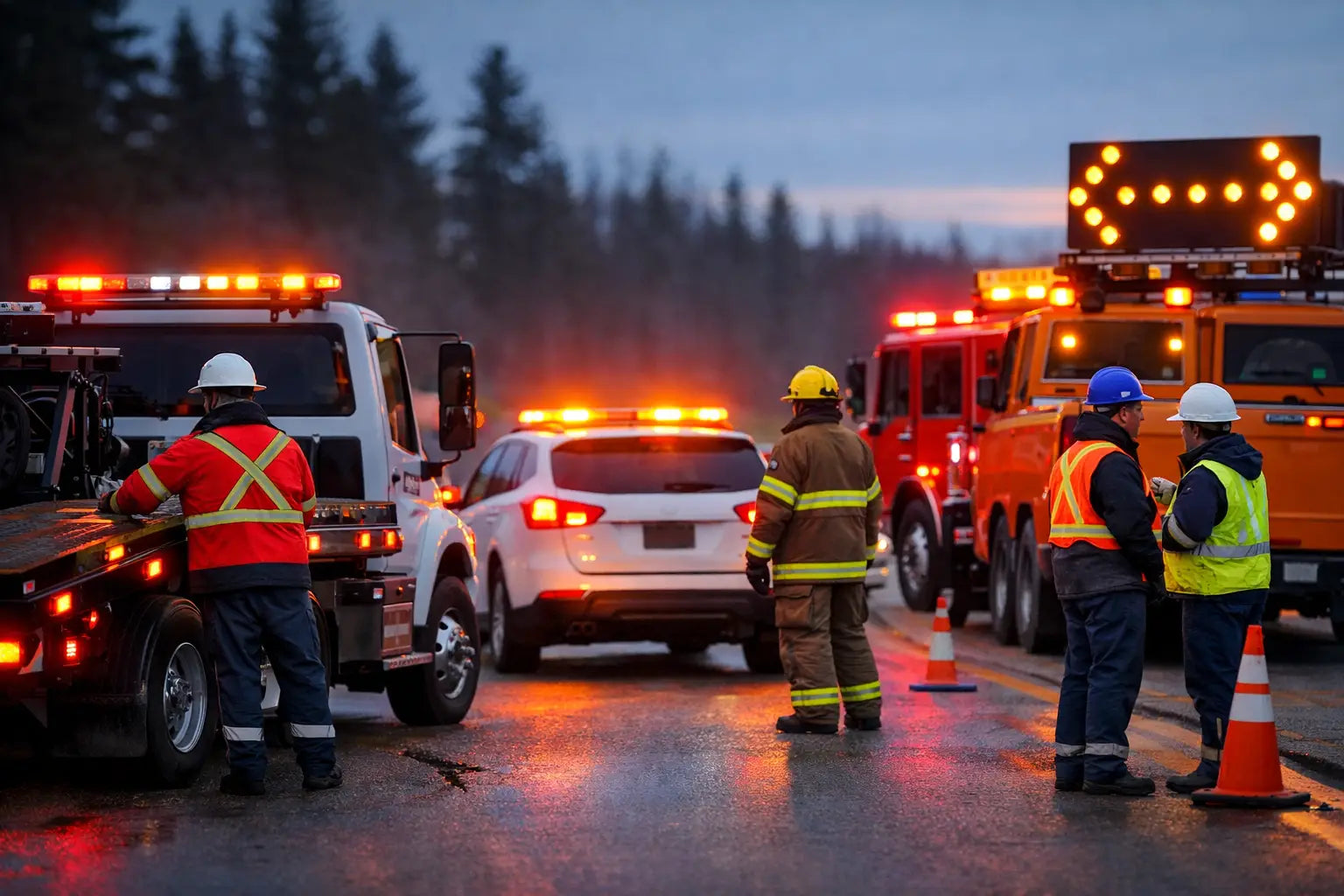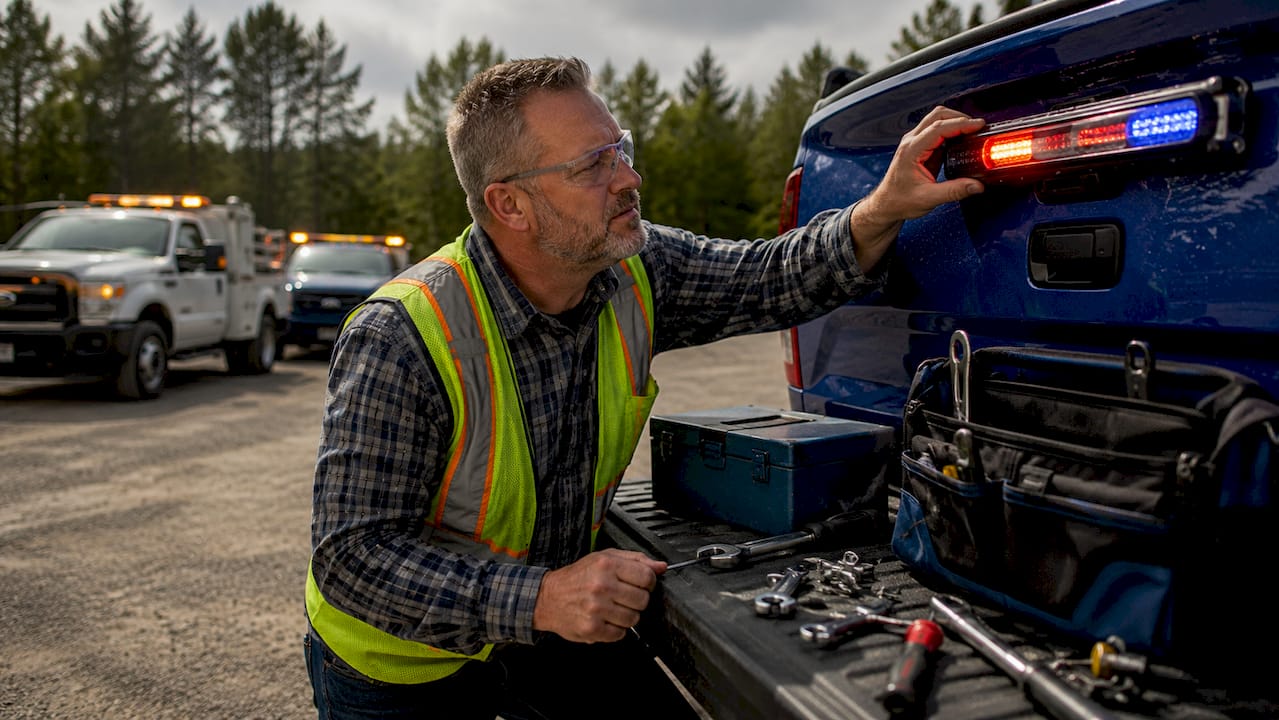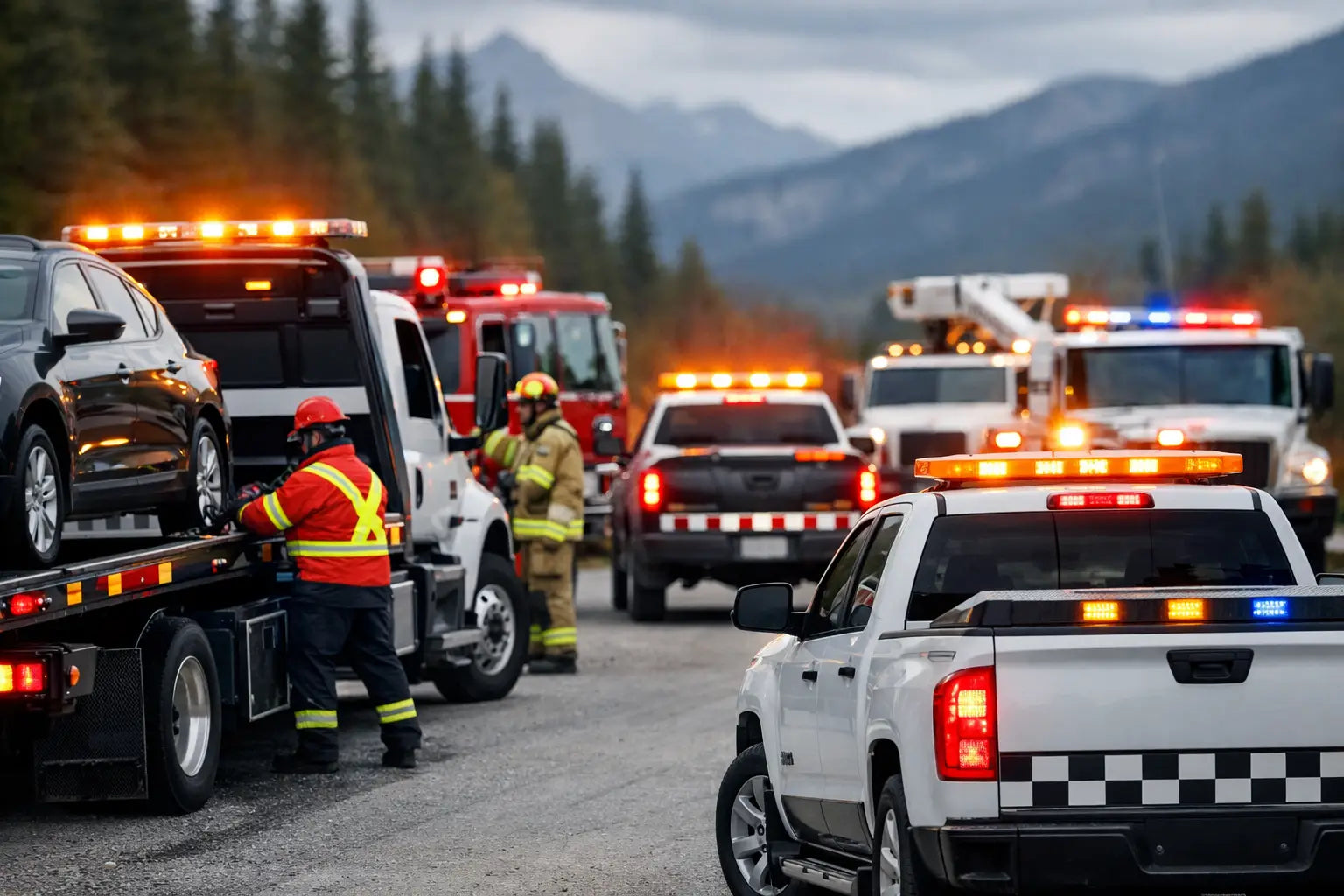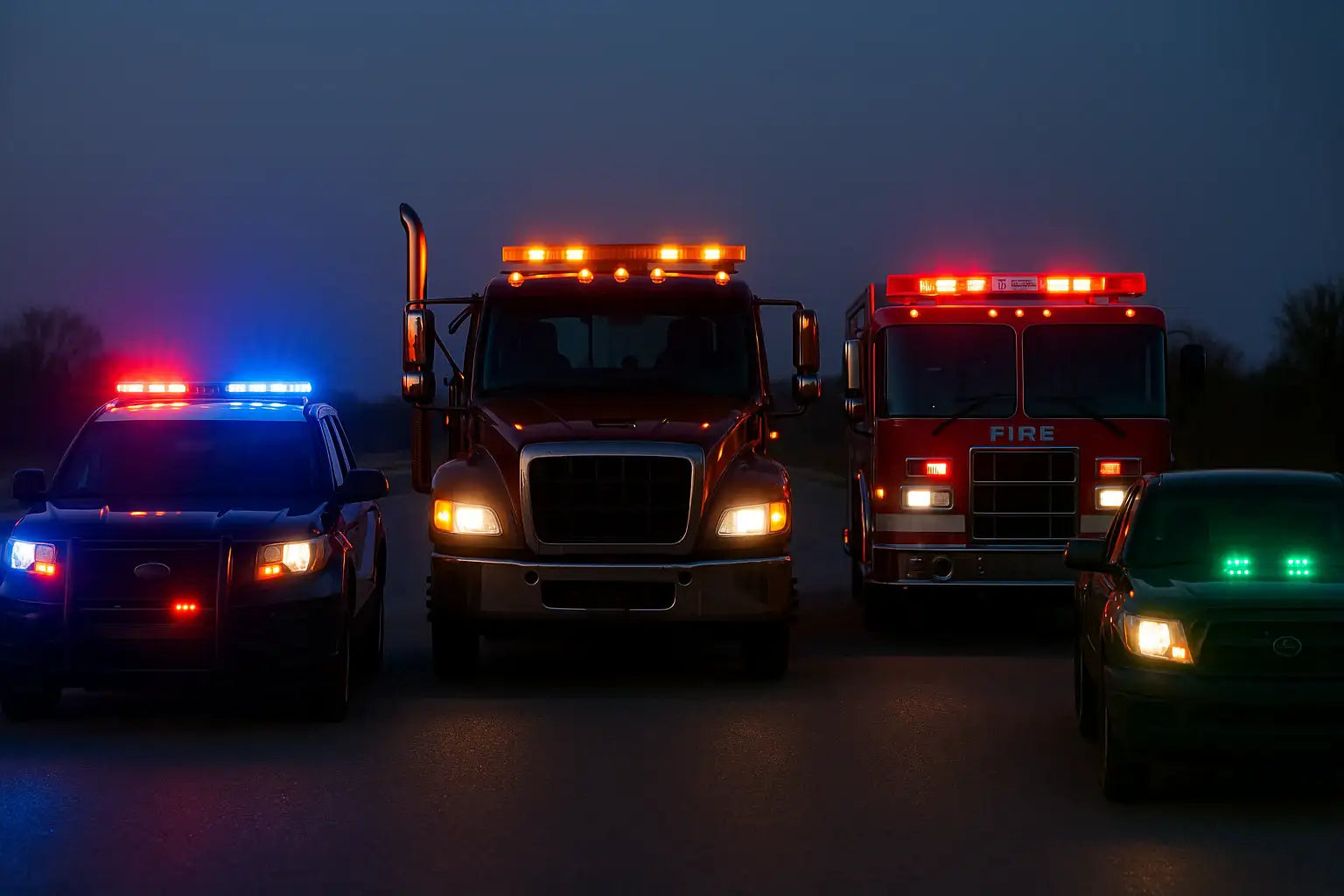

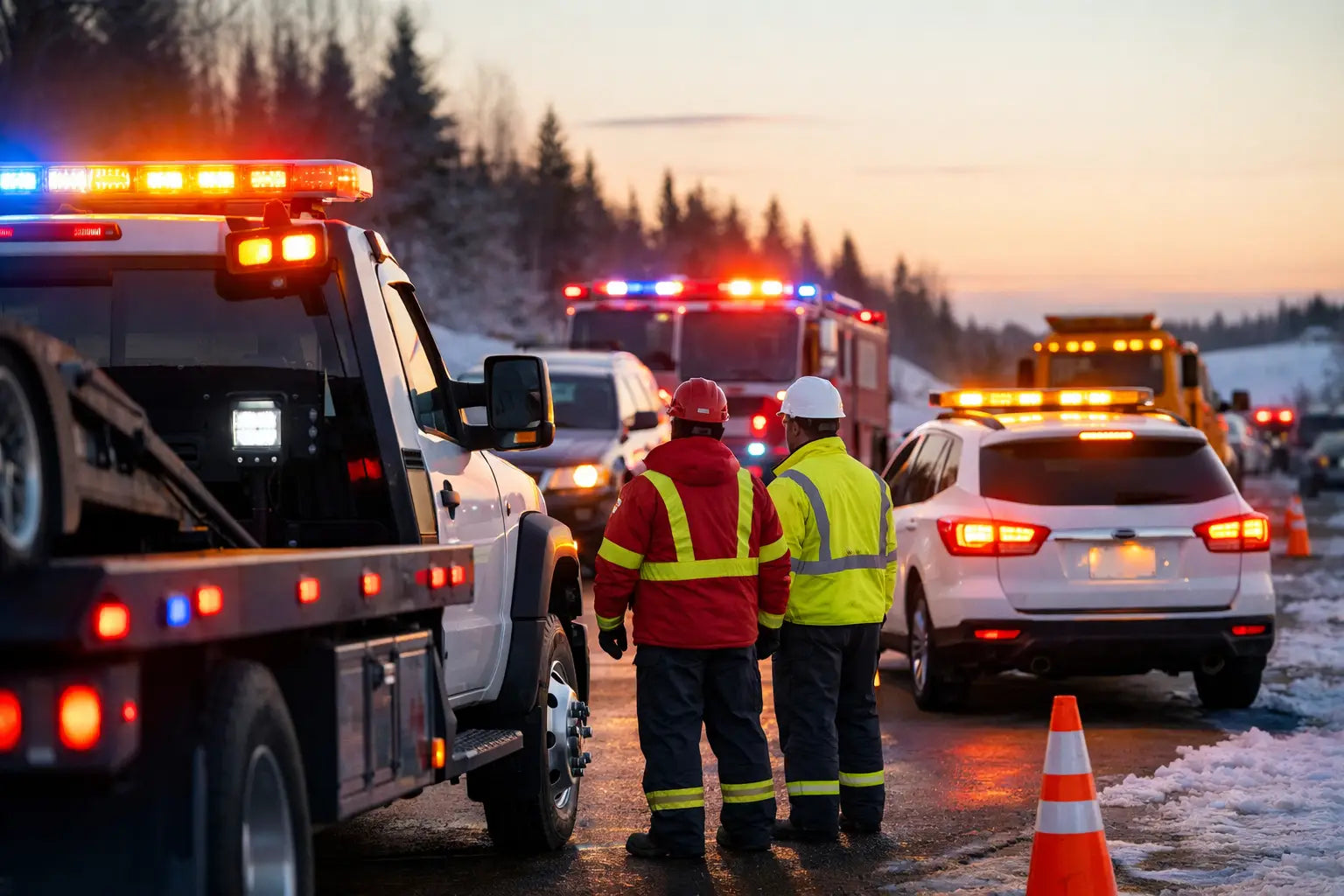
A warning light that looks bright in a warehouse can disappear fast on a rainy shoulder, against dirty white paint, or beside a reflective chevron. That is where a lot of buyers get burned. Surface mount warning lights are popular because they fit almost anywhere, but the right choice depends less on the light itself and more on where the vehicle works, how it is seen, and what kind of traffic it faces.
For tow operators, volunteer fire departments, utility fleets, road maintenance crews, and municipal units, these lights solve a very specific problem. You need directional warning output on the outside of the vehicle without the height, weight, or wind exposure of a full lightbar in every location. Used properly, they add side intersection warning, rear protection, and perimeter visibility. Used poorly, they become expensive decoration.
Where surface mount warning lights make sense
Surface mount warning lights work best when you need compact, hard-mounted warning in a targeted area. On tow trucks, they are often used on the rear body, headache rack, tool compartments, tailboard, grille, mirror housings, and bed sides. On fire apparatus and command units, they help fill dead zones around the cab, box, and rear corners. On utility and construction vehicles, they are useful where ladder racks, service bodies, liftgates, or equipment boxes block larger warning devices.
Their biggest strength is flexibility. A good surface mount can be installed high, low, wide, narrow, horizontal, or vertical depending on the housing design. That lets you build a more complete warning package around the actual shape of the vehicle instead of forcing one oversized product into every application.
That said, they are not automatically the best answer. If your goal is long-range 360-degree warning on a plow truck, highway unit, or primary response vehicle, a lightbar or beacon may still do more of the heavy lifting. Surface mounts usually perform best as part of a system, not as the entire system.
What matters more than flash patterns
Most buyers start with flash patterns because they are easy to compare. In the field, that is rarely the deciding factor. Output, lens design, mounting location, and synchronization matter more.
A strong light with a poor mounting position can underperform. A modest-sized light placed at the right height and angle can do a better job of catching approaching traffic. This is especially true at the rear corners of service bodies and tow units, where off-axis visibility matters. If the light cannot be seen from the lane where the threat is coming from, the pattern does not save you.
SAE ratings are part of this discussion. Depending on the application, buyers should look at whether the product is built and tested to relevant standards such as SAE J595, SAE J845, or SAE J2498 where applicable. The exact standard that matters depends on the light type and use case. Standards are useful because they give you a better baseline than marketing language, but they still do not replace proper vehicle layout.
Choosing surface mount warning lights by vehicle job
A tow truck working live lanes at night has different needs than a parks department pickup or a volunteer firefighter POV. That sounds obvious, but a lot of specifications still ignore it.
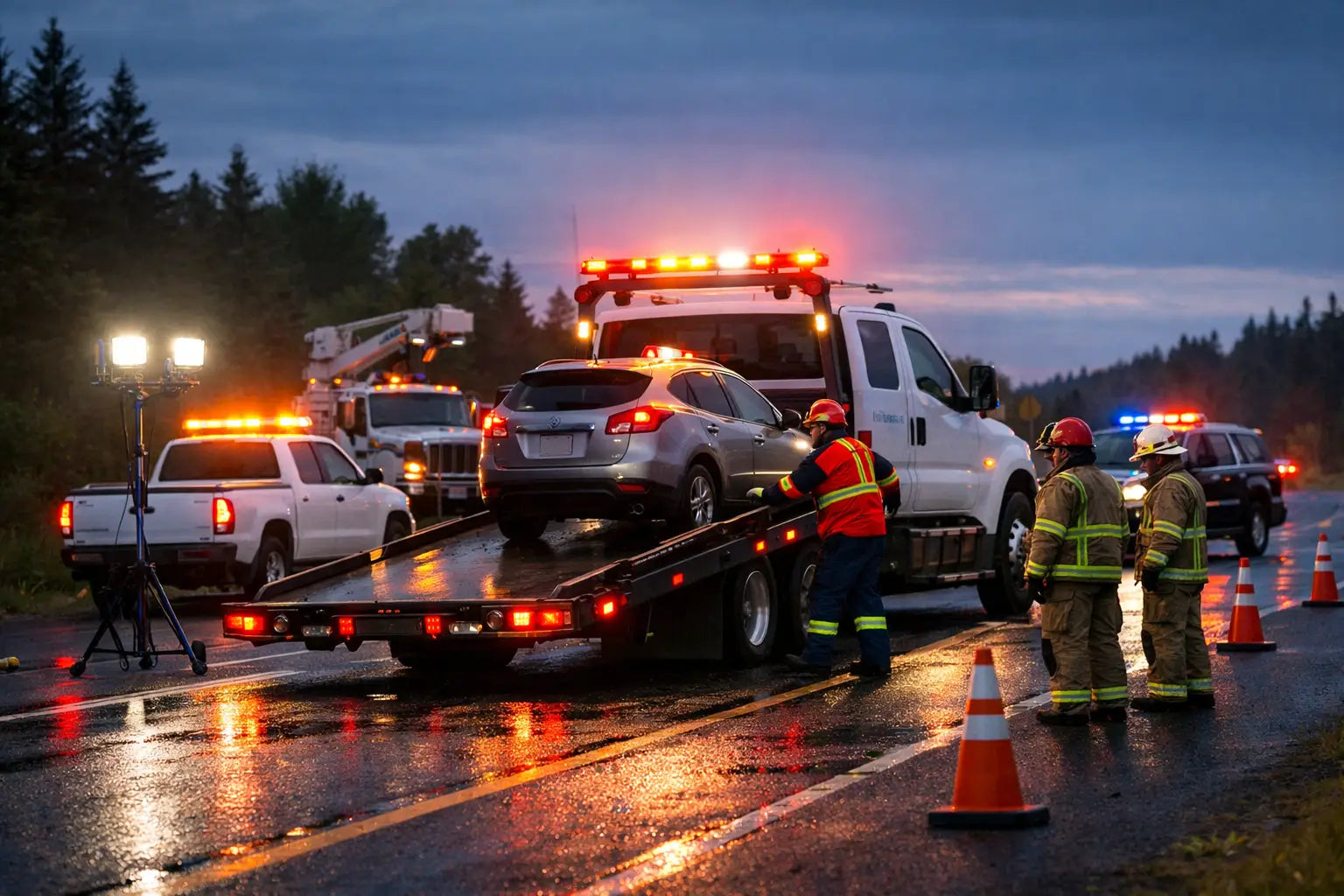
For towing and roadside service, rear and rear-side warning should be a priority. You are often stopped in compromised positions with traffic moving past the driver side. In that environment, wide-angle output and strong daytime punch matter. Lights mounted too low can get buried by road spray, snow, mud, and headlights. Too high, and they may miss close-in traffic approaching from a shallow angle. Usually, the best layouts combine upper and lower warning zones.
For volunteer fire and command vehicles, compact perimeter coverage is often the goal. Surface mounts can supplement a roof system or provide warning where headliners, roof rails, hatch clearance, or low-profile requirements limit larger equipment. Side intersection visibility becomes especially important in urban responses.
For municipal, utility, and contractor fleets, durability and serviceability matter as much as brightness. These vehicles see wash bays, salt, vibration, backing incidents, and long operating hours. A lower-cost light that fails every season is not cheaper in the real world. Downtime, replacement labour, and repeat drilling into body panels add up fast.
Mounting location decides performance
This is where field experience matters. Light placement should match threat direction, body shape, and sightlines.
Front corners and grille areas
Front-facing surface mounts help with intersection clearing and oncoming traffic recognition. They are common in grilles, push bumpers, and fascia panels. The trade-off is contamination. Snow, slush, bugs, and road film can reduce effectiveness quickly. If a vehicle lives on winter roads, grille-mounted lights should be easy to clean and built to handle moisture and debris.
Side warning zones
Side warning is often overlooked until a near miss happens at an intersection or on a narrow shoulder. Mirror housings, front fenders, body sides, and service compartments can all work well. The goal is not just to be visible broadside, but to be seen early from an angle as traffic approaches.
Rear corners and tail areas
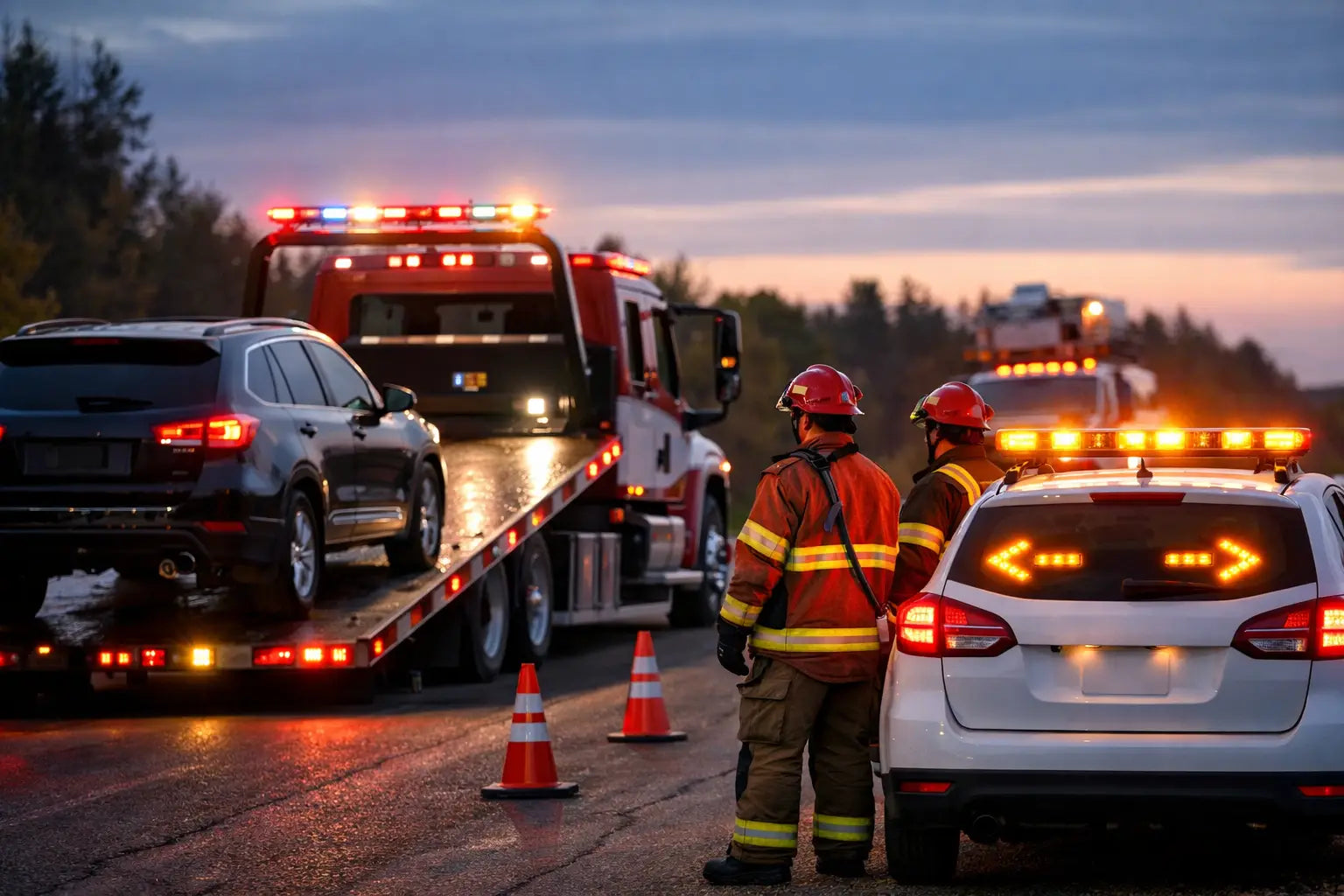
Rear warning is critical for tow, utility, road work, and service fleets. Rear corner lights generally outperform centre-mounted lights alone because they define vehicle width better. If the vehicle also uses a traffic advisor, the warning lights should complement it rather than wash it out. More light is not always better if it creates visual clutter.
Durability is not a brochure issue
In Canadian fleet use, warning lights get punished. Salt, freeze-thaw cycles, pressure washing, gravel roads, vibration, and poor wiring practices kill more lights than lab conditions ever will. When evaluating a surface mount, pay attention to the housing material, lens retention, gasketing, ingress protection, wire exit design, and mounting hardware.
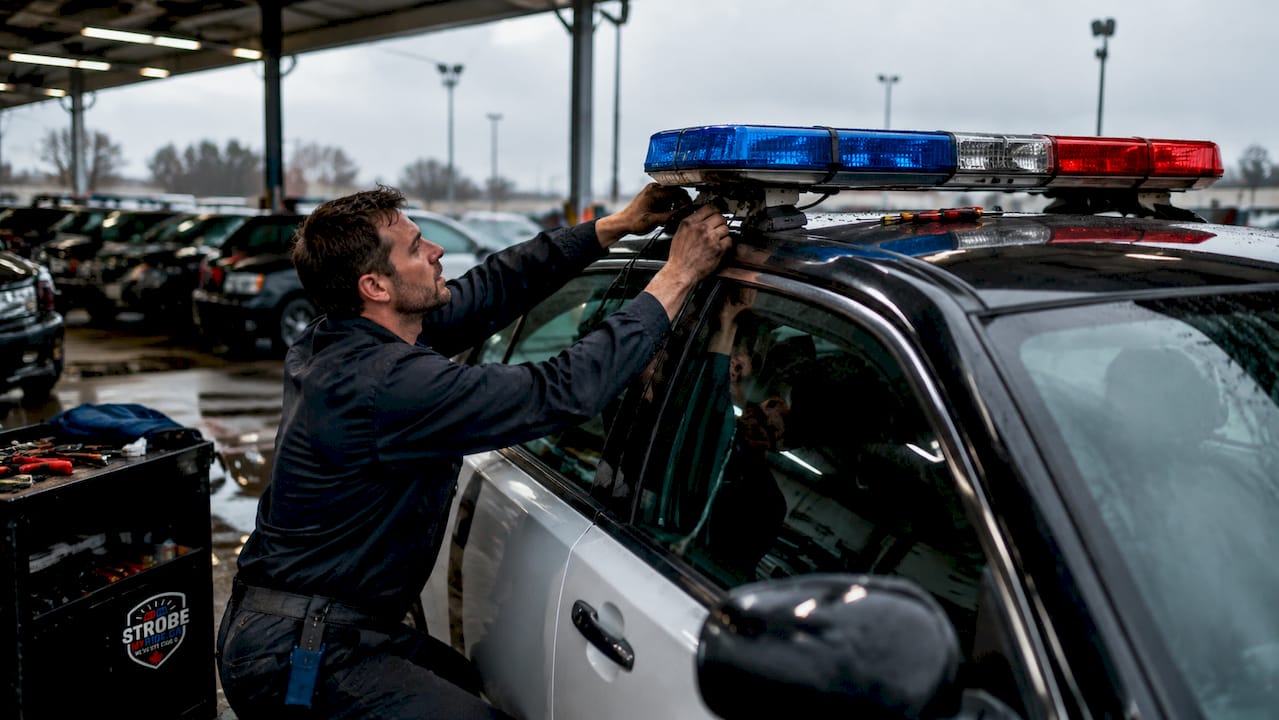
A common failure point is not the LED head itself but the install. Water intrusion through a badly sealed pass-through, undersized wiring, poor grounding, or unsupported cable routing can turn a good product into a comeback job. If you are specifying lights across a fleet, standardizing install practices is just as important as choosing the product.
This is also where warranty should be viewed properly. A long warranty sounds good, but fleet buyers should also consider how often they can actually afford to have a unit out of service. Reliability in service is worth more than warranty paperwork.
Compliance awareness without guesswork
Warning lighting rules vary by vehicle type, service, colour, and jurisdiction. Buyers should verify what applies to their operation rather than assuming one setup works everywhere. Transport Canada requirements, provincial highway traffic legislation, and agency or contract-specific fleet standards may all influence what you can use and how you configure it.
The practical takeaway is simple. Start with the job, confirm the permitted warning colour and application, then choose lighting that aligns with recognized performance standards and safe installation practices. Do not buy based on appearance alone, and do not assume a light is suitable just because it fits the panel.
When fewer lights do a better job
There is a point where adding more warning lights stops improving visibility and starts creating noise. Drivers need to identify the vehicle, understand its position, and recognize that workers may be nearby. If every surface is flashing at full intensity, the message gets messy.
Good warning design uses contrast, spacing, synchronization, and purpose. A clean layout with well-placed surface mounts, a properly configured rear advisor, and effective work lighting usually outperforms a random collection of lights installed wherever there was room. This is especially true for fleets trying to reduce distraction while still improving conspicuity.
At SMR, that is usually the conversation worth having first - not which light has the most flash patterns, but what problem the vehicle actually needs to solve.
What to ask before you buy
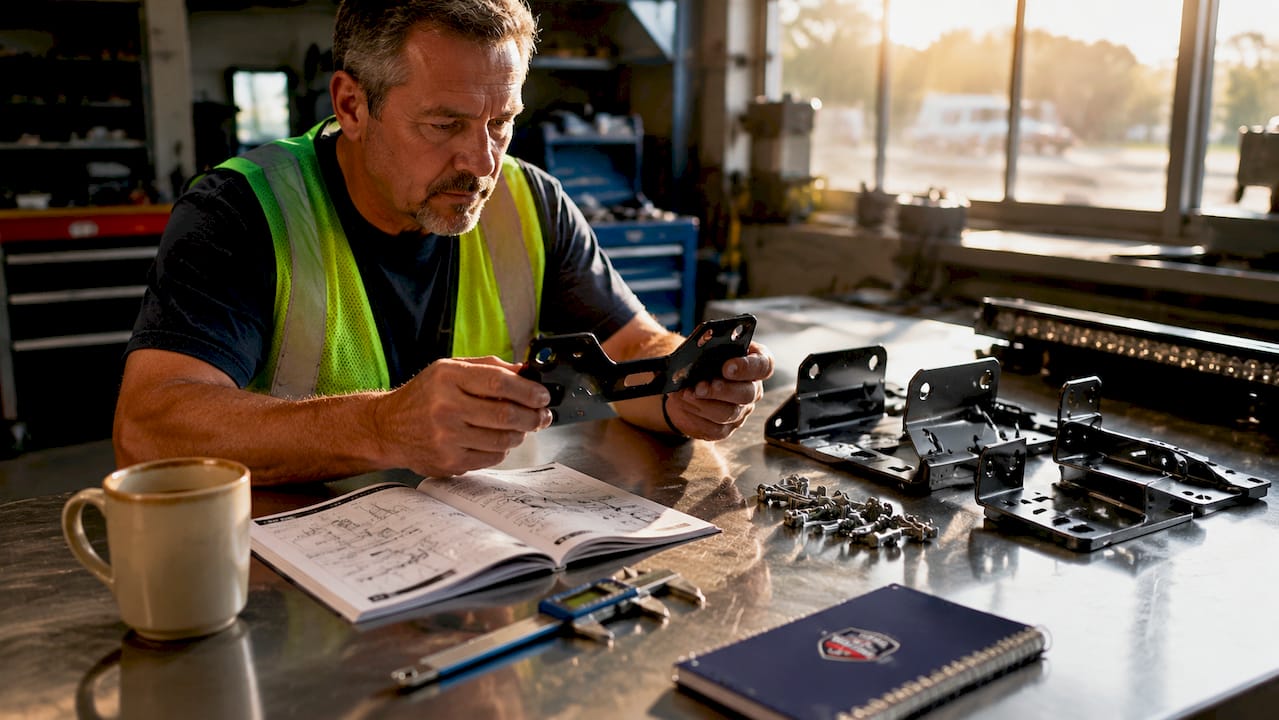
Before choosing a model, look at five things: where the vehicle operates, what direction the hazard comes from, what body panels are available, what standards matter for the application, and how the light will be installed and serviced over time. Those answers narrow the field quickly.
If the unit works highways, shoulders, snow, and night recoveries, buy for real-world abuse. If it is a municipal inspection vehicle that spends more time in town at lower speeds, your layout may focus more on intersection and rear visibility than maximum long-range punch. It depends on the work.
A good surface mount warning light should do three things well. It should be visible where it matters, survive the environment it is placed in, and integrate cleanly into the rest of the vehicle warning package. If it cannot do all three, keep looking.
The best lighting setups are rarely the flashiest. They are the ones that make your vehicle easier to read, your crew easier to notice, and your operation safer to approach when conditions are at their worst.