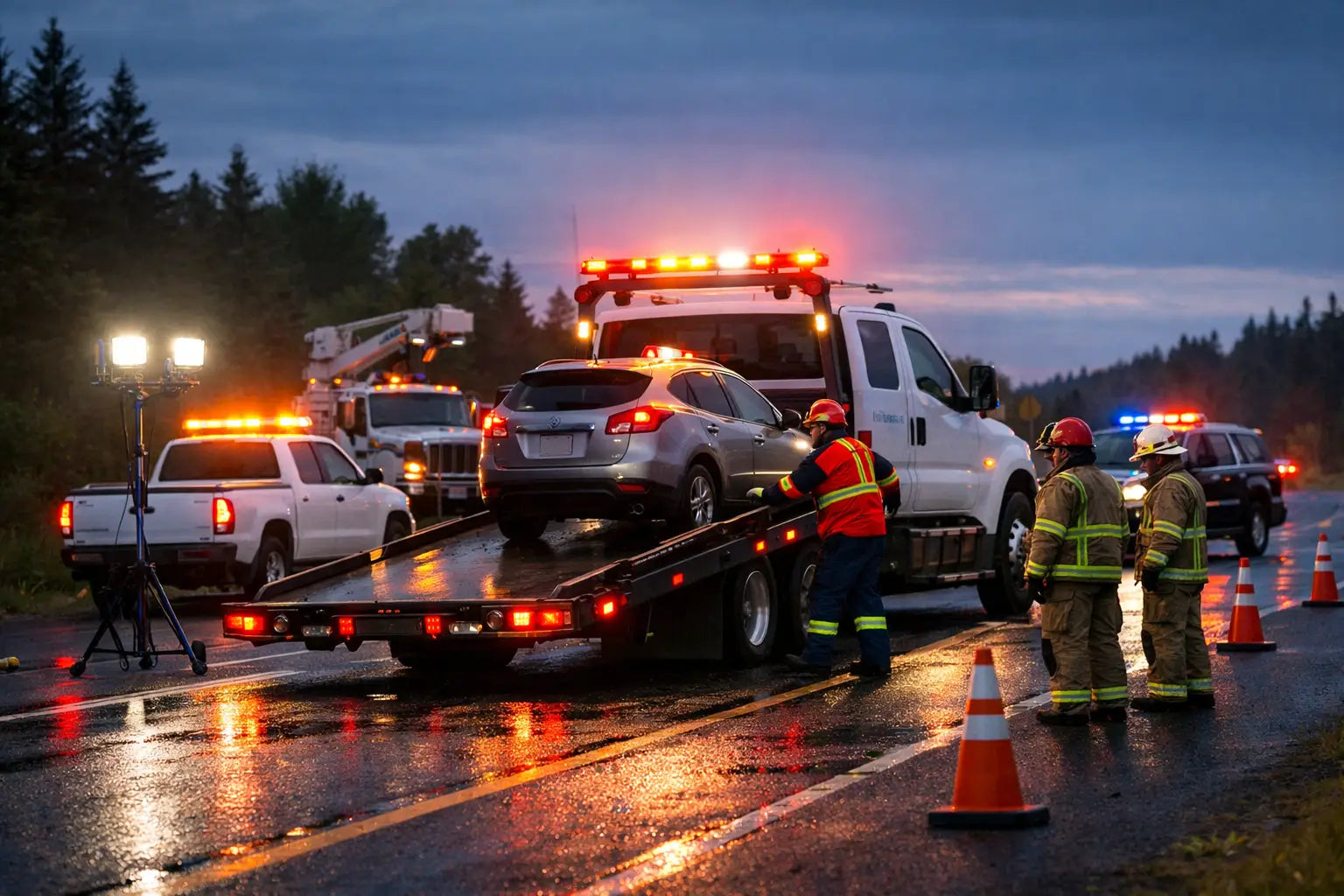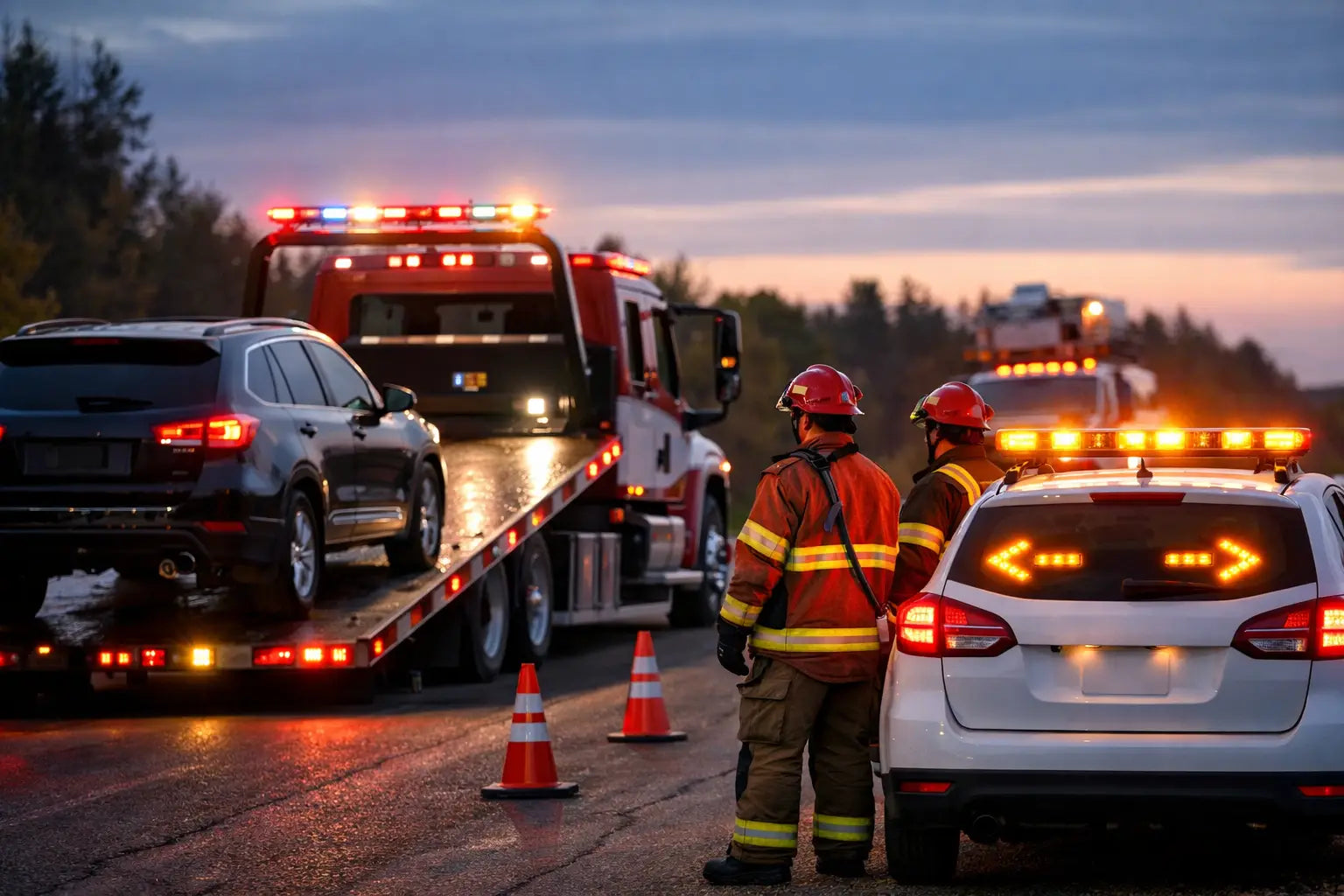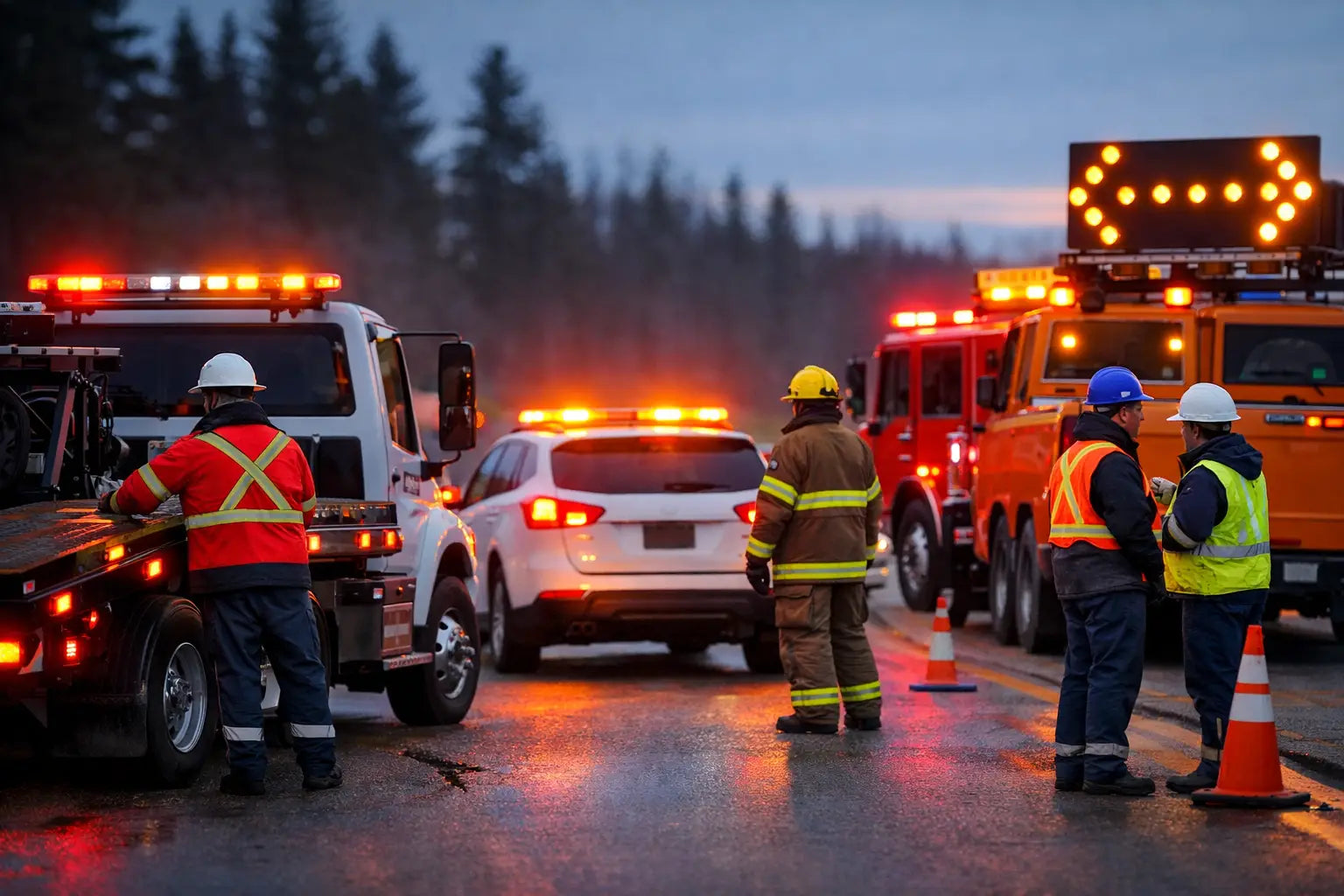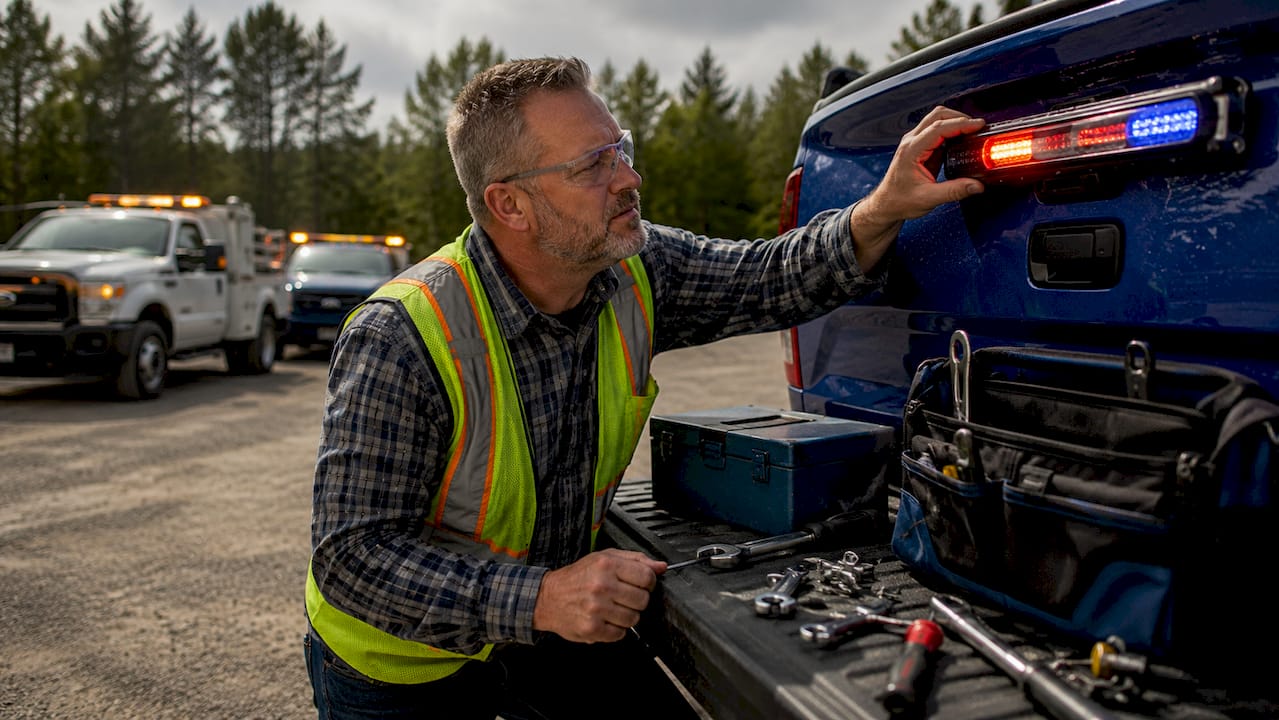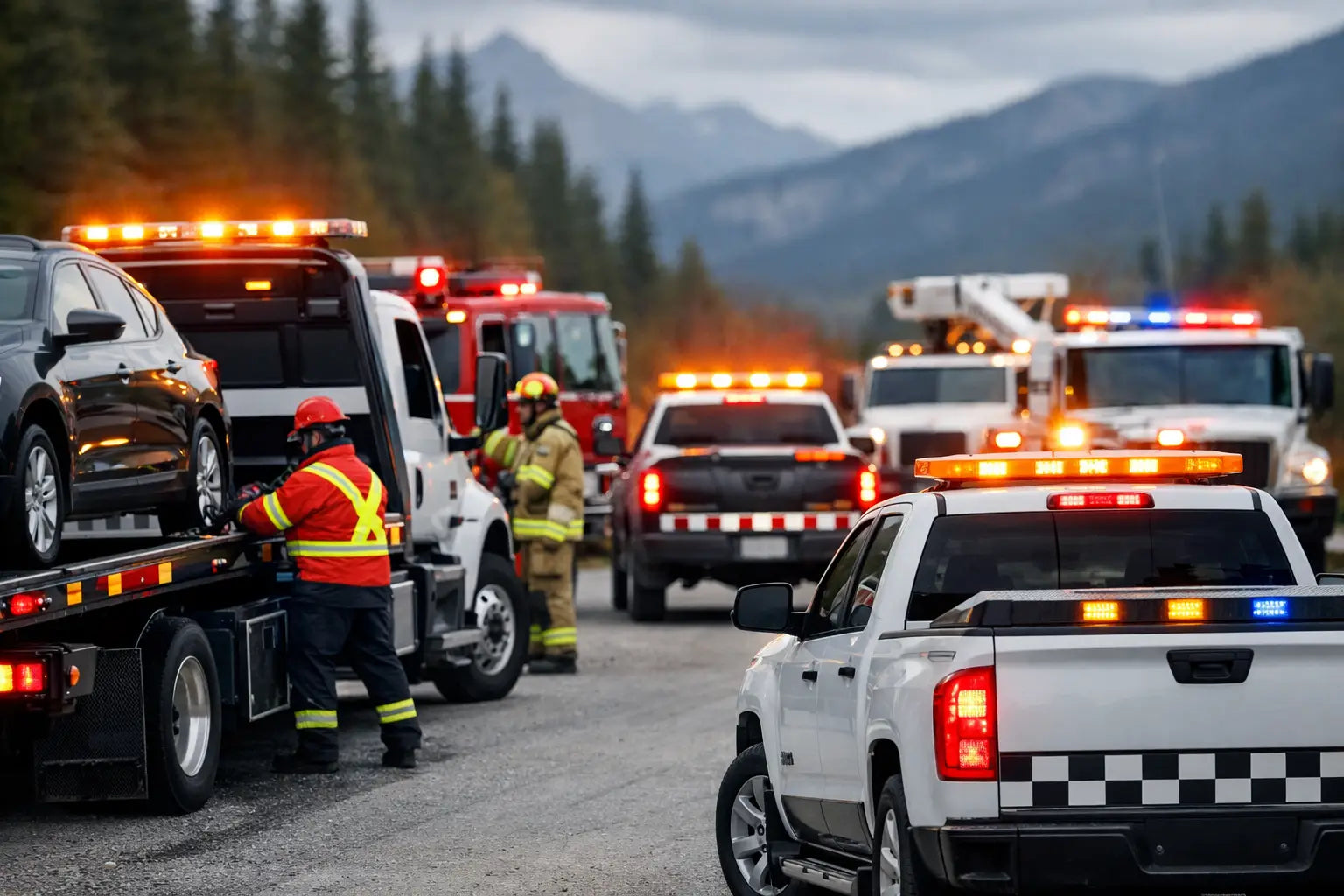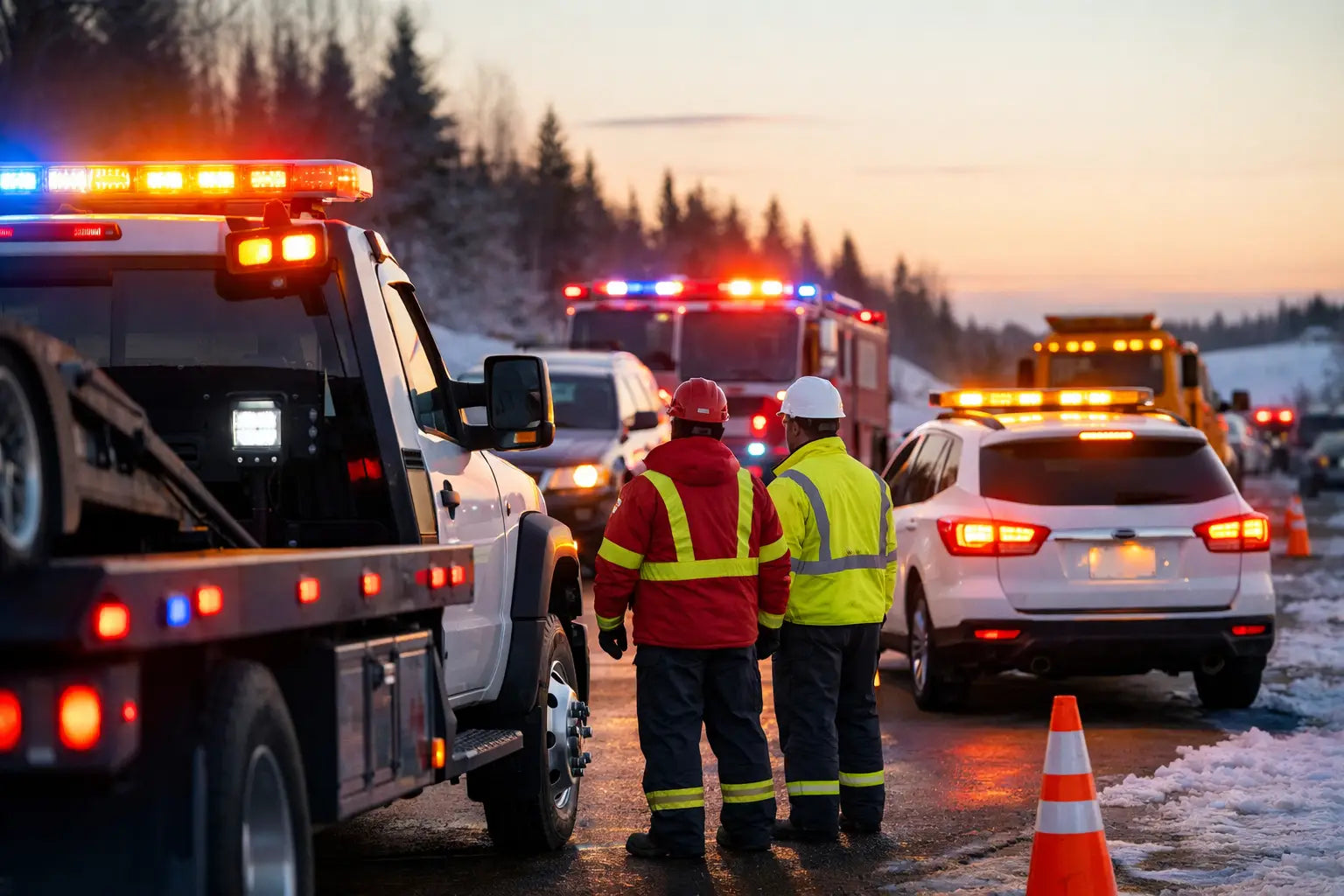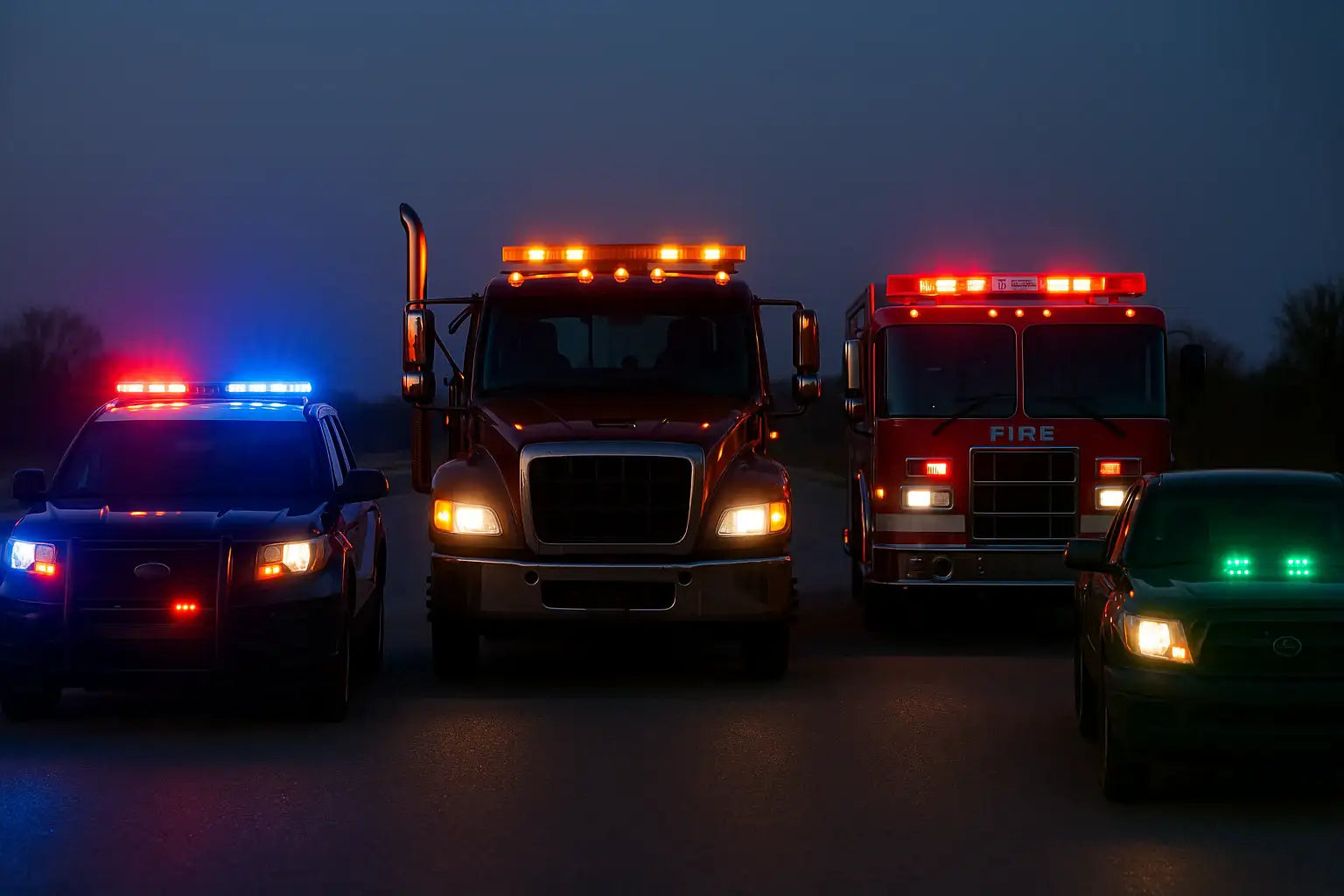

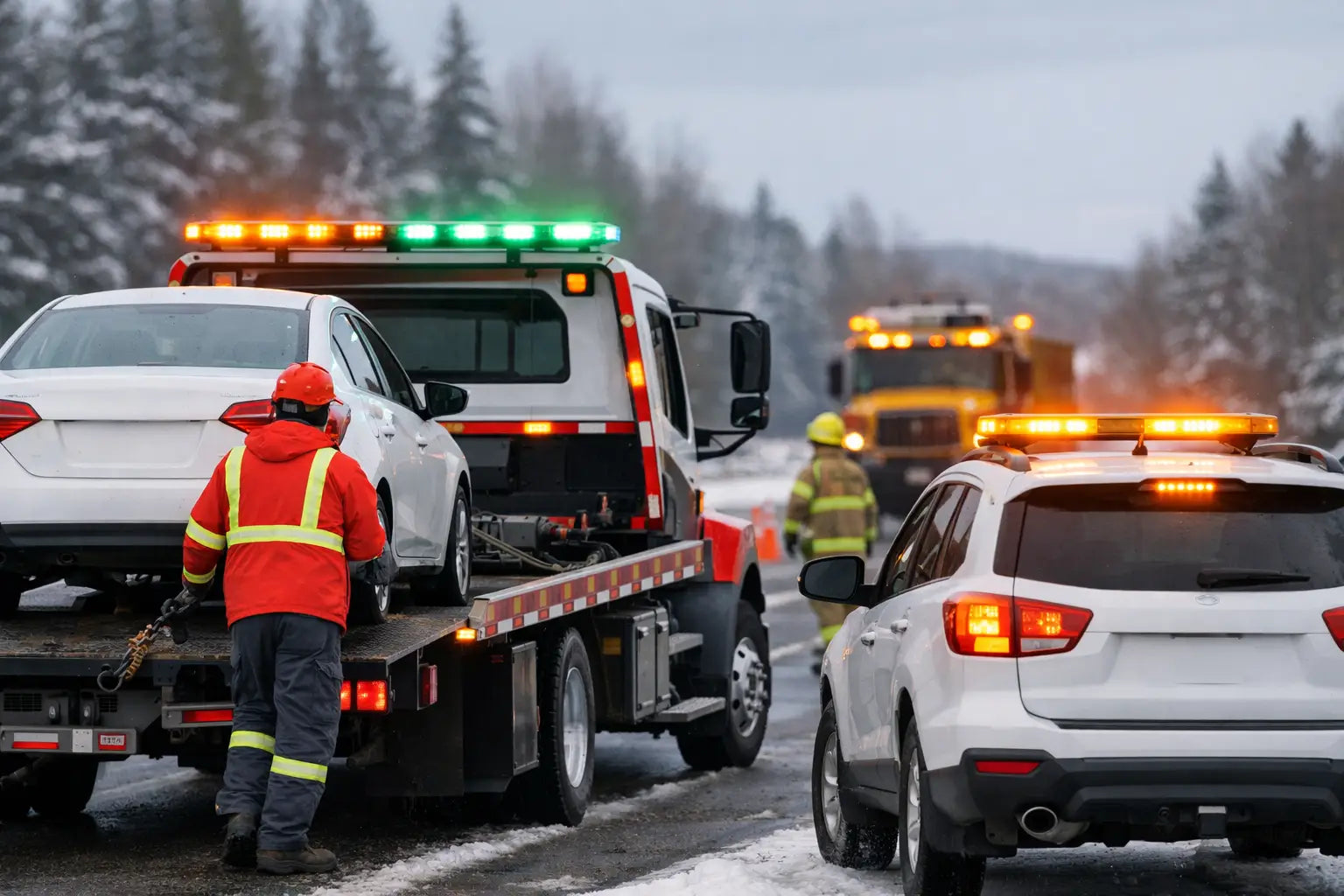
A tow operator working the shoulder at night does not need more guesswork. They need passing traffic to recognize the truck early, understand that an active roadside operation is underway, and move over with enough time to react. That is why amber/green warning lights tow trucks Quebec has become a practical question for owner-operators, fleet buyers, and roadside assistance teams trying to balance visibility, equipment standards, and real-world roadside risk.
This is not just about adding more flash. It is about using the right light colours, the right output, and the right layout for the job your truck actually does.
Why amber and green get discussed together
Amber has long been the standard warning colour for service vehicles, highway maintenance units, and tow operations across Canada. Drivers already associate amber with caution, work activity, slow-moving vehicles, and roadside service. That matters because recognition is a big part of visibility. A light that is bright but confusing can still fail in traffic.
Green enters the conversation because some jurisdictions distinguish tow operations from other roadside work through colour use, and because operators want a lighting package that stands out in a crowded visual environment. On a busy autoroute, especially at night or in poor weather, motorists may see a mix of police, fire, EMS, road maintenance, utility, and recovery vehicles. Distinctive colour combinations can improve recognition, but only if they are used correctly and verified against current provincial requirements.
That last point matters. Lighting rules can change, and they can vary by vehicle class, service role, and equipment use. If you run tow trucks in Quebec, verify current provincial requirements before specifying or activating any colour combination.
Amber/green warning lights tow trucks Quebec - what matters in practice
From a field safety standpoint, the first priority is still amber. Amber is the foundation colour for tow and roadside service visibility because it communicates caution without creating the public expectation associated with emergency response lighting. If green is used as part of the warning package, it should support identification and scene awareness, not replace a solid amber strategy.
A good tow setup is usually built around an amber primary system with green added only where it makes operational sense and where current rules allow it. That means your roof lightbar, rear warning package, side warning coverage, and traffic-direction function should still be chosen based on work zone exposure, truck size, recovery type, and roadway speed.
A flat deck working urban breakdowns has different needs than a heavy wrecker on a divided highway. The urban truck may benefit more from strong side intersection coverage and controlled rear flash patterns. The highway unit needs long-range rear warning, strong off-axis performance, and a traffic advisor that remains readable in spray, fog, and snow.
Visibility is more than colour
Operators sometimes focus on colour because it is easy to talk about, but colour alone does not solve roadside visibility problems. In actual operations, effectiveness comes from the full lighting system.
Output matters. Beam pattern matters. Mounting height matters. Flash pattern selection matters. So does where the truck is parked, whether the casualty vehicle blocks your line of sight, and whether your rear warning gets washed out by work lights.
That is why SAE-rated equipment should be part of the discussion. SAE J595 and SAE J845 help define performance expectations for warning lights and optical warning devices. For tow applications, buying lighting that meets recognized performance standards is usually the smarter move than chasing cheap units with impressive online photos and no real photometric credibility.
Class selection matters too. A Class 1 lightbar or warning device is generally the better fit for vehicles operating in higher-speed traffic environments or where maximum conspicuity is required. Lower-output equipment may look acceptable in the yard and still disappear against headlight glare, rain, road spray, or sunrise conditions on the highway.
Choosing the right setup for a tow truck
The best tow-truck lighting packages are built by task, not by trend. Start with the truck’s operating environment.
If the unit spends most of its time on 400-series style highways, autoroutes, or rural high-speed roads, the priority should be a high-output roof lightbar, strong rear-facing warning, and a traffic advisor or directional function that clearly indicates lane movement. Side warning is also important because many struck-by incidents start with late driver recognition as traffic approaches from an angle.
If the truck works mostly in urban service, parking enforcement towing, impounds, or short-duration roadside stops, compact warning systems can work well, but they still need enough punch for daytime use. Surface mounts, grille lighting, rear deck or headache-rack lights, and controlled flash synchronization can make a smaller package perform better than a poorly planned oversized system.
For heavy wreckers and rotators, scene complexity usually justifies a more layered approach. These trucks often work longer-duration incidents, block more lane space, and operate around responders, debris fields, and traffic transitions. In those cases, warning lights, scene lights, work lights, and traffic control devices all need to complement each other rather than compete.
Common mistakes with amber and green lighting
One of the biggest mistakes is over-lighting the truck without a plan. More heads, more colours, and more flash patterns do not automatically create better warning. They can create visual clutter, especially to the rear, where drivers need a clear message.
Another mistake is choosing patterns that are too aggressive for close-range work. Some high-intensity patterns are effective at distance but become distracting when motorists or workers are near the truck. A useful system often includes pattern options for different scenarios, such as transport mode, active recovery mode, and rear directional mode.
Poor placement is another issue. Lights hidden behind toolboxes, mounted too low, blocked by wheel lifts, or aimed badly can leave serious dead zones. Tow trucks are awkward vehicles from a lighting standpoint because their bodies, booms, decks, and casualty vehicles can all interfere with warning coverage.
Then there is durability. Tow work is hard on gear. Vibration, weather, salt, hydraulic oil, pressure washing, and year-round service will expose weak housings, poor wiring, and low-grade connectors fast. Built for real work means sealed housings, proper mounting, quality cable protection, and controls that can survive daily use with gloves on.
Roadside safety is still the main issue
Warning lights are only one layer of a safer roadside operation. They help motorists recognize the scene, but they do not replace smart truck positioning, taper devices, PPE, cones, road flares where appropriate, or disciplined work habits.
A good operator uses the truck as a shield where possible, sets the scene to create space, and avoids standing in live lanes or pinch points. Rear traffic advisors can help communicate merge direction, but only when used in a way that matches the actual lane closure or blocking position. Work lights help the operator see the job, but they should not blind approaching drivers.
This is where fleet standards matter. If you run multiple trucks, standardize your lighting layout, control placement, and operating modes. Drivers make better decisions when each unit behaves the same way. It also makes training easier and reduces the chance that one truck is running a completely different roadside setup from the rest of the fleet.
Buying for compliance, performance, and total cost
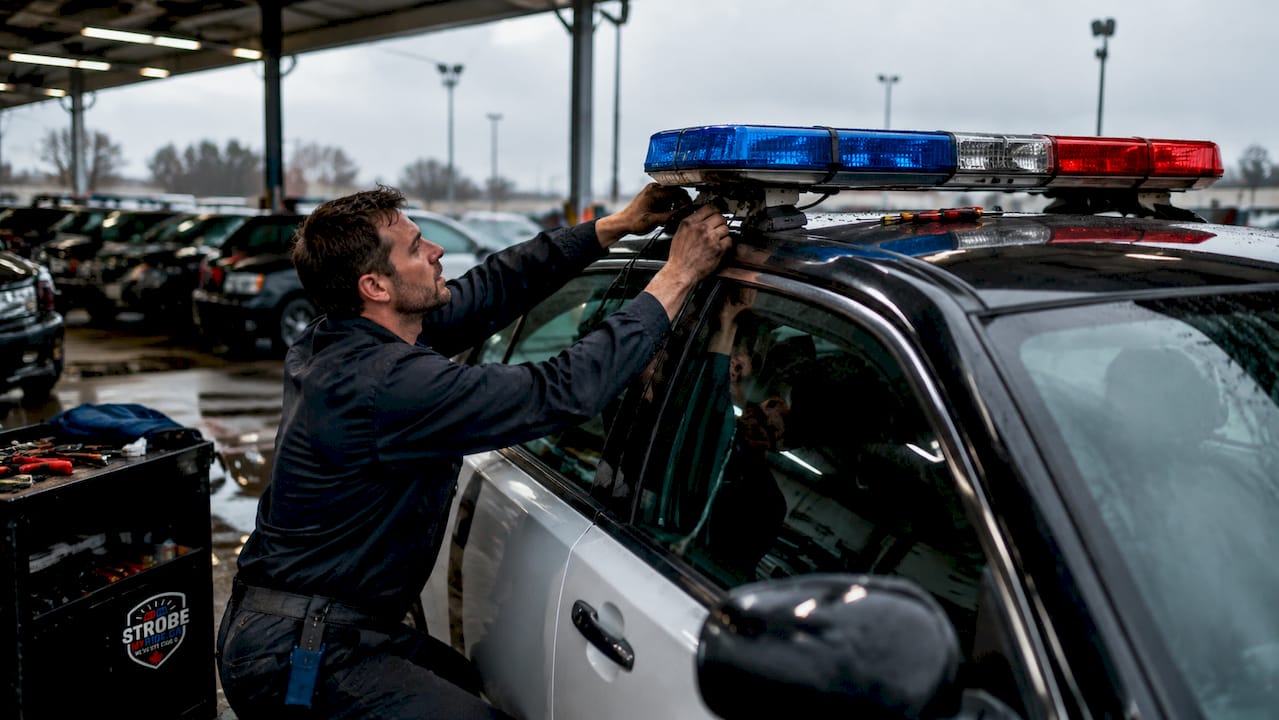
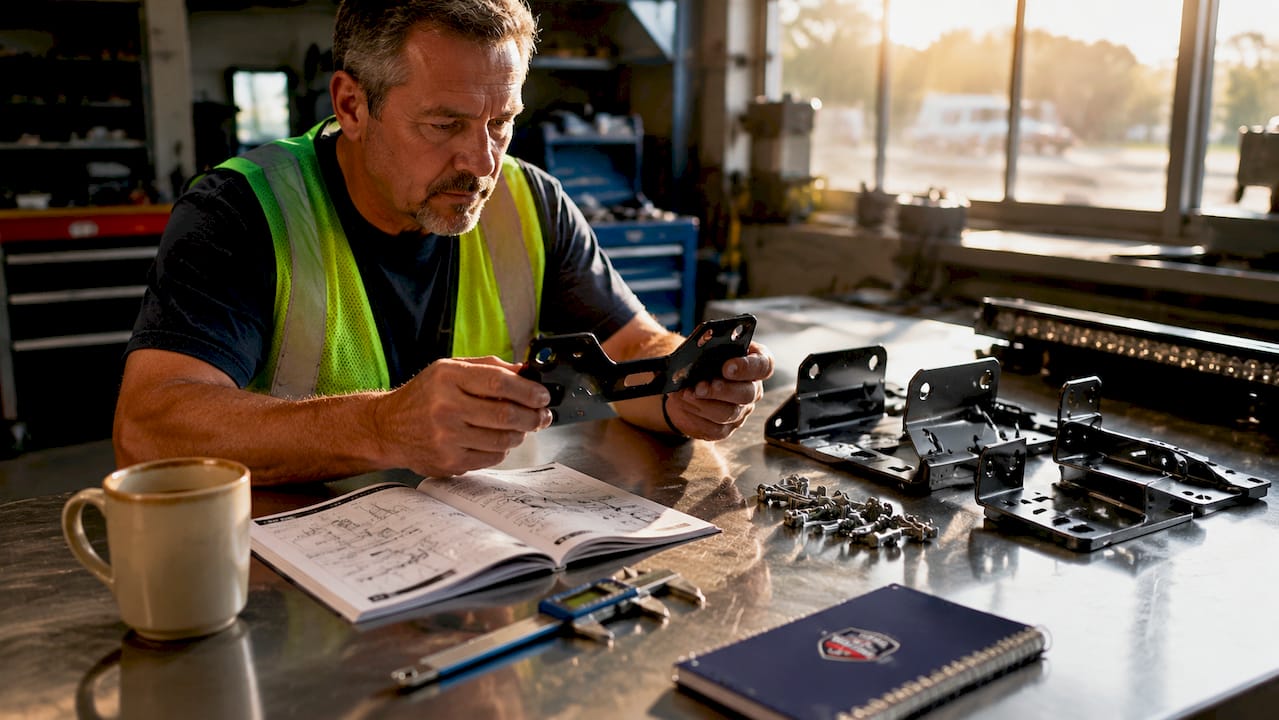
For buyers comparing equipment, start with application and standards, not price alone. Ask whether the warning lights are appropriate for tow service, whether they meet the relevant SAE performance standard, how they handle Canadian weather, and what kind of warranty and support back them up.
Total cost of ownership matters more than the cheapest invoice. A low-cost light that fails during winter roadside work, pulls a truck out of service, or needs repeated replacement is not a deal. Professional-grade equipment usually costs more up front because the optics, housings, electronics, and testing are better. Over the service life of the truck, that often pays for itself.
For fleets trying to sort through amber/green warning lights tow trucks Quebec requirements and equipment choices, the practical answer is simple. Build around proven amber warning performance first. Add green only where it is appropriate for the application and verified for your jurisdiction. Choose SAE-rated equipment, prioritize rear and side visibility, and spec the truck for the roads it actually works.
If you are unsure where to start, work backwards from your highest-risk calls, not your easiest ones. The right lighting package is the one that still performs on the wet shoulder, at 2 a.m., with traffic closing fast and no room for equipment that only looked good on paper.