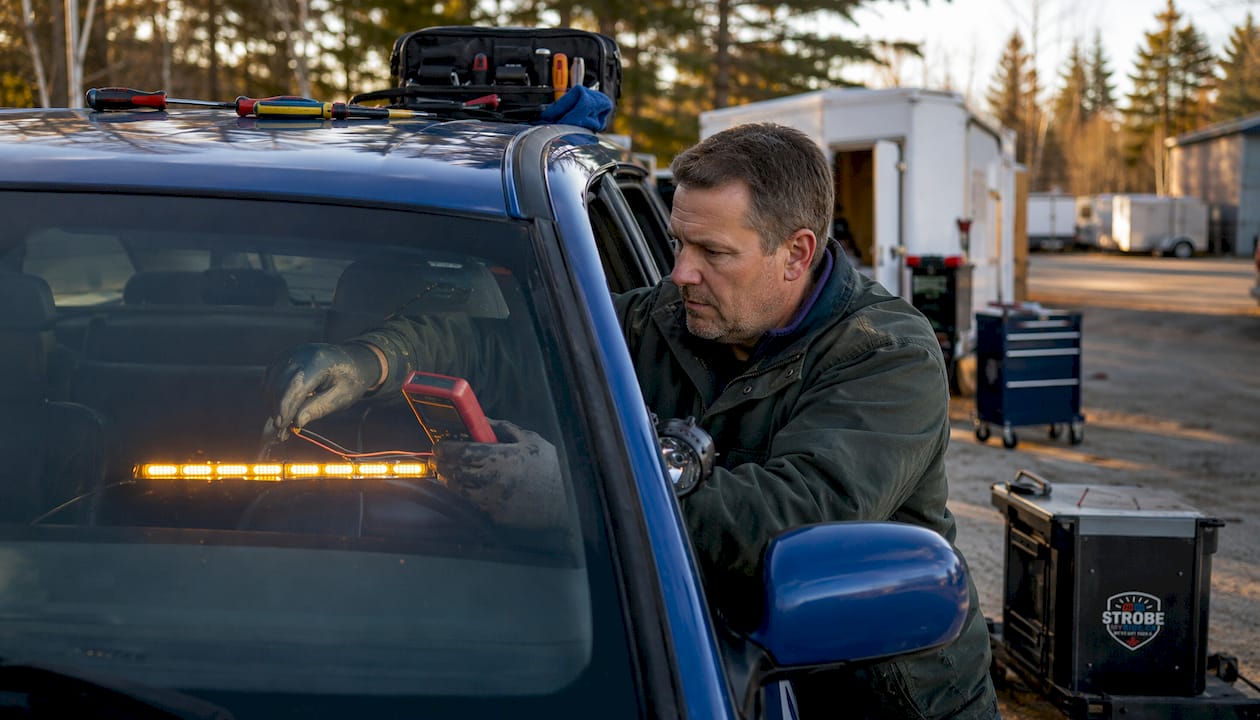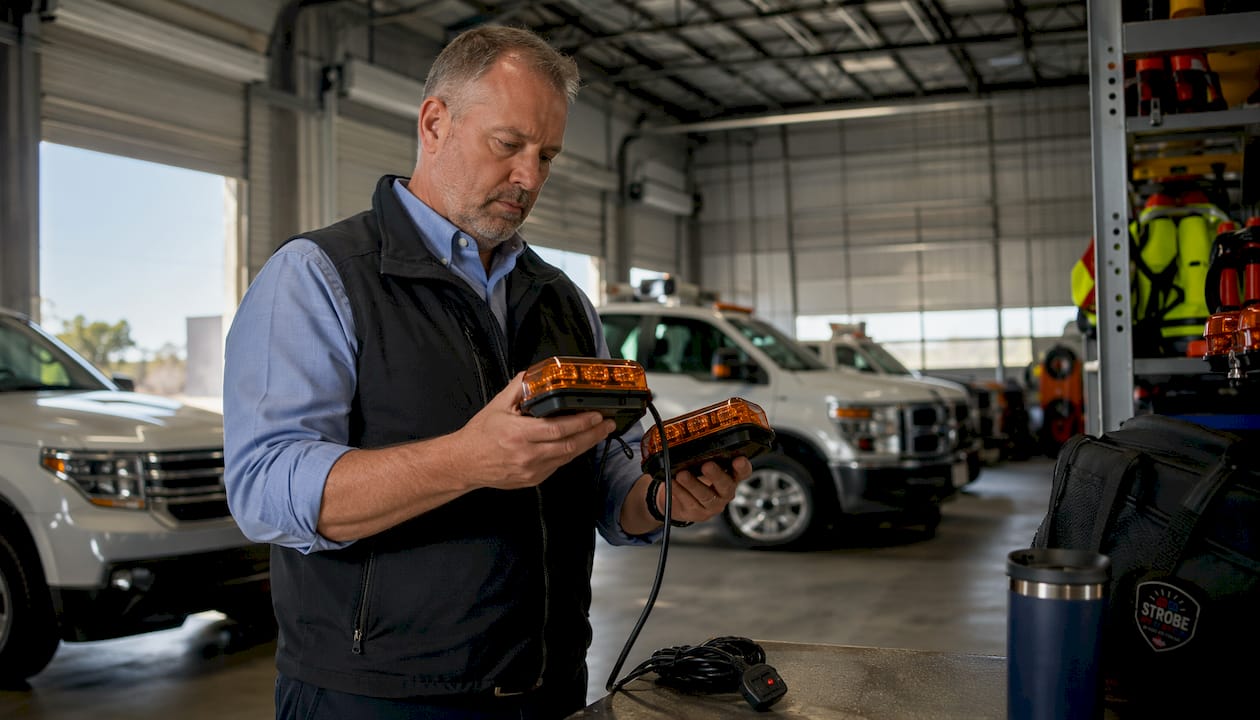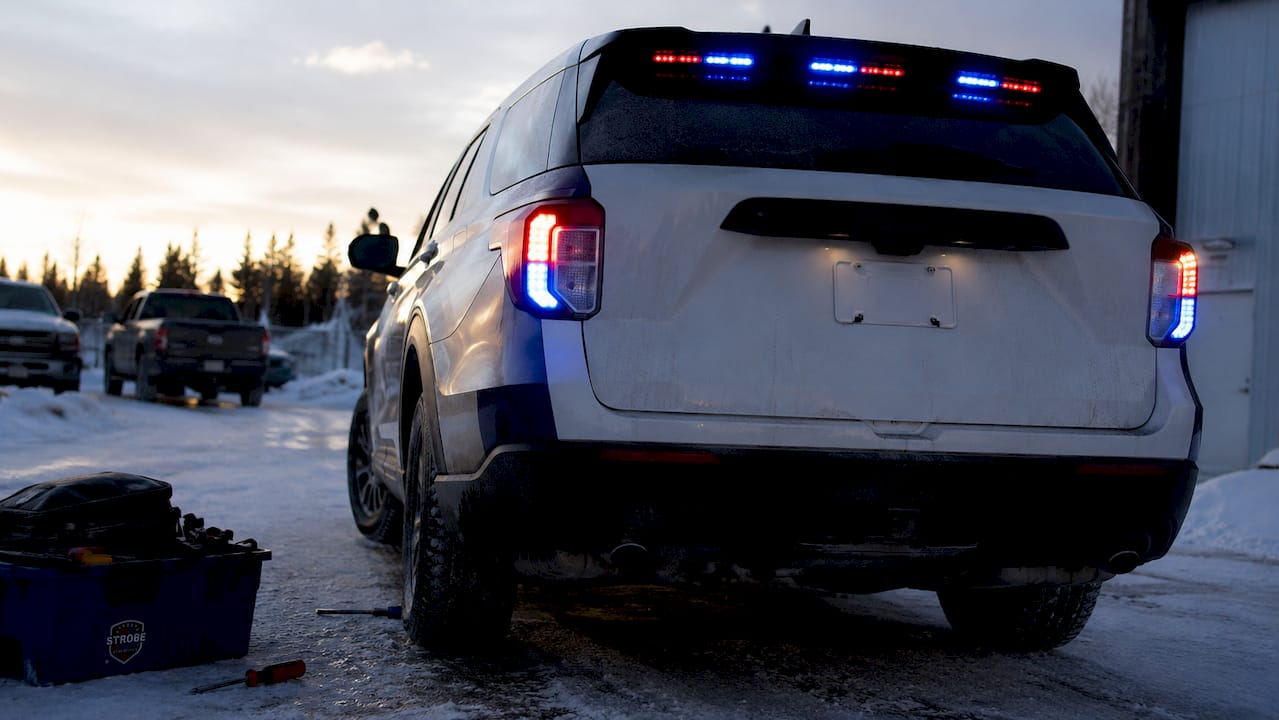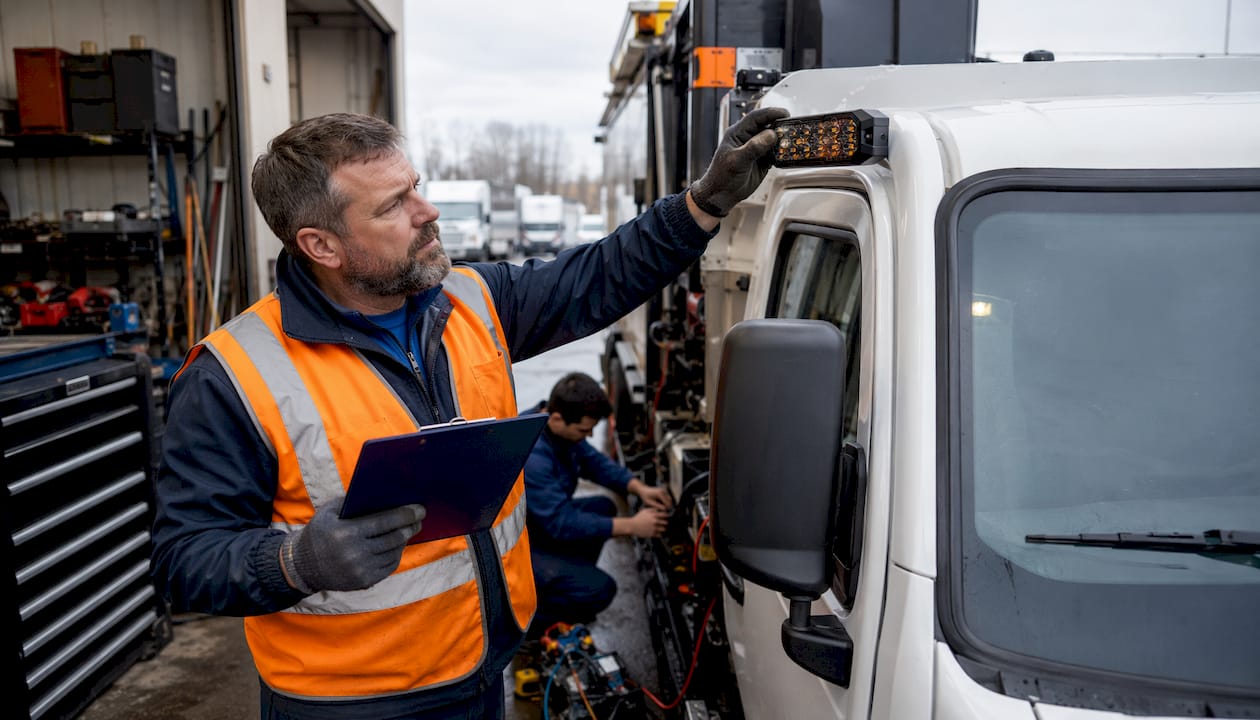


A loader backing into a live lane at dawn does not get a second chance. If the warning light is weak, mounted poorly, or buried under dust and snow, the risk lands on your operator, your crew, and everyone moving past the site. That is why construction vehicle strobes are not an add-on for looks. They are working safety equipment, and the difference between decent and duty-ready shows up fast in the field.
For contractors, municipalities, road crews, and heavy equipment operators, the real question is not whether to run warning lights. It is which setup gives you the visibility you actually need without creating install headaches, downtime, or compliance problems. Cheap lights can flash. That does not make them fit for real work.
What construction vehicle strobes need to do
On a construction vehicle, a strobe has one job - get noticed early and clearly in bad conditions. That sounds simple until you factor in snow, rain, road spray, dust, glare, daylight washout, and the fact that many machines do not present clean mounting surfaces like a standard pickup or van.
A proper warning setup needs enough intensity to cut through ambient light, enough spread to be seen from useful angles, and enough durability to survive vibration, washdowns, and long shifts. If a beacon is bright head-on but disappears from the side, that is a problem. If a surface mount cracks after a season on rough equipment, that is money burned.
This is where spec sheets matter, but only up to a point. Buyers should care about SAE ratings, weather resistance, housing quality, mounting method, and flash pattern control. They should also care about whether the light makes sense for the machine. A compact excavator working inside a site has different needs than a plow truck crossing public roads or a paver operating beside traffic.
Choosing construction vehicle strobes by application
The right setup depends on where the vehicle works and how much exposure it has to public traffic.
For machines that stay mostly inside controlled jobsites, a beacon or compact mini bar often covers the basics. You want strong 360-degree visibility, a mount that will stay put, and wiring that will not become a maintenance issue. On equipment with enclosed cabs, roof beacons are common because they keep the light above body lines and work debris.
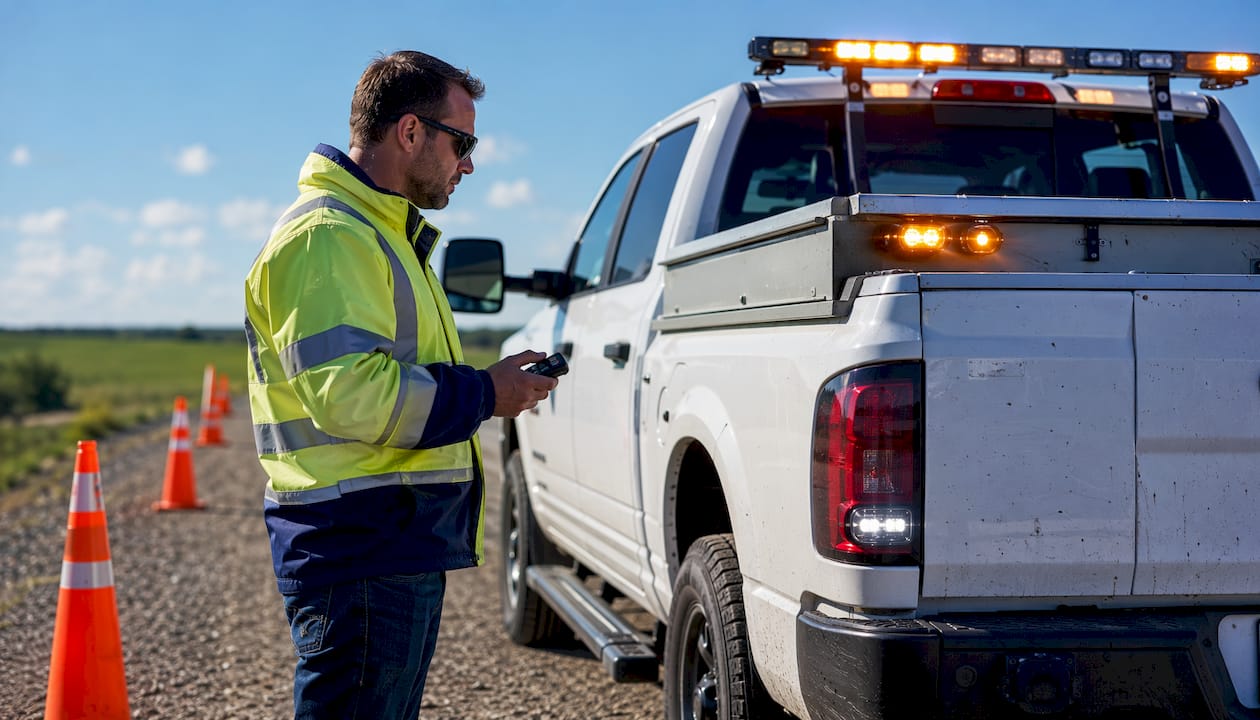
For vehicles working near live traffic, a single beacon may not be enough. A dump truck, pilot truck, service body, or road maintenance vehicle usually benefits from a more complete warning package. That can mean a light bar on top, directional warning at the rear, and supplemental surface mounts at key corners. The goal is not just to flash. It is to communicate vehicle presence and movement from multiple angles.
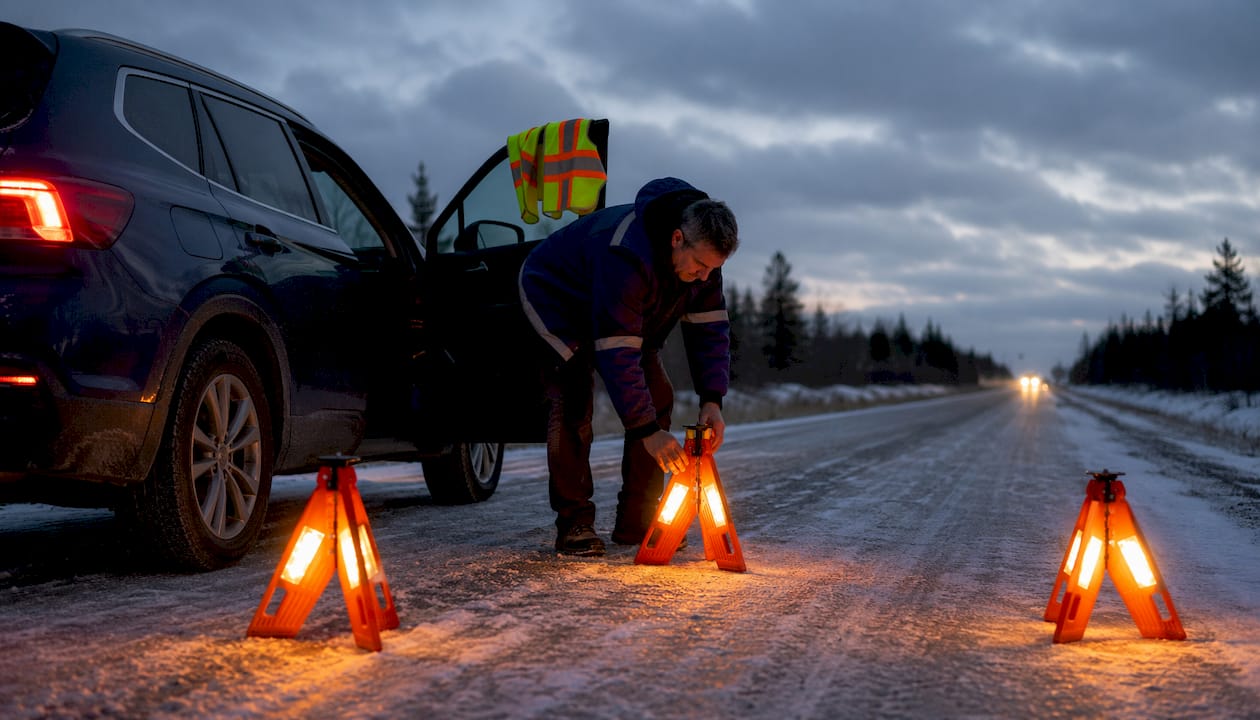
Snow and road service fleets sit in their own category. Winter reduces contrast, covers lenses, and shortens reaction time. In those conditions, height, lens design, and output become even more important. So does serviceability. If the light is hard to clear, hard to replace, or mounted where ice buildup kills performance, it will let you down right when it matters most.
Beacon, mini bar, or surface mount?
A lot of buyers start by asking which product type is best. The honest answer is that each has a place.
Beacons are a solid fit when you need simple, recognizable warning output with a smaller footprint. They work well on loaders, tractors, skid steers, compact service units, and other equipment where roof space is limited. A quality beacon is straightforward, effective, and often easier to maintain than a larger setup.
Mini bars give you more output and a broader warning signature. They make sense for pickups, utility bodies, municipal units, and contractor trucks that spend real time near moving traffic. If the vehicle operates roadside, especially in mixed light conditions, the added visibility is usually worth it.
Surface mounts are best used as support lights, not magic bullets. They help fill blind angles, increase side warning, and improve rear visibility. They are especially useful when body shape, racks, toolboxes, or equipment attachments block the main warning device. On many fleets, the best result comes from combining a primary roof-mounted light with well-placed auxiliary strobes.
Mounting matters more than most buyers think
Even strong construction vehicle strobes can perform badly if they are mounted in the wrong place.
Height helps, but height alone does not solve everything. A roof beacon hidden behind equipment, signage, or a raised body can lose visibility from critical angles. Likewise, low-mounted lights can get coated in mud, salt, and slush within hours. You need to think about the vehicle in motion, not just parked in the yard.
Ask where the machine is approached from. Consider whether workers, passing drivers, or spotters will see the light head-on, from the side, or from behind. Then look at what blocks that line of sight. Mirrors, lift arms, racks, tailgates, spreaders, and tool compartments all affect visibility.
Mounting method also matters. Magnetic mounts are convenient, but they are not always the right answer for rough-duty equipment. Permanent mounts and secure bracket installations usually hold up better under vibration, weather, and extended use. If the vehicle is bouncing across uneven ground all day, convenience should not outrank retention.
Brightness is not the whole story
There is a bad habit in this market of selling warning lights on raw flash and not much else. More output sounds good, but there is a trade-off.
If a light is painfully intense at close range, it can create glare for nearby workers and operators, especially at night or in snow. If the flash pattern is chaotic or distracting, it may get attention without communicating clearly. Useful warning lighting should be noticeable, not blinding.
Optics and flash pattern design are what separate professional gear from novelty-grade imports. Good optics control the light so it reaches where it needs to go. Good flash patterns create urgency without turning the vehicle into visual noise. This is one reason serious fleets stay away from bargain-bin lighting. It is not snobbery. It is operational common sense.
Compliance, durability, and the Canadian reality
If your vehicles operate on public roads or support traffic control work, compliance is not optional. Buyers should look at applicable SAE ratings, provincial requirements, and any fleet or municipal standards that govern colour, intensity, and use. Amber remains the common choice for construction and service applications, but legal use still depends on vehicle type and duty.
Durability is just as important. Canadian fleets deal with freeze-thaw cycles, road salt, vibration, and long winters. A light that works fine in fair weather can fail fast in real service. Housings need to resist impact. Seals need to hold. Wiring and connectors need to survive moisture and corrosion. If the product is cheap enough to be disposable, it usually will be.
This is where buying from a supplier that understands real fleet use matters. Strobe My Ride built its reputation on gear meant for roadside duty, not Amazon junk dressed up with flashy photos. For professional buyers, that difference saves time, warranty grief, and repeat installs.
What to avoid when buying construction vehicle strobes
The biggest mistake is buying only on price. Low-cost imports often look fine on a bench test and fail once they meet vibration, weather, and daily use. The next mistake is under-lighting the vehicle. A single cheap beacon on a large unit working near traffic is often more wishful thinking than a safety plan.
Another common issue is mixing random components without thinking through control and synchronization. If the flash patterns fight each other, or the operator cannot easily activate the system, performance drops. Warning equipment should be easy to use under pressure. If the switch layout is clumsy, people will avoid using it properly.
Finally, do not ignore service after the sale. If you are outfitting multiple units, replacing failed lights one by one with mismatched products gets expensive and messy. Standardizing by application makes installations cleaner, maintenance easier, and future replacements faster.
Building a setup that fits the fleet
The best warning package is the one that matches the vehicle’s actual work. A backhoe on private property, a roadside mower, and a traffic control pickup should not all be treated the same. Good buyers look at environment, duty cycle, public exposure, mounting options, and operator workflow before they spec lights.
That approach usually leads to fewer gimmicks and better results. It may mean a single Class 1 beacon on one machine and a full light bar with rear warning on another. It may also mean spending a little more up front to avoid replacing weak gear halfway through the season.
Construction vehicle strobes are not complicated, but they are easy to get wrong when the buying decision is rushed. If the light is bright, durable, compliant, and mounted where it can actually do its job, you are in good shape. If not, the invoice may be cheap, but the risk is not.
When you spec warning lights, think like the person standing in blowing snow beside the lane closure, not like someone scrolling for the lowest price. That is usually where the right answer shows up.