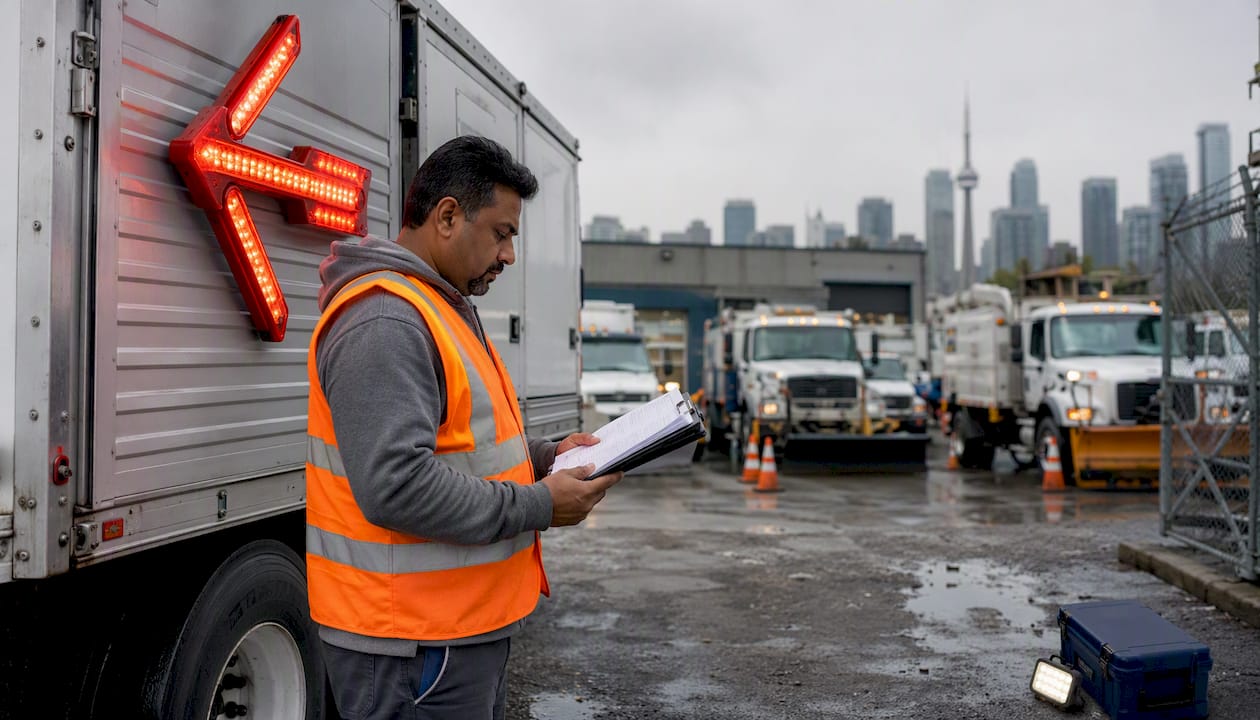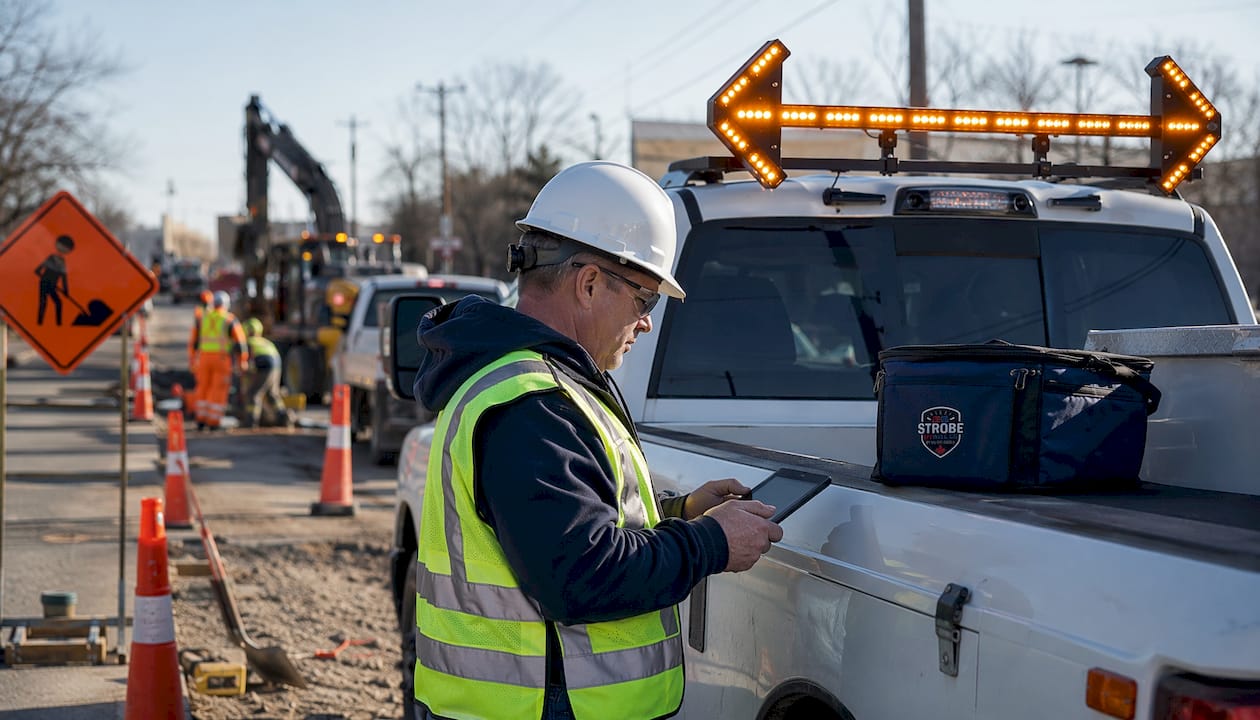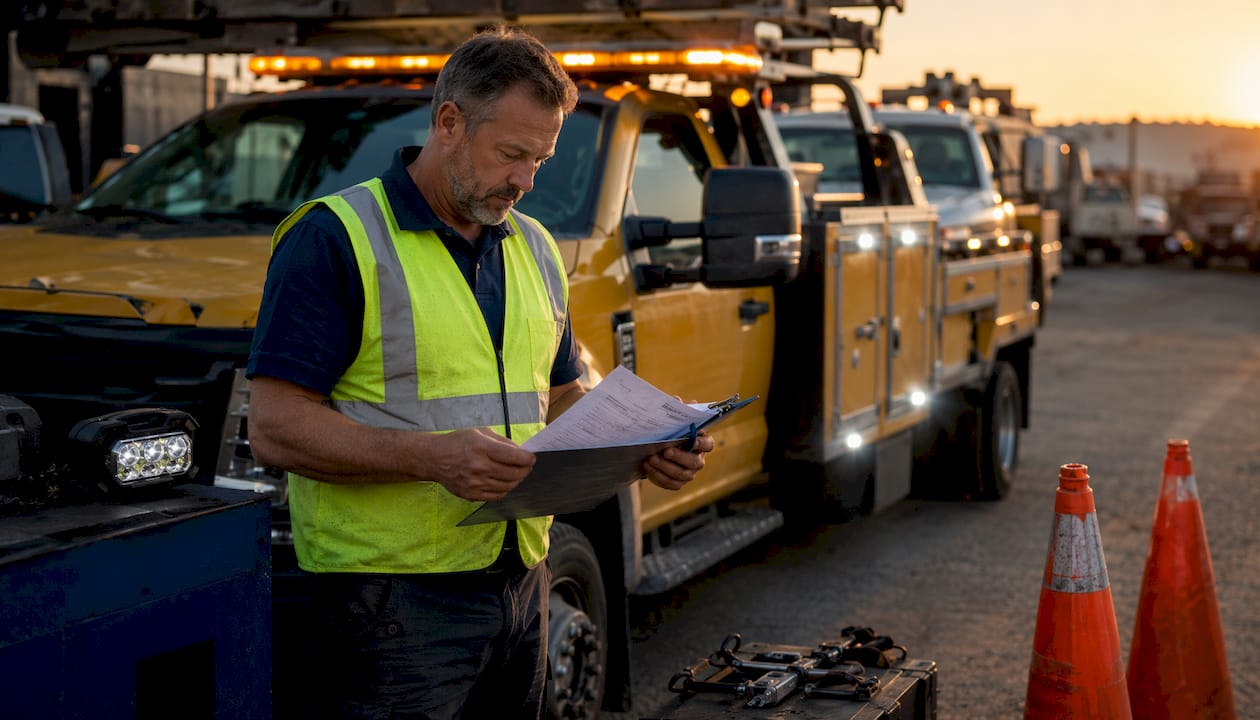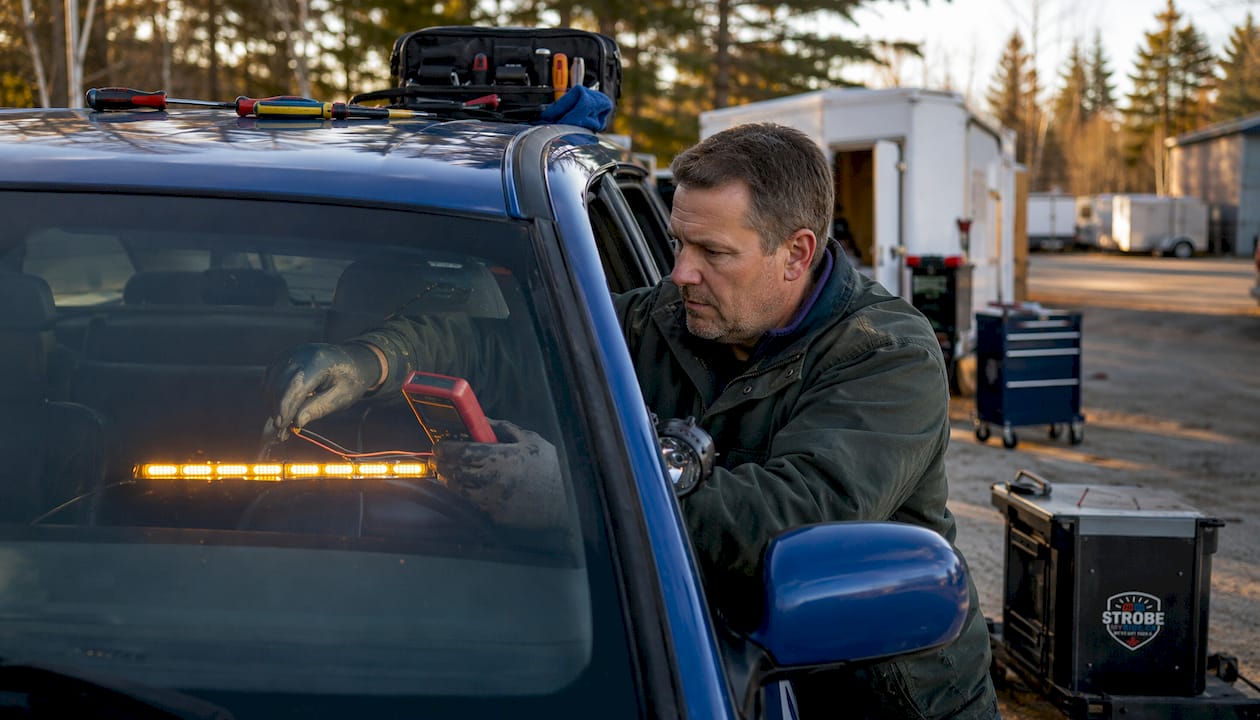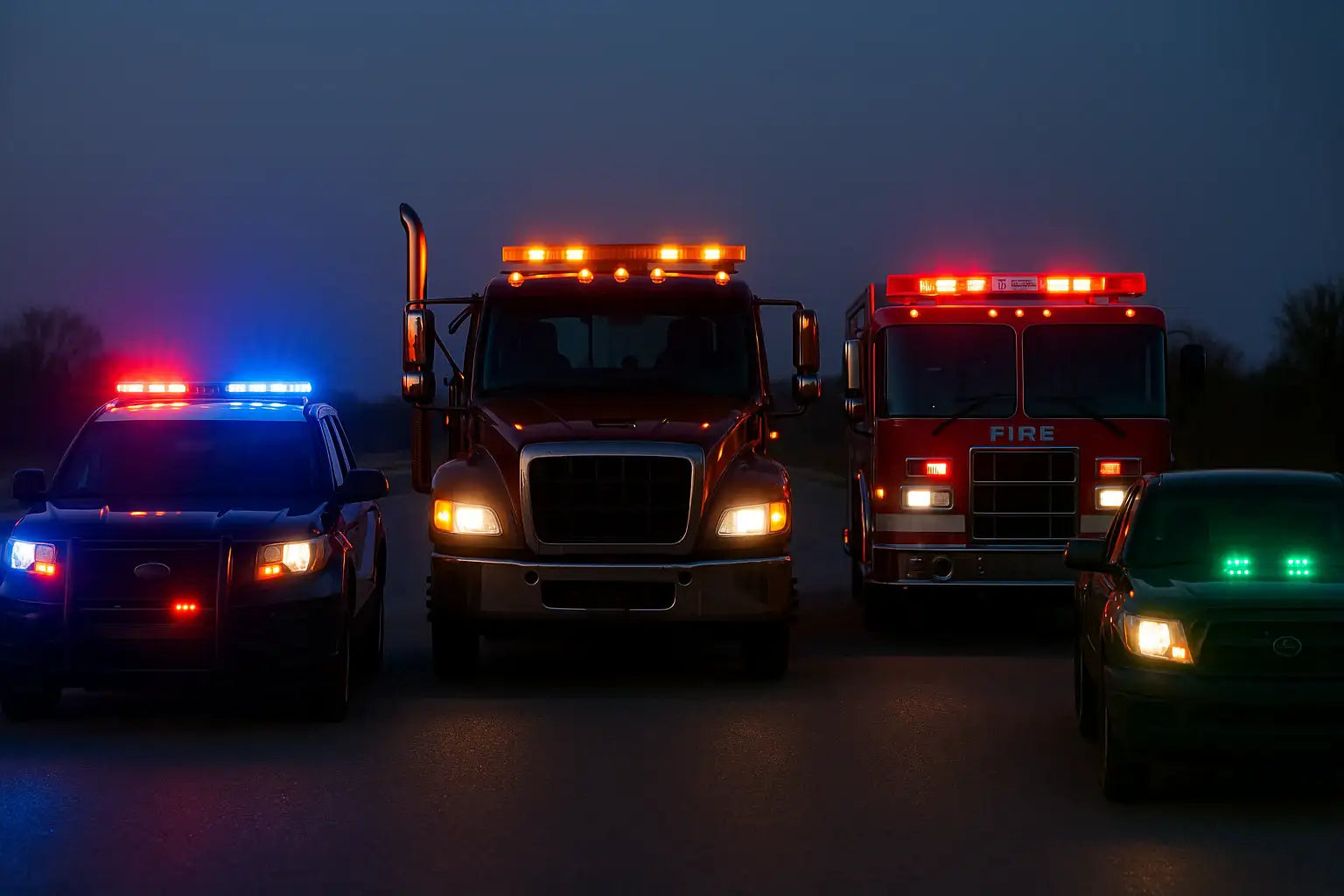

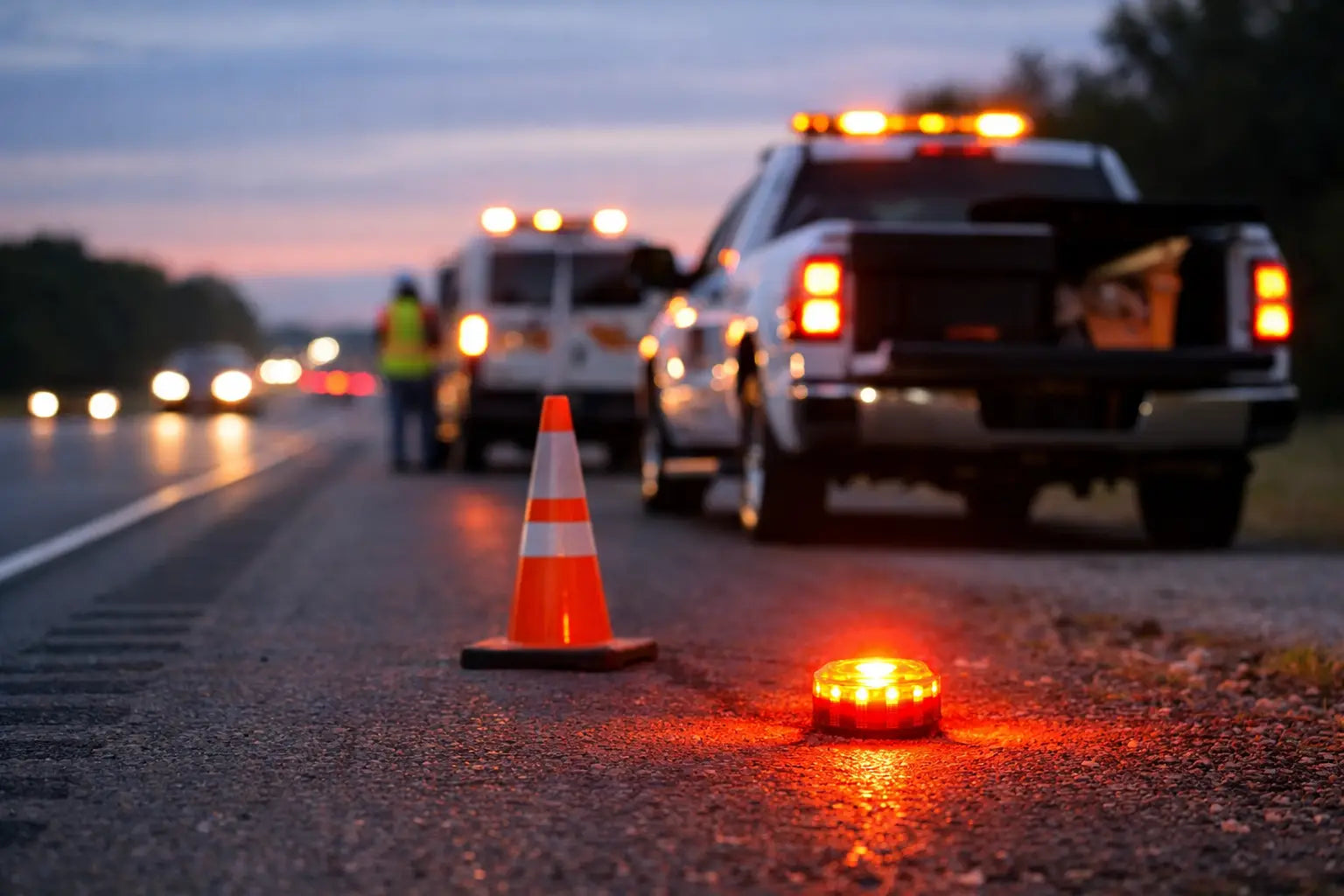
A truck on the shoulder at 2 a.m. in blowing snow does not get a second chance at visibility. If your crew works live lanes, gravel shoulders, municipal streets, or winter roads, this roadside safety lighting guide is about one thing - being seen early enough to keep people alive.
Too many buyers still treat warning lights like an accessory line item. They are not. They are part of your traffic control, your worker protection plan, and your vehicle uptime. Cheap lights fail when the weather turns, weak flash patterns get lost in daytime glare, and the wrong mounting setup leaves blind spots exactly where an approaching driver needs to see you.
What a roadside safety lighting guide should actually cover
A real roadside safety lighting guide is not just a list of products. It should help you match lighting to the work, the vehicle, and the legal environment you operate in. A tow truck running highway recoveries has different visibility demands than a parks truck doing shoulder work in town. A snow contractor in Northern Ontario faces different conditions than a municipal inspector working daylight callouts in the Lower Mainland.
That is why lighting selection always starts with the job. You need to think about approach angles, traffic speed, weather, time of day, and how long the vehicle sits exposed. The faster the traffic and the worse the conditions, the less room there is for compromise.
Start with the hazard, not the catalogue
If the vehicle stops near moving traffic, lighting has to do three jobs at once. It needs to warn drivers from distance, define the vehicle footprint up close, and support the crew working around it. Those jobs often require different light types.
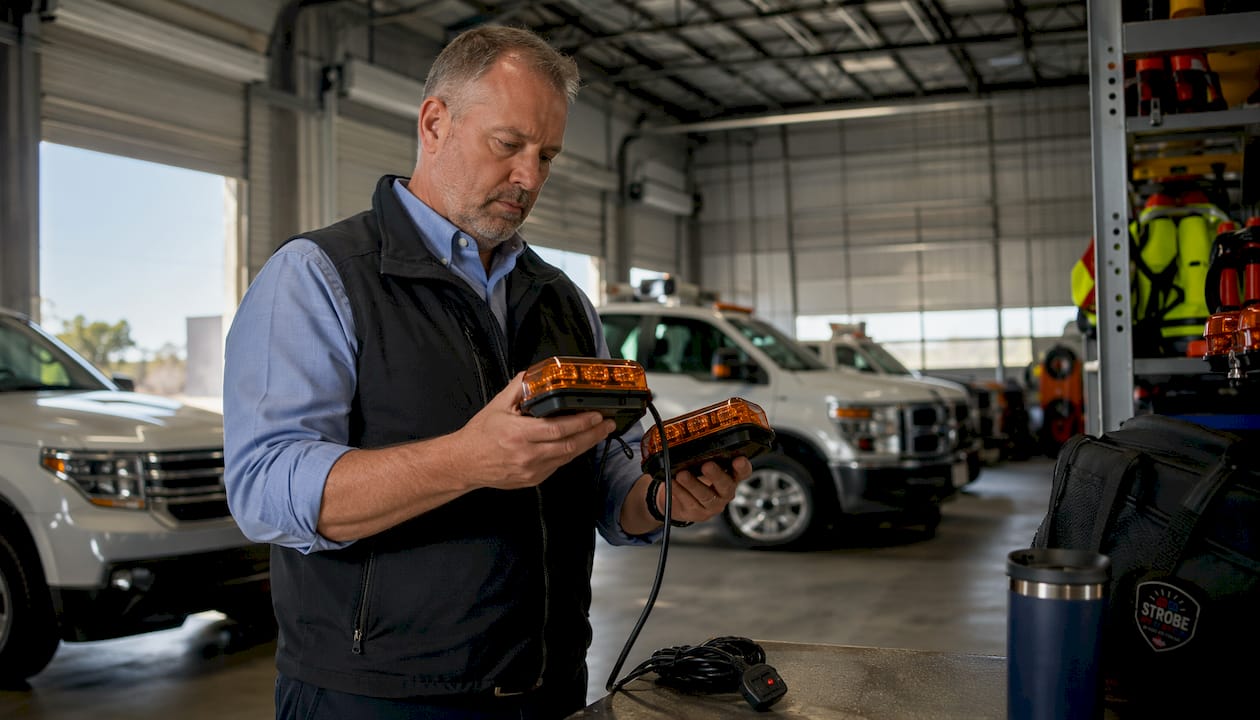
Primary warning comes from high-output beacons, mini bars, or full-size light bars. These grab attention at range and tell traffic that something is happening ahead. Secondary warning usually comes from surface mounts, grille lights, rear warning, and side markers that fill in the dead angles. Task lighting or scene lighting is different again. It helps your crew see what they are doing, but it should never wash out your warning pattern or blind oncoming traffic.
This is where a lot of installs go sideways. Buyers focus on maximum flash and forget balance. A bright front end with weak side warning is a problem when crews enter and exit on the shoulder. Strong rear warning with no directional traffic advisor is a missed opportunity on lane closures and recovery scenes. More light is not always better. Better placement is better.
Front, side, and rear coverage all matter
Roadside incidents are rarely viewed from one angle. Drivers approach from the rear, pass on the driver side, and sometimes meet the vehicle head-on around curves or hills. Your setup has to work from all those perspectives.
Front-facing warning matters for service calls, median work, wrong-way exposure, and vehicles that stage facing traffic. Grille lights, visor lights, dash lights, and front bar modules can all play a role, but windshield glare, headliner angle, and vehicle tint can affect output. Internal lights can be useful, though they are not a perfect substitute for external mounting on active-duty work trucks.
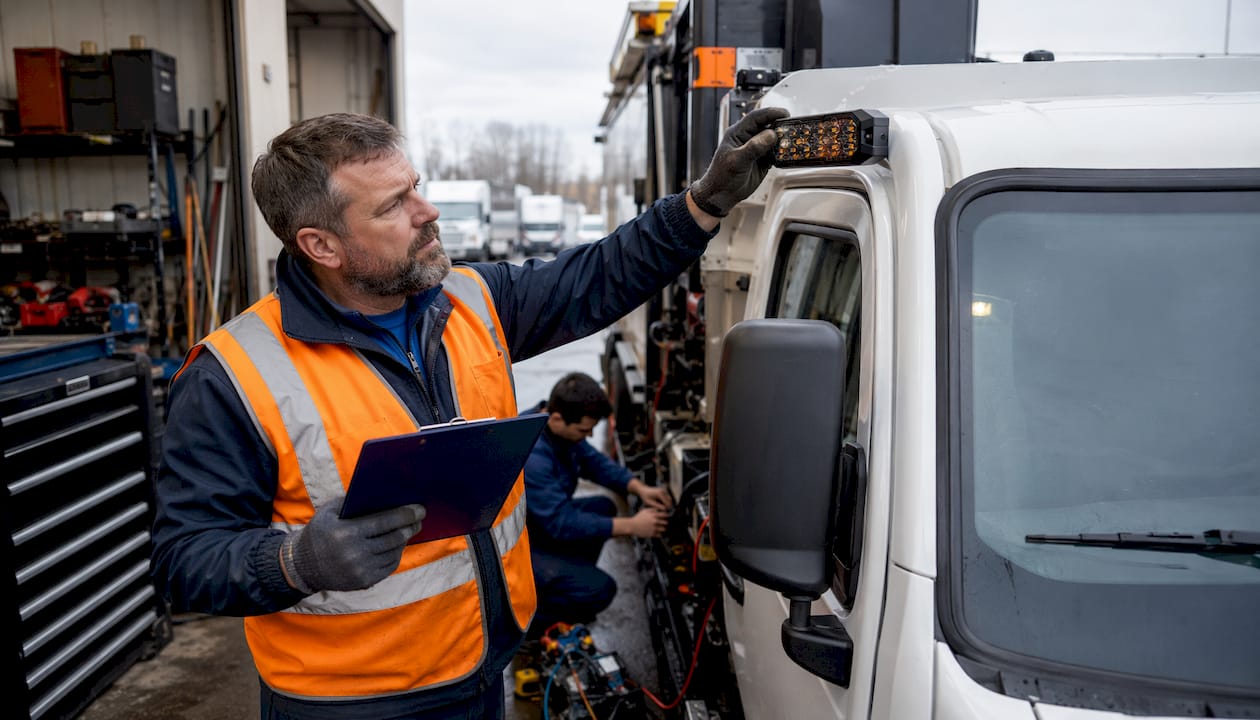
Side warning gets ignored until someone nearly clips a worker stepping out into the buffer. Side-facing surface mounts, bar corners, and fender or body-mounted modules help show the full footprint of the vehicle. On pickups, cube vans, and service bodies, side coverage often makes the biggest safety difference because that is where crews load gear and move around the unit.
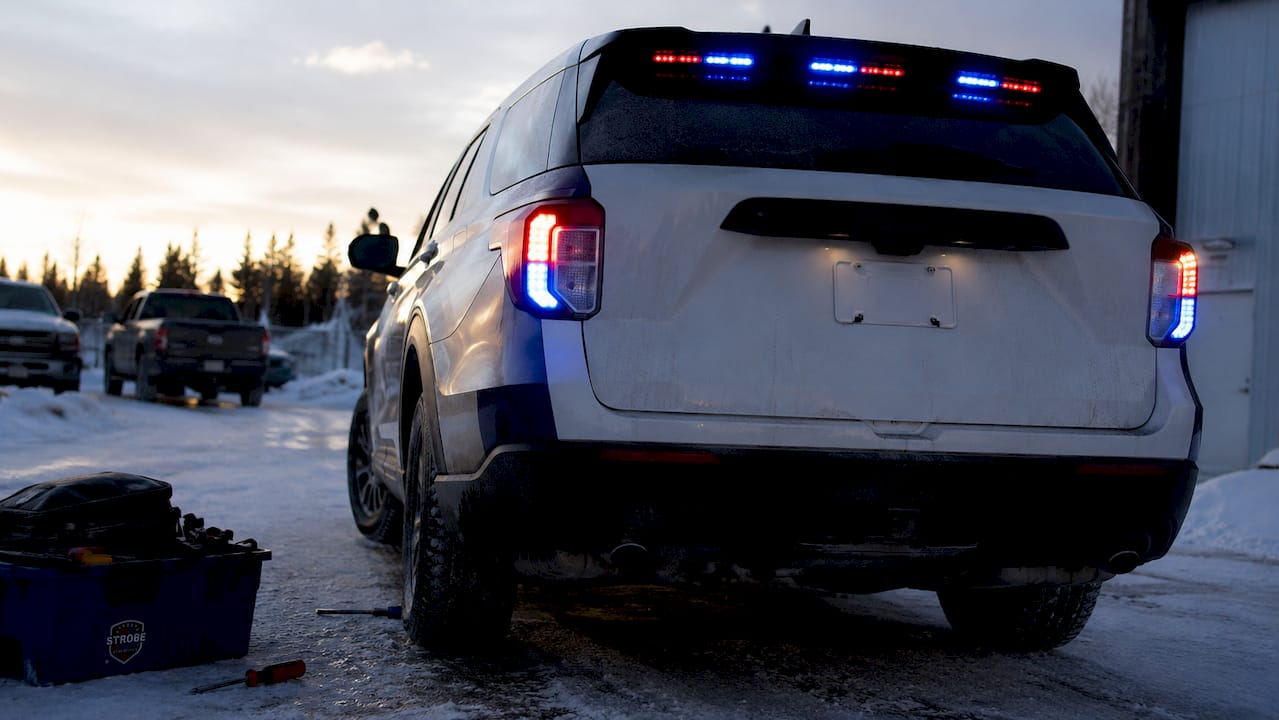
Rear warning is critical on shoulder stops and lane-edge work. This is where approaching traffic gets its first clear message. Rear bars, tailgate modules, hideaways, and traffic advisors can help slow and guide traffic before it reaches your people. For higher-risk operations, a directional function is not a luxury. It gives drivers a clearer cue about where to move.
SAE class, compliance, and why it affects buying
A warning light that looks bright in a product photo is not the same as a light built to recognized performance standards. For professional buyers, SAE class matters because it gives you a baseline for output and intended use. If you are buying for fleet service, municipal use, towing, snow operations, or roadside response, Class 1-rated products are often the right place to start.
That said, compliance is not one-size-fits-all. Provincial requirements, municipal specs, and specific use cases can vary. Some fleets need amber only. Others may require a mix based on role, authority, or emergency designation. If you spec lighting without checking the operating environment, you can end up with gear that is either underbuilt for the job or wrong for the application.
The practical move is simple. Buy compliant equipment that matches the vehicle role and the jurisdiction. Guessing costs more later, especially when you are refitting a whole unit after install.
Built for Canadian weather or built to fail
Canadian roadside work is hard on equipment. Salt, slush, wash cycles, vibration, freeze-thaw swings, and long idle hours kill low-grade lighting fast. This is why build quality matters more than flashy marketing.
Look at housing strength, lens quality, sealing, wiring, connectors, and mount hardware. A good light is not just bright on day one. It stays bright after a winter of spray and road grime. It resists moisture intrusion, keeps mounting tension, and does not turn into a service headache because of weak brackets or bargain wiring.
There is also a downtime cost that buyers sometimes underestimate. When a warning light fails, the expense is not just the replacement unit. It is the lost truck time, the labour to diagnose it, and the risk exposure while the vehicle runs with reduced visibility. That is why not all cheap pricing is actually good value.
Choosing the right setup for your vehicle type
A half-ton pickup used for inspections does not need the same package as a plow truck or a heavy wrecker. Vehicle size, roofline, electrical capacity, and duty cycle all affect what makes sense.
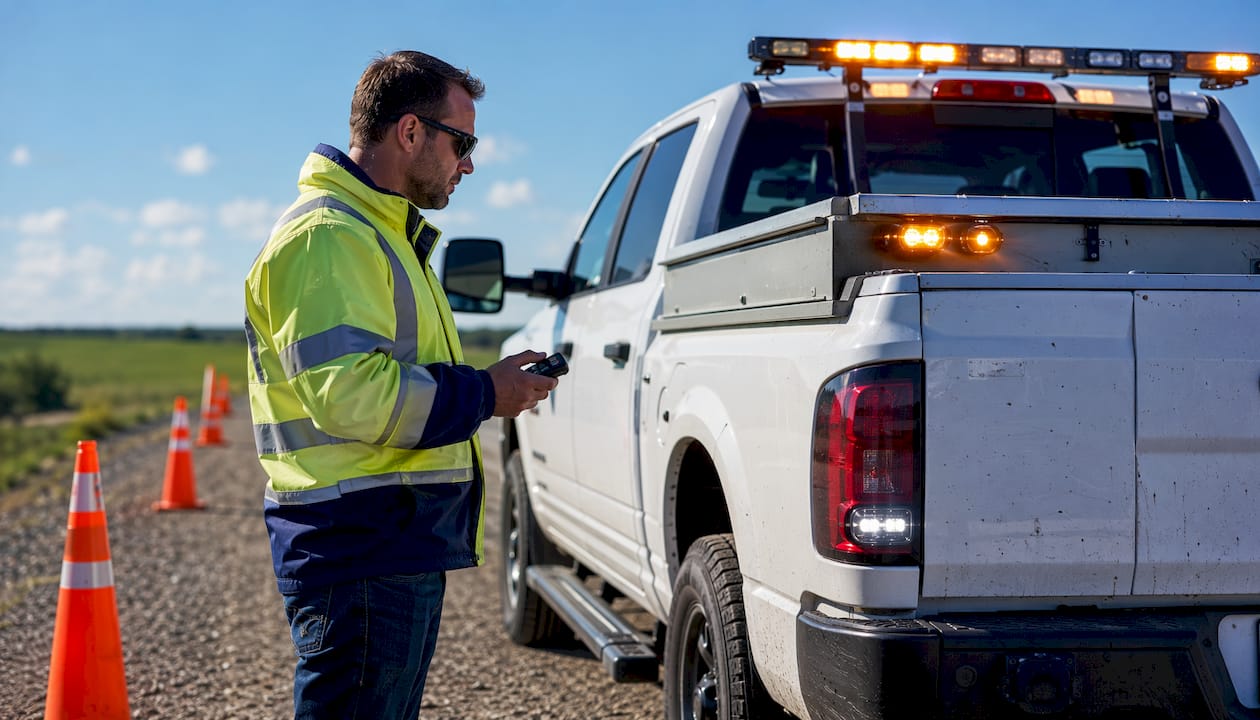
For pickups and SUVs, low-profile bars, visor or dash lights, grille modules, and a few well-placed surface mounts can build solid 360-degree warning without turning the install into a wiring mess. For service bodies and utility trucks, you usually have more room to add side and rear modules where they matter most. Tow trucks and highway units often benefit from stronger rear packages and directional traffic control, especially if they spend long periods exposed to moving traffic.
If the vehicle works nights or in rural areas, scene lighting may deserve more attention. If it spends most of its time in urban traffic, compact high-output warning with smart flash pattern coordination may be the better investment. It depends on how the truck is used, not just what fits on the roof.
Flash patterns, controllers, and the operator factor
Brightness alone does not create safer scenes. Pattern selection and control matter. A chaotic mix of unsynchronised modules can be harder for drivers to interpret, especially in rain, snow, or dense urban lighting. Coordinated patterns generally look more professional and communicate the hazard more clearly.
Operators also need controls that make sense under stress. If the driver cannot quickly switch between full warning, rear-only, traffic advisor, or scene lighting, the system is working against the crew. Good controllers reduce fumbling and help standardise how vehicles are deployed across the fleet.
There is a trade-off here. More advanced systems give you better control, but they also require better planning during install. If the vehicle changes hands often or is maintained by multiple techs, keep the setup straightforward enough that it will still be used properly six months later.
Common buying mistakes that cost fleets money
The first mistake is under-specifying rear and side coverage. The second is buying mixed-quality components that fail at different rates and create constant maintenance issues. The third is treating installation as an afterthought.
Even a good light can perform badly if it is mounted in a blocked location, wired poorly, or paired with a controller that the operator hates. Fleet buyers should think in systems, not single SKUs. The bar, the modules, the controller, the flasher, the mounts, and the wiring all affect real-world performance.
Another common mistake is buying novelty-grade imports for work trucks. They may save money up front, but they usually lose the argument on durability, output, and service life. If the vehicle earns money on the road or protects workers on live traffic scenes, consumer-grade lighting is the wrong tool.
A practical roadside safety lighting guide for fleet decisions
If you are reviewing or upgrading a fleet, start by looking at your highest-risk vehicles first. Which units stop closest to live traffic? Which ones work in snow, rain, darkness, or high-speed corridors? Which crews are on the shoulder most often? Those vehicles should get the strongest and most compliant packages.
From there, build a standard around duty type. That makes future installs faster, parts easier to stock, and training more consistent. It also helps avoid the patchwork problem where every truck ends up with a different switch layout and different warning profile.
For Canadian buyers, local inventory and support matter more than people admit. If a truck is down and you are waiting on cross-border delays, that is not just annoying. It is operational drag. Strobe My Ride built its lineup around that reality - professional-grade warning lighting, Canadian stock, and gear meant for real roadside work rather than shelf-filler accessories.
The right lighting package is not about making a truck look busy. It is about giving tired drivers one clear message, early enough to react. When your crews work inches from traffic, that margin matters more than any spec sheet ever will.