


An amber white combo pairs long‑range white illumination with amber’s superior penetration in fog, dust and snow, giving one fixture two distinct jobs. It suits mixed‑condition operators, including fleets, off‑roaders and winter maintenance crews, who want a single coordinated lighting strategy instead of swapping equipment for every weather change. A 2024 field study on snowplow lighting backs this up with real reaction‑time data.
TL;DR:
- Amber light penetrates particulate matter more effectively than white light, making it superior in fog, snow, and dust conditions.
- White light produces higher raw lumen output, which favors open, high-speed driving on clear roads but can be less effective in heavy snow or fog.
- Independent control over amber and white channels provides greater flexibility, while beam pattern and housing durability are key for long-term reliability.
- Proper placement involves mounting white lights for forward visibility and amber lights for peripheral or low-angle conditions, avoiding beam overlap.
- Fleets benefit from dual-color fixtures to reduce wiring and maintenance, with specific product options designed for different roles and vehicle types.
What is an amber white combo, and why do the two colours behave differently?
An amber white combo works because amber and white light interact with the atmosphere in fundamentally different ways. Amber wavelengths, typically in the 590 to 625 nanometre range, scatter less when they hit airborne particles like snow, fog and dust, which is why amber light stays more usable in low visibility. White light sits at a broader, blue‑richer colour temperature and produces higher raw lumen output, which is exactly what helps on clear, high‑speed stretches where distance matters more than penetration.
The catch is that raw lumens and usable light are not the same thing. A white beam rated at a high lumen figure can actually perform worse than amber in heavy snow, because much of that light bounces straight back at the driver instead of reaching the road. This is the core optical tradeoff behind amber vs white light bars for snow wheeling, and it explains why serious operators run both colours rather than picking one.
A few practical points worth remembering when comparing products:
- Amber’s longer wavelength penetrates particulate matter more effectively than blue‑rich white light.
- White delivers greater raw output, which favours open, high‑speed driving.
- Marketing terms like “warm white” or “amber” are not reliable specs on their own.
Pro Tip: Check the manufacturer’s stated wavelength (nm) or colour temperature (K) on the product page rather than trusting a colour name in the listing title. Two lights both called “amber” can behave quite differently on the road.
When should you use amber, white, or both together?
Matching colour to condition is mostly about matching the light’s strength to the interference it has to fight through. A few common scenarios:
- Snowplow and winter maintenance work. Amber cuts through blowing snow better than white; many operators pair it with white for approach visibility.
- Dust or debris trails. Amber again outperforms white here, since dust scatters blue‑rich light in the same way snow does.
- Coastal or low‑lying fog. Amber is the better default; white tends to reflect off moisture and reduce your own visibility.
- Clear roads at highway speed. White wins, since raw distance and contrast against the pavement matter more than particulate penetration.
Running both colours at once, rather than switching between them, avoids the eye fatigue that comes from constant colour changes, but it also means managing glare carefully. Simultaneous operation makes sense for warning and signalling roles; switching makes more sense when a single beam is doing double duty as a work light and a travel light.
A 2024 naturalistic field study tested 384 human reaction trials alongside a 454‑participant survey and found that amber‑only lighting produced slower reaction times than amber‑white or amber‑blue combinations. Survey respondents showed a preference for amber‑white setups under winter conditions. That is a meaningful data point, but it is not a blanket safety guarantee. It supports the case for a hybrid approach without proving that any single product eliminates risk.
What features actually matter when buying dual‑colour lighting?
Most of the difference between a good amber white combo and a disappointing one comes down to four features, not colour alone.
- Independent channel control. Lights wired so amber and white run on separate, current‑regulated channels give you far more flexibility than fixtures where both colours share the same circuit and can’t be operated independently.
- Beam pattern. Spot beams throw light farther down the road; flood beams spread wider for fog‑zone or peripheral coverage; combo patterns blend the two for general‑purpose use.
- Ingress protection and heat management. An IP rating that matches outdoor exposure, paired with a housing that dissipates heat well, has more to do with long‑term reliability than any advertised lumen number.
- LED package quality. Chip‑scale package (CSP) or chip‑on‑board (COB) LEDs generally produce more even output and hold up better under sustained heat than cheaper surface‑mount assemblies crammed onto a shared board.
None of these specs are consistent across every product on the market, so verify compatibility, permitted use and exact ratings on the individual product page before buying. If a listing doesn’t state the information you need, that is a reason to ask before you order, not to assume.
Where should amber and white units be mounted?
Placement matters as much as the light itself. The general principle practitioners follow is to separate functions by height and angle: put your primary white light where it has the clearest forward line of sight, and position amber where it needs to catch peripheral or low‑angle conditions.
Common mounting roles include:
- A roof or bumper‑mounted white bar for long‑range forward illumination.
- A‑pillar or cowl‑mounted amber pods aimed wider, covering ditch lines and fog‑prone edges.
- Amber beacons on slow‑moving equipment, prioritizing visibility to other traffic over forward throw.
Avoid pointing an amber and a white unit at the exact same focal point, since overlapping beams can wash out the contrast each colour is supposed to provide. Vehicle‑specific mounting constraints vary, so check individual product pages or speak with an installer before finalizing placement.
How Strobe My Ride approaches amber‑white lighting
Strobe My Ride is a Canadian‑owned supplier of LED warning lights, work lights and vehicle‑lighting accessories, stocked in Ottawa and shipped across Canada. The catalogue includes several SKUs built specifically around dual‑colour function rather than single‑colour output, which matters for fleets that would rather run one coordinated system than juggle mismatched fixtures.
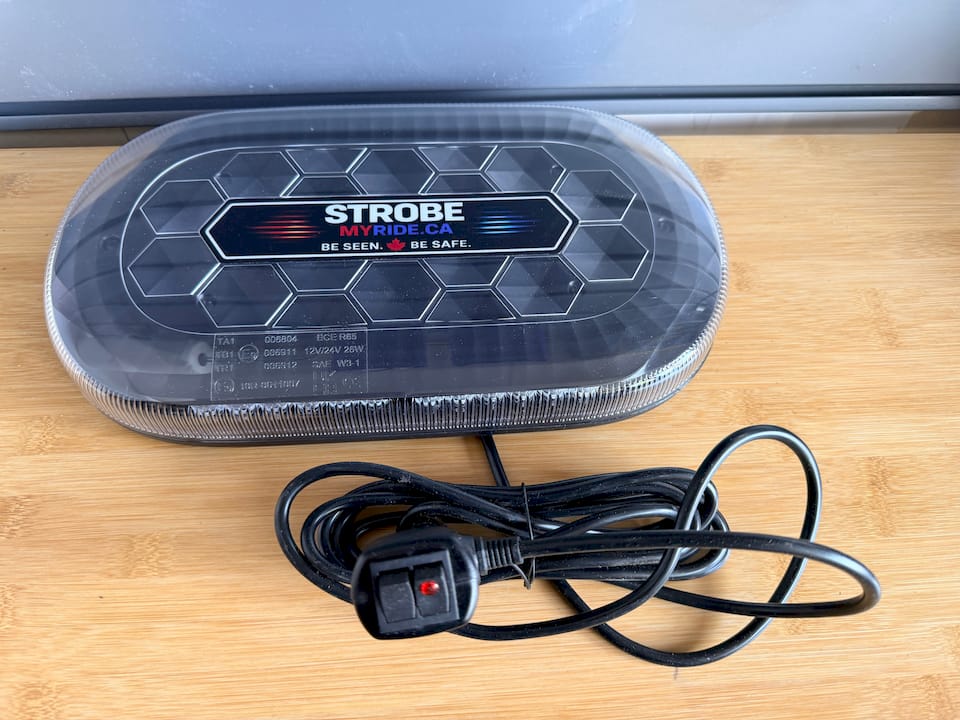
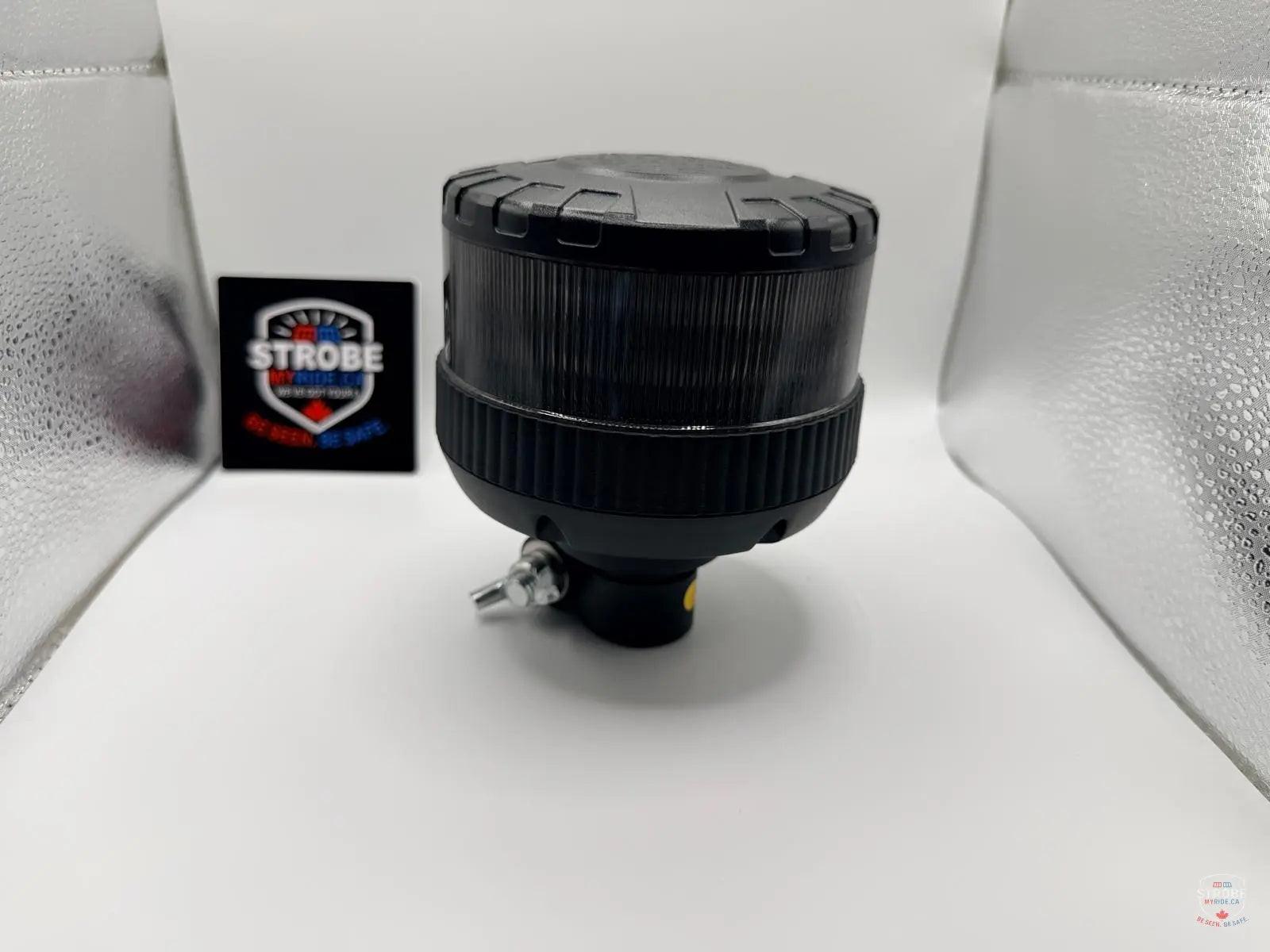
Three products in the catalogue illustrate different roles an amber white combo can fill. The Fleet Bar Mini Duo is a compact mini light bar suited to low‑profile forward or marker applications where a toggle between amber and white adds versatility without adding bulk. The Fleet Beacon Mini Tractor (Amber/White Duo) is a DIN‑style beacon aimed at slower‑moving equipment, where visibility to surrounding traffic takes priority over forward throw. The Signal SM Flex is a flexible surface mount strobe suited to vehicles or equipment where mounting location and role need to adapt from one job to the next.
Fleets often gravitate toward dual‑colour units for a practical reason: fewer fixtures doing more jobs means less wiring, less clutter and fewer parts to maintain across a vocational vehicle. Before ordering, confirm certified specs, permitted colours and vehicle compatibility directly on each product page, since ratings vary by SKU and jurisdiction.
Products to consider from Strobe My Ride
If the scenarios above sound familiar, the buying checklist points toward specific products rather than a generic search. For low‑profile forward or marker applications where you want amber and white in one compact housing, the Fleet Bar Mini Duo is built around that Class 1 SAE mini light bar format.
For slow‑moving equipment like tractors or work vehicles that need to be seen from a distance in mixed conditions, the Fleet Beacon Mini Tractor Amber/White Duo is designed around that exact warning role.
For operators who need mounting flexibility across different vehicles or job sites, the Signal SM Flex surface mount strobe adapts to amber or white configurations depending on setup.
Strobe My Ride stocks these products in Ottawa for shipping across Canada. If you’re outfitting a fleet and want help matching SKUs to your specific vehicles and conditions, review the full lighting collection or reach out directly for fleet‑specific recommendations. You can also read more on amber warning lights for work trucks or dedicated snowplow warning light guidance as you plan a setup.
Sources
The snowplow lighting field study supports amber‑white performance claims for winter conditions. Transport Canada provides general vehicle safety‑standards context. For the optics behind wavelength and scatter, see the optical engineer’s verdict on amber vs white light bars.


