

What are surface mount strobe lights and where do they fit in Canadian fleets?
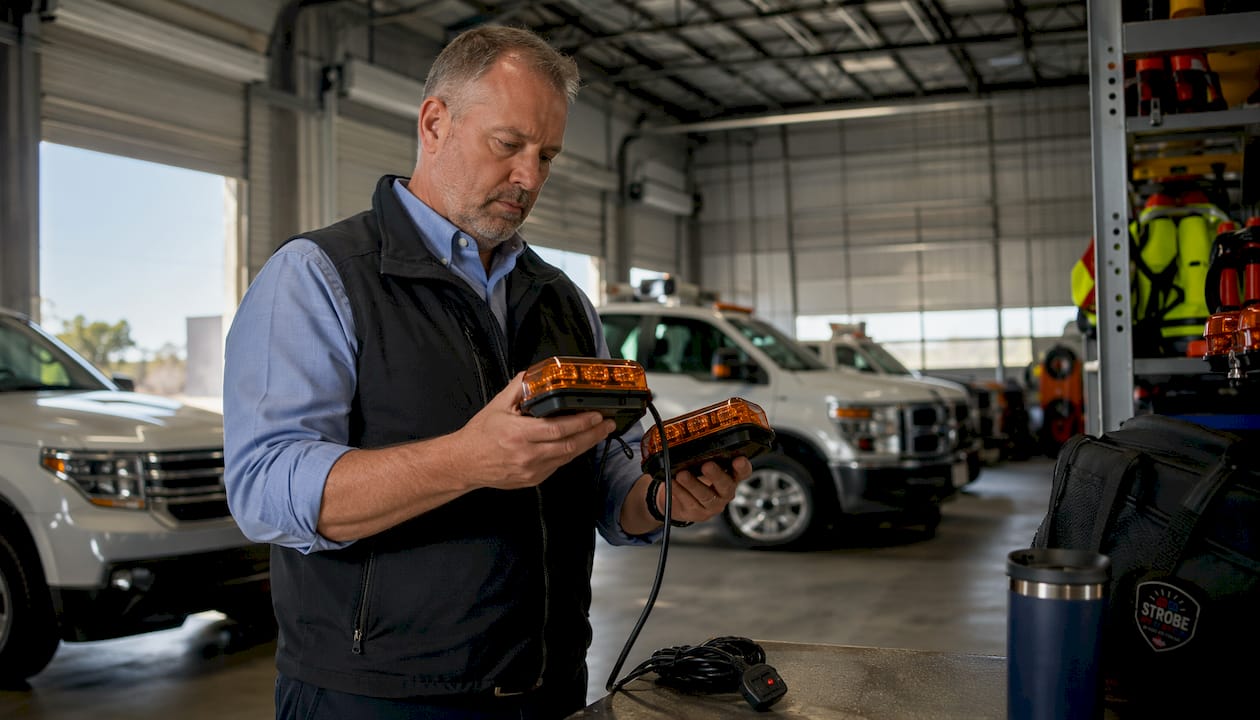
Surface mount strobe lights are compact, high-intensity warning lights designed to attach directly to a flat vehicle surface, whether a roof panel, bumper fascia, running board, or cab corner. Unlike light bars that span the full roofline, these units sit flush or near-flush against the vehicle body, making them practical for operators who need visible warning output without the aerodynamic drag or height restrictions of a full bar.
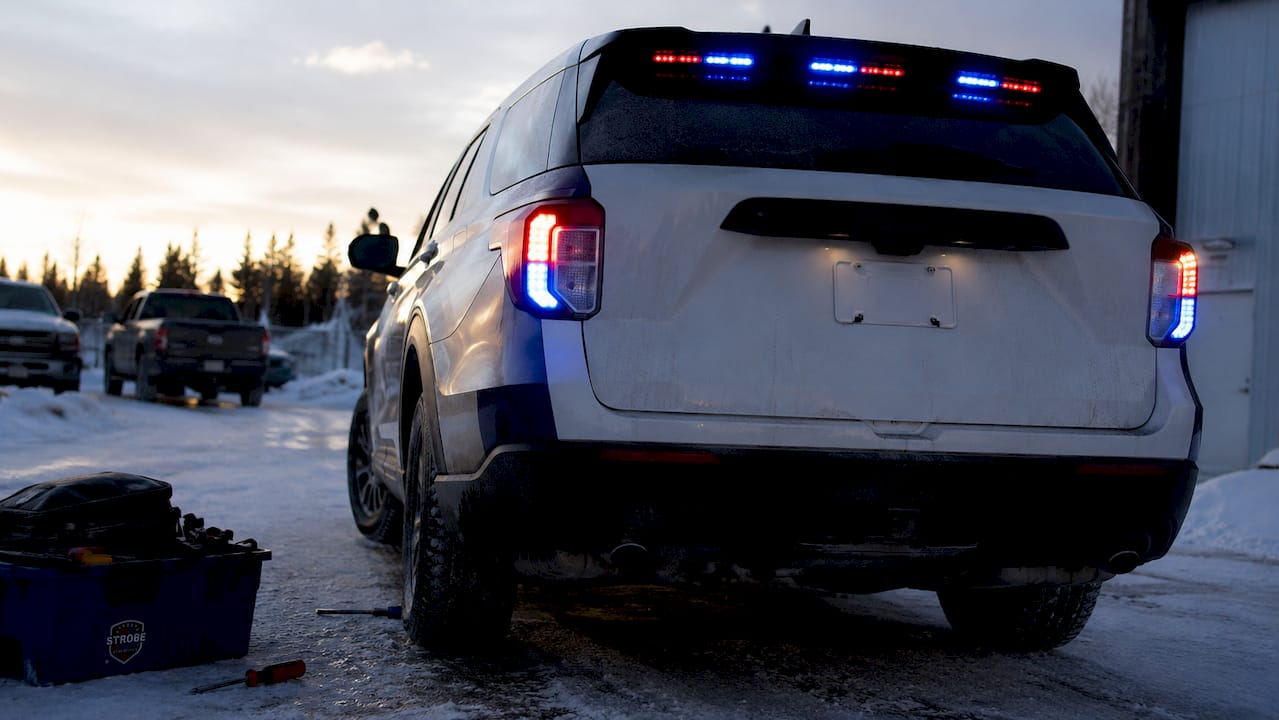
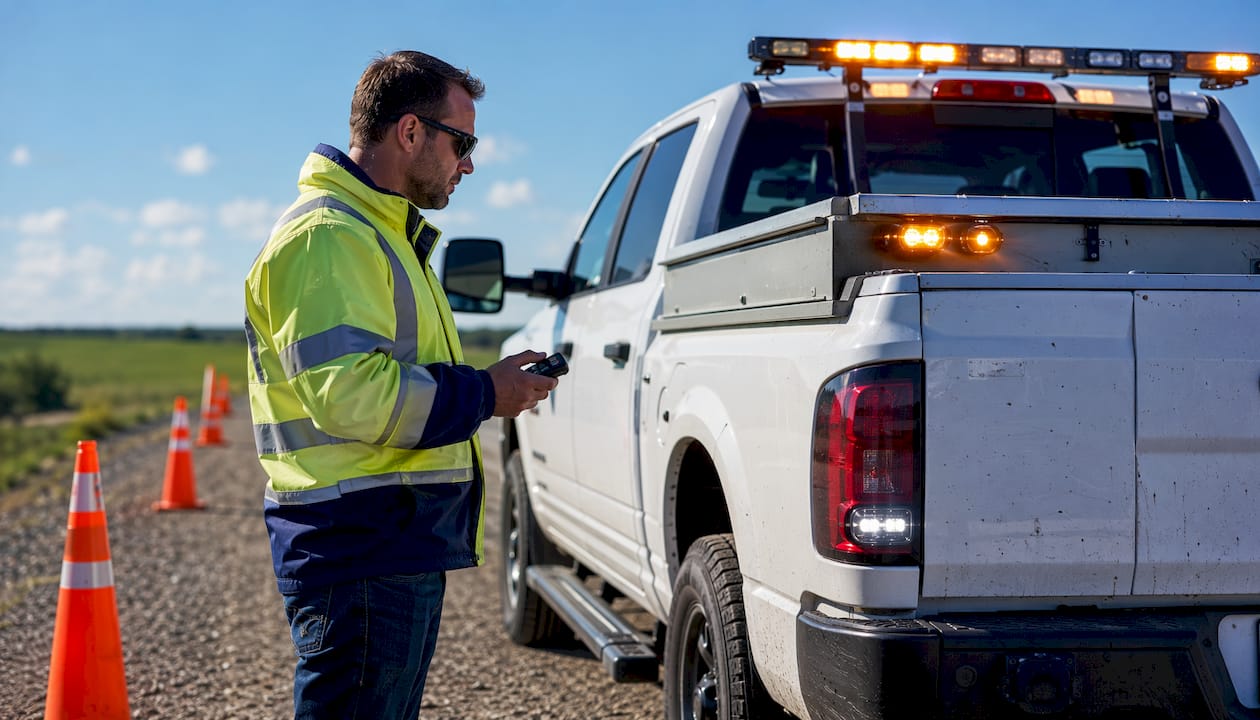
In Canadian commercial and emergency fleets, you will find them on tow trucks, snow plows, roadside assistance vehicles, utility trucks, pilot cars, and municipal service vehicles. Their appeal is straightforward: they deliver powerful directional or omnidirectional illumination in a package small enough to fit almost anywhere on the vehicle.
Key reasons fleet operators choose surface mounted warning lights:
- Compact footprint that fits vehicles with height or clearance restrictions
- High-intensity LED output visible in daylight, rain, and low-visibility Canadian weather
- Flexible positioning on front, rear, or side surfaces for 360-degree coverage when paired correctly
- Permanent mounting compatible with CMVSS 108 requirements for lighting devices on trucks, buses, and MPVs
- Lower profile reduces wind noise and fuel consumption compared to full light bars
- Scalable across a mixed fleet without major upfitting costs
The regulatory context matters here. Transport Canada’s CMVSS 108 governs lighting and reflective devices on Canadian road vehicles, and any warning light you permanently mount on a commercial vehicle must meet its performance and installation criteria. Choosing the right surface mount unit from the start keeps you on the right side of that framework.
Table of Contents
- Types and key features to understand before you buy
- What Canadian regulations actually require for warning lights
- How to install surface mount strobe lights correctly on Canadian commercial vehicles
- Recommended surface mount LED strobes for Canadian fleet operators
- How surface mount LED strobes compare to other vehicle warning light types
- Key takeaways
- Strobe My Ride has the surface mount warning lights your fleet needs
Types and key features to understand before you buy
Not all surface mount strobes are the same, and the distinction between types has real safety consequences, not just spec-sheet differences.
Omnidirectional vs. directional
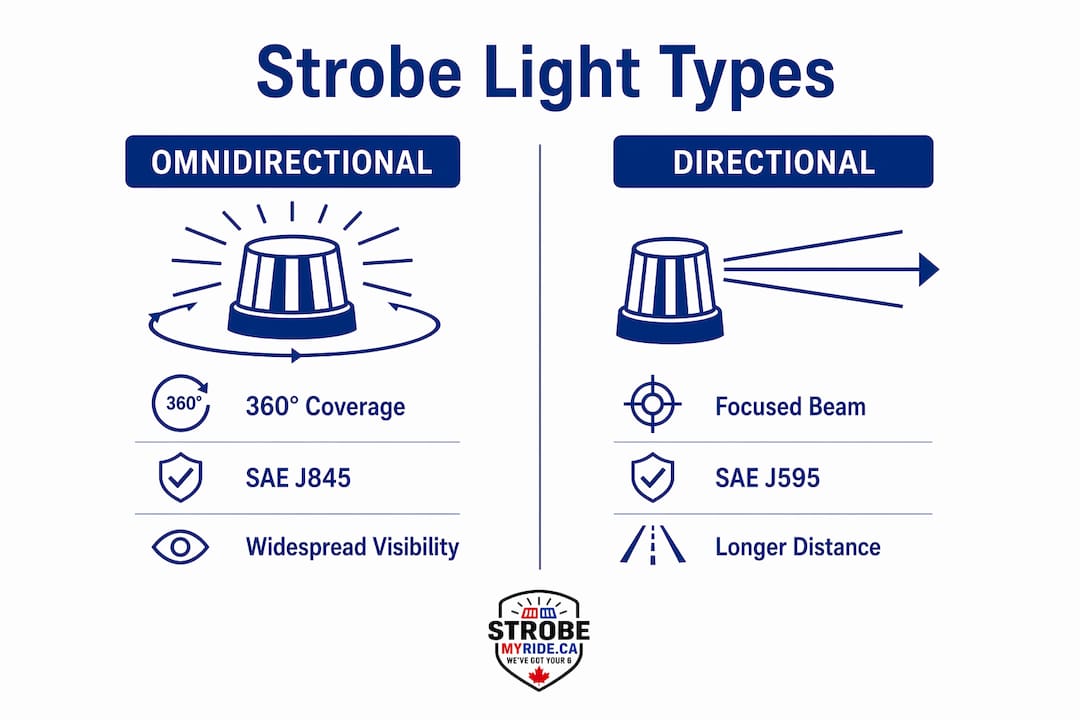
The most important split is between omnidirectional (360-degree) and directional units. SAE J845 covers omnidirectional warning lights, which project light in all horizontal directions simultaneously. SAE J595 applies to focused, directional warning lights intended for specific angles, such as grille or side-facing applications. Using a J595 directional unit where J845 omnidirectional coverage is needed can leave critical blind spots on vehicle sides, a point lighting experts consistently flag when reviewing fleet upfits. Knowing which standard applies to your intended mounting position is the first decision to make.
Optical performance and beam pattern
Intensity and beam pattern determine how far away your vehicle is visible. For daytime highway work, you need a unit with sufficient candela output to cut through ambient light. Beam angle affects whether a driver approaching from the side will see the warning at all.
Size, form factor, and mounting
Surface mount units range from palm-sized single-diode modules to multi-LED rectangular heads. Smaller units suit cab corners and mirror brackets; larger rectangular heads work well on bumpers and roof edges. The form factor also affects how cleanly the unit can be permanently attached, which is a CMVSS 108 requirement for trucks, buses, and MPVs.
Power consumption and wiring
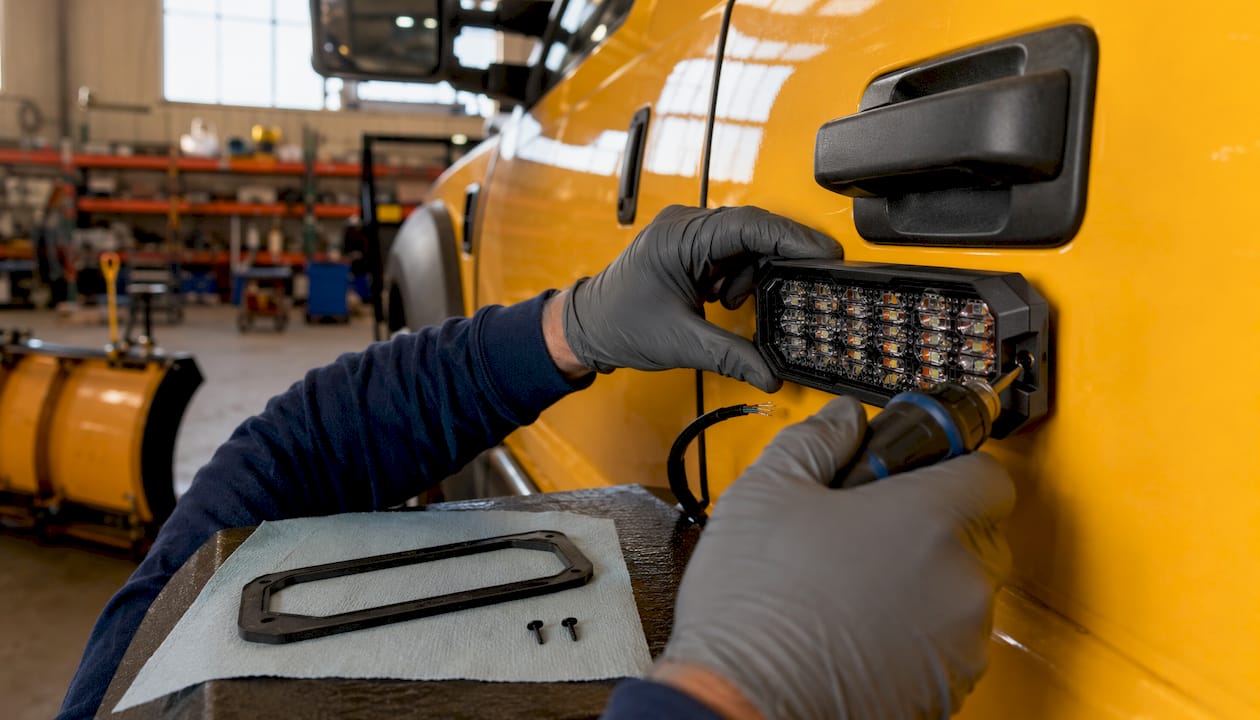
LED strobe lights consume considerably less power than older incandescent warning lights, which reduces the load on your vehicle’s electrical system during extended operations. This matters on tow trucks and snow plows that run warning lights for hours at a stretch. Most surface mount LED units operate on 12V or 24V DC systems and draw low enough amperage to run off a standard fused circuit.
Durability: weatherproofing and vibration tolerance
Canadian conditions are demanding. A surface mount unit on a plow truck faces road salt, freeze-thaw cycling, pressure washing, and constant vibration. Look for units with a sealed housing, a high IP (Ingress Protection) rating, and construction that has been tested for vibration tolerance. These are not optional features for Canadian fleet use.
| Feature | Omnidirectional (SAE J845) | Directional (SAE J595) |
|---|---|---|
| Coverage | 360 degrees horizontal | Focused beam, specific angle |
| Typical position | Rooftop, cab corners | Grille, bumper, side-facing |
| Best for | Full perimeter warning | Targeted directional alert |
| Blind spot risk | Low when positioned correctly | High if misapplied |
| Common fleet use | Tow trucks, plows, utility | Emergency grille lights |
| Power draw | Low (LED) | Low (LED) |
What Canadian regulations actually require for warning lights
Compliance is not optional, and the regulatory framework in Canada has multiple layers that fleet managers need to understand separately.
Transport Canada TSD 108
TSD 108 is Transport Canada’s primary technical standard for vehicle lighting and reflective devices, aligned with CMVSS 108. It mandates that every lamp and associated device be permanently mounted on a rigid part of the vehicle, not on glazing or removable panels, and that it meet specific photometric performance standards. The standard also specifies that device faces must be oriented perpendicular or parallel to the vehicle centreline unless the unit has been photometrically certified for an off-axis angle. Mounting a surface mount strobe at an arbitrary angle without that certification is a compliance failure, regardless of how bright the unit is.
CMVSS 108 and the Motor Vehicle Safety Regulations
CMVSS 108 sits within Canada’s Motor Vehicle Safety Regulations and governs original lamps and associated devices across vehicle categories. For fleet operators adding aftermarket warning lights, the relevant question is whether the installation meets the standard’s mounting location, height, and photometric requirements. Permanent attachment to a rigid body panel is the baseline.
Provincial colour and usage restrictions
Federal standards set the floor; provincial regulations set the colour and operational rules. Ontario’s O. Reg. 484/07 and Nova Scotia’s Vehicle Warning Lights Regulations, for example, specify which vehicle classes may use which colours of flashing lights. Across most provinces, amber is the broadly permitted colour for non-emergency commercial vehicles, while red and blue are reserved for emergency services. Green is authorized for specific uses such as volunteer firefighters in some jurisdictions. These rules vary by province, so a light configuration legal in Alberta may not be legal in Ontario.
Compliance note: Fleet managers operating across multiple provinces must verify the warning light colour and usage rules for each jurisdiction. Applying one province’s rules across the entire country is a common and costly mistake.
Key compliance checklist for fleet operators:
- Confirm the unit meets TSD 108 photometric performance criteria
- Verify permanent mounting to a rigid, non-removable vehicle panel
- Check device face orientation against CMVSS 108 mounting angle requirements
- Confirm permitted colour for your vehicle class in each province of operation
- Distinguish between the SAE standard required for your mounting position (J845 vs. J595)
- Review provincial warning light regulations before finalizing your configuration
How to install surface mount strobe lights correctly on Canadian commercial vehicles
Getting the installation right the first time protects your investment and keeps your vehicle compliant. Sloppy wiring or a poorly chosen mounting location can create both safety and legal problems.
Choosing the mounting location
Position determines effectiveness. For omnidirectional coverage, roof corners and cab tops give the widest horizontal sightlines. For directional applications, bumper faces and grille positions work well for front-facing warning. Side-facing units on running boards or body panels fill in the flanks. Whatever position you choose, the surface must be a rigid, non-removable body panel to satisfy TSD 108’s permanent mounting requirement.
Surface preparation and attachment
Clean the mounting surface thoroughly before drilling or applying adhesive. On steel panels, treat any bare metal exposed during drilling to prevent rust. Use stainless steel hardware where possible, particularly on plow trucks and vehicles that operate in salted road conditions. Silicone sealant around the mounting base helps prevent water ingress at the attachment point.
Electrical wiring
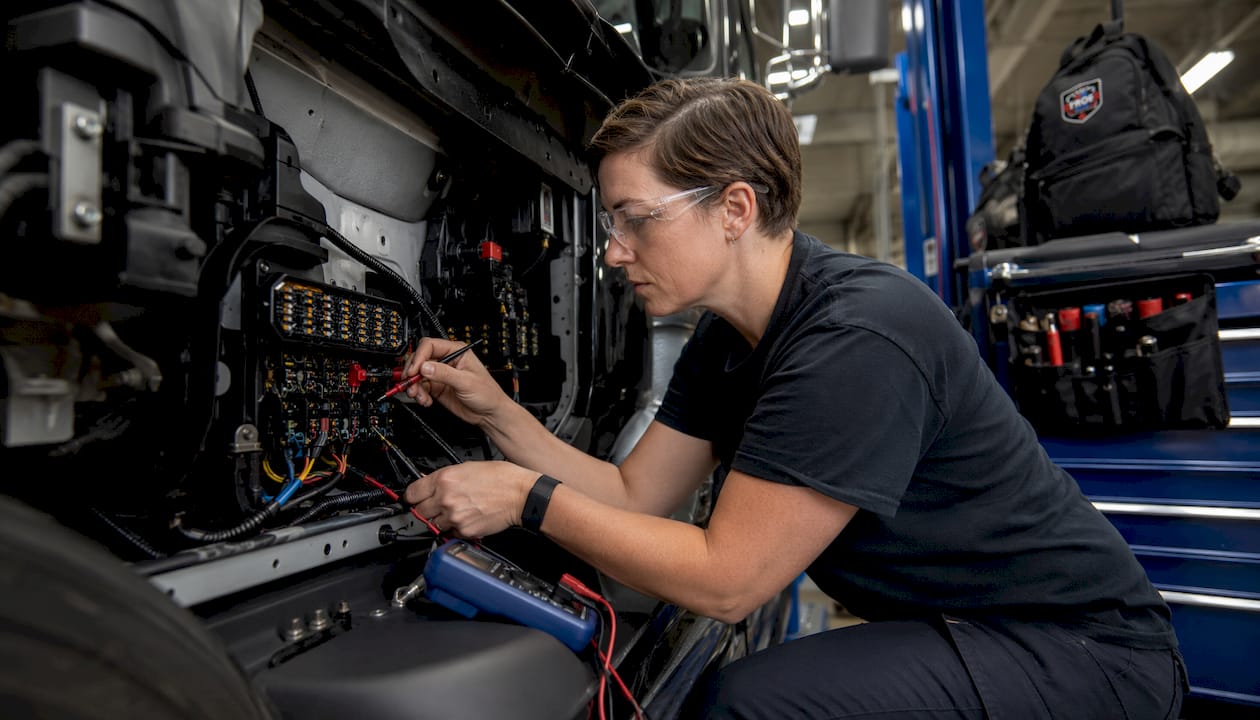
Run dedicated, properly fused circuits for your warning lights rather than tapping into existing circuits. Use marine-grade or automotive-rated wiring with heat-shrink connectors at every junction. Route cables away from exhaust components and moving parts, and use grommets wherever the harness passes through a panel. A proper ground connection to the vehicle chassis is as important as the positive feed.
Integration with vehicle warning systems
Most fleet operators connect surface mount units to a central controller or flasher module that manages flash patterns and synchronisation across multiple heads. This keeps your warning system consistent and allows you to switch patterns for different operational contexts.
Maintenance and troubleshooting tips
- Inspect mounting hardware and seals annually, or after any significant impact
- Check wiring connections for corrosion, particularly at the end of each winter season
- Test flash patterns and output intensity at the start of each season
- Replace any unit showing reduced output or erratic flash behaviour promptly; a dim warning light is worse than no light because it creates false confidence
- Keep a spare unit on hand for critical fleet vehicles to minimise downtime
Pro Tip: When installing on a vehicle that operates in heavy road salt conditions, apply a thin bead of dielectric grease inside every electrical connector before sealing. It takes two minutes and can prevent corrosion failures that would otherwise ground a vehicle mid-season.
Recommended surface mount LED strobes for Canadian fleet operators
Two products worth knowing well if you are specifying surface mount warning lights for a Canadian fleet are the Signal SM Flex and the Fleet SM Stealth.
Signal SM Flex
The Signal SM Flex is a surface mount LED strobe built for flexible positioning across a range of vehicle types. Its compact housing suits cab corners, bumper edges, and mirror brackets equally well, and the mounting options accommodate both flat and slightly curved surfaces. For fleet operators running mixed vehicle types, the Signal SM Flex’s adaptability means you can standardise on a single unit across your roster rather than sourcing different products for different vehicles.
Fleet SM Stealth
The Fleet SM Stealth takes a low-profile approach with a smoked lens that reduces visual clutter when the lights are off, making it a practical choice for vehicles that need to look professional in non-operational contexts, such as utility trucks or municipal service vehicles. The smoked housing does not compromise output when the unit is active. It is well-suited to tow trucks, roadside assistance vehicles, and any fleet application where the vehicle alternates between active warning duty and regular road use.
Both products are available through Strobe My Ride with Canadian-based expert support and fast domestic shipping, which matters when a vehicle is grounded waiting for a replacement part. Warranty coverage and access to knowledgeable support staff who understand Canadian regulatory requirements are practical advantages that generic offshore sourcing rarely matches.
Pro Tip: If your fleet includes both highway-speed tow trucks and lower-speed municipal vehicles, consider pairing the Fleet SM Stealth on the tow units (where the smoked lens keeps the vehicle looking clean at the yard) with the Signal SM Flex on municipal vehicles where mounting flexibility across varied body styles is the priority.
For a broader look at how these units fit into a full fleet lighting strategy, the fleet warning light buying guide covers selection criteria across vehicle categories.
How surface mount LED strobes compare to other vehicle warning light types
Understanding where surface mount LED strobes sit relative to other warning light technologies helps you make the right call for your specific application.
LED vs. incandescent
Incandescent warning lights were the standard for decades, but they have significant drawbacks for fleet use. They consume more power, generate more heat, and have a much shorter service life than LED units. On a vehicle running warning lights for extended periods, the power draw difference is meaningful for battery and alternator load. LED surface mount strobes also respond faster electronically, producing sharper flash edges that are more attention-grabbing at distance. For Canadian fleets operating in cold weather, LED units also perform more reliably at low temperatures, where incandescent bulbs are prone to early failure.
Surface mount units vs. full light bars
A full light bar offers more total LED output and a longer visible profile across the roofline, which is why it remains the choice for high-speed emergency response vehicles. Surface mount units trade raw output for flexibility and discretion. You can position them precisely where coverage is needed, keep the vehicle’s profile lower, and add or reconfigure units without replacing an entire bar. For commercial fleets where the vehicle serves multiple roles, that flexibility often outweighs the output advantage of a bar.
Surface mount units vs. beacons
Rotating or LED beacons provide omnidirectional coverage from a single elevated point, which suits slow-moving vehicles like forklifts or construction equipment operating in contained areas. On highway-speed commercial vehicles, a beacon’s single mounting point can leave side and rear coverage gaps that a properly positioned set of surface mount units fills more reliably. Beacons also sit higher and catch more wind, which matters on vehicles with height restrictions or that spend time at highway speeds.
The practical conclusion for most Canadian fleet operators: surface mount LED strobes are the most versatile warning light format available, capable of covering the gaps that bars and beacons each leave, and well-matched to the compliance requirements that govern commercial vehicle lighting in this country.
Key takeaways
Surface mount LED strobes are the most versatile warning light format for Canadian commercial fleets, combining compact installation with compliance-ready performance under TSD 108 and provincial colour regulations.
| Point | Details |
|---|---|
| Compliance is multi-layered | TSD 108 governs mounting and photometrics; provincial rules govern permitted colours and vehicle classes. |
| Standard selection matters | SAE J845 covers omnidirectional units; SAE J595 covers directional ones. Using the wrong standard for a position creates safety blind spots. |
| Permanent mounting is mandatory | CMVSS 108 requires all lighting devices on trucks, buses, and MPVs to be permanently attached to a rigid, non-removable body panel. |
| LED outperforms incandescent | Lower power draw, longer service life, and better cold-weather reliability make LED the clear choice for Canadian fleet conditions. |
| Strobe My Ride for Canadian fleets | The Fleet SM Stealth and Signal SM Flex are available with Canadian support, fast shipping, and warranty coverage suited to professional fleet use. |
Strobe My Ride has the surface mount warning lights your fleet needs
When you are specifying warning lights for a commercial fleet in Canada, the difference between a product that works and one that creates compliance headaches often comes down to sourcing. Strobe My Ride supplies professional-grade surface mount warning lights built for Canadian conditions, backed by domestic technical support that understands TSD 108, provincial colour rules, and the real-world demands of tow trucks, snow plows, utility vehicles, and emergency service fleets.
The Fleet SM Stealth and Signal SM Flex are stocked in Canada, so you are not waiting weeks for international shipping when a vehicle needs to get back on the road. Every product comes with warranty coverage and access to a support team that can help you match the right unit to your vehicle type and operational requirements.
If you are ready to spec your next surface mount strobe installation, browse the Fleet SM Stealth or contact Strobe My Ride directly for fleet pricing and configuration advice.