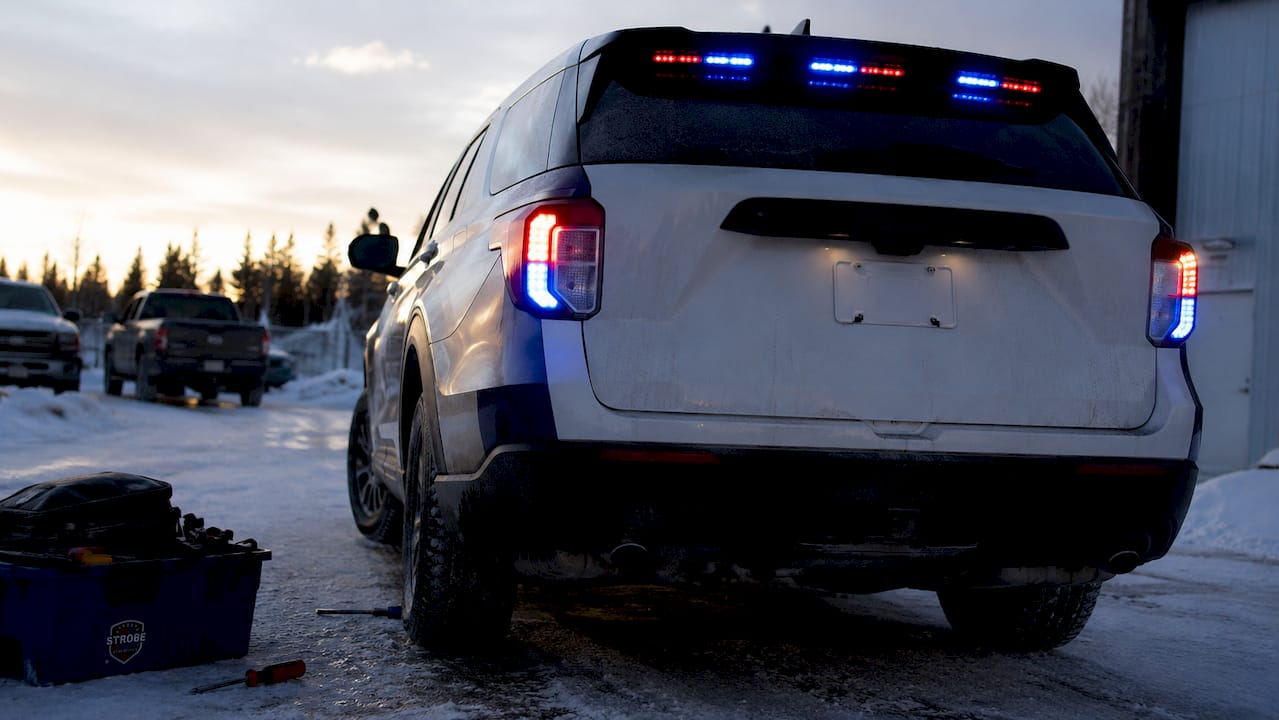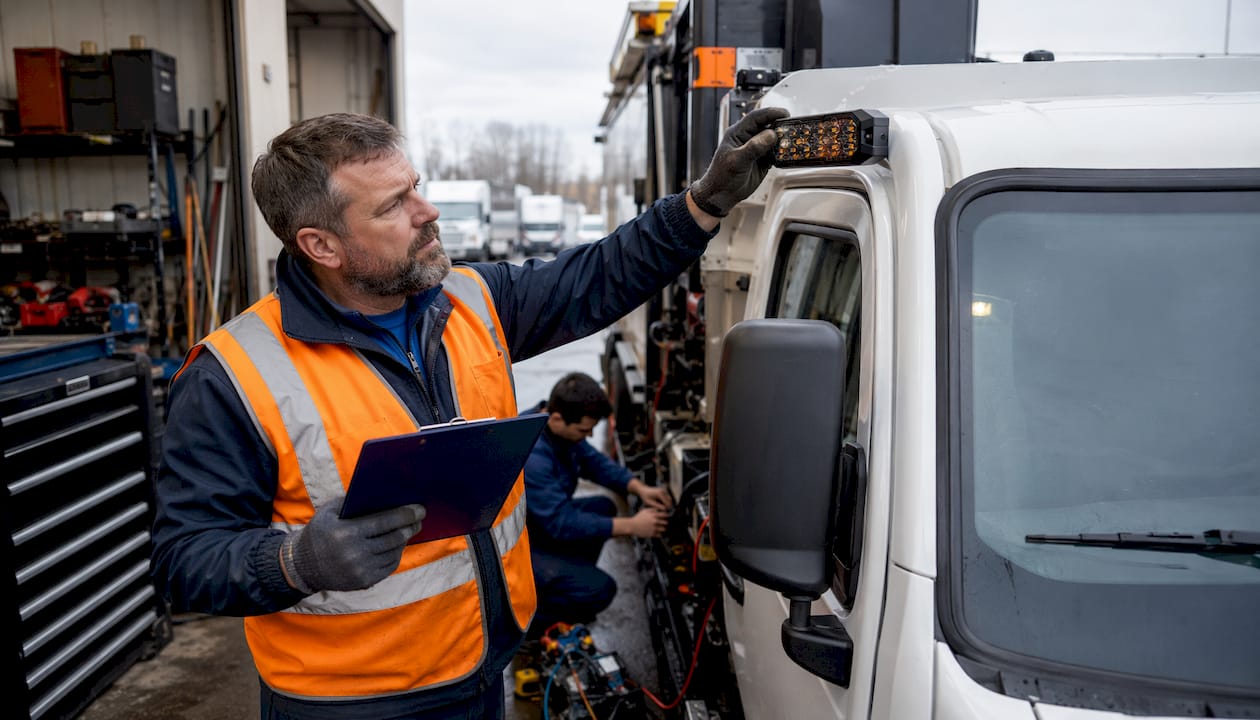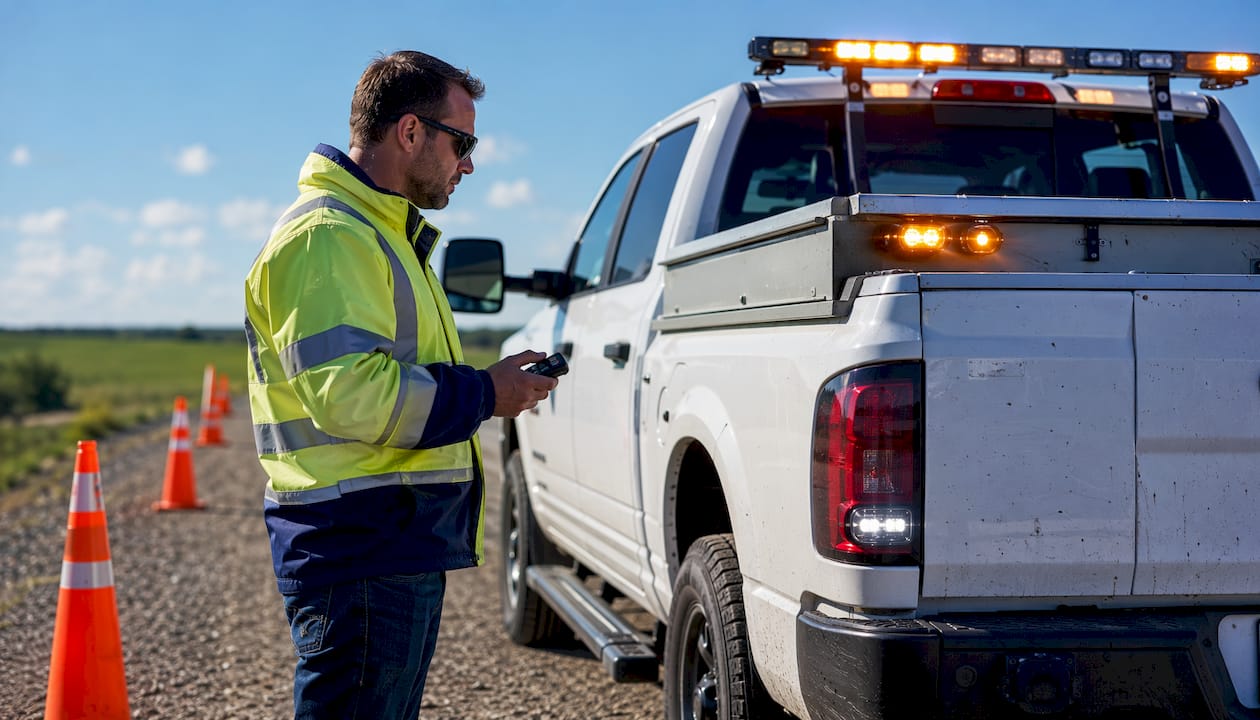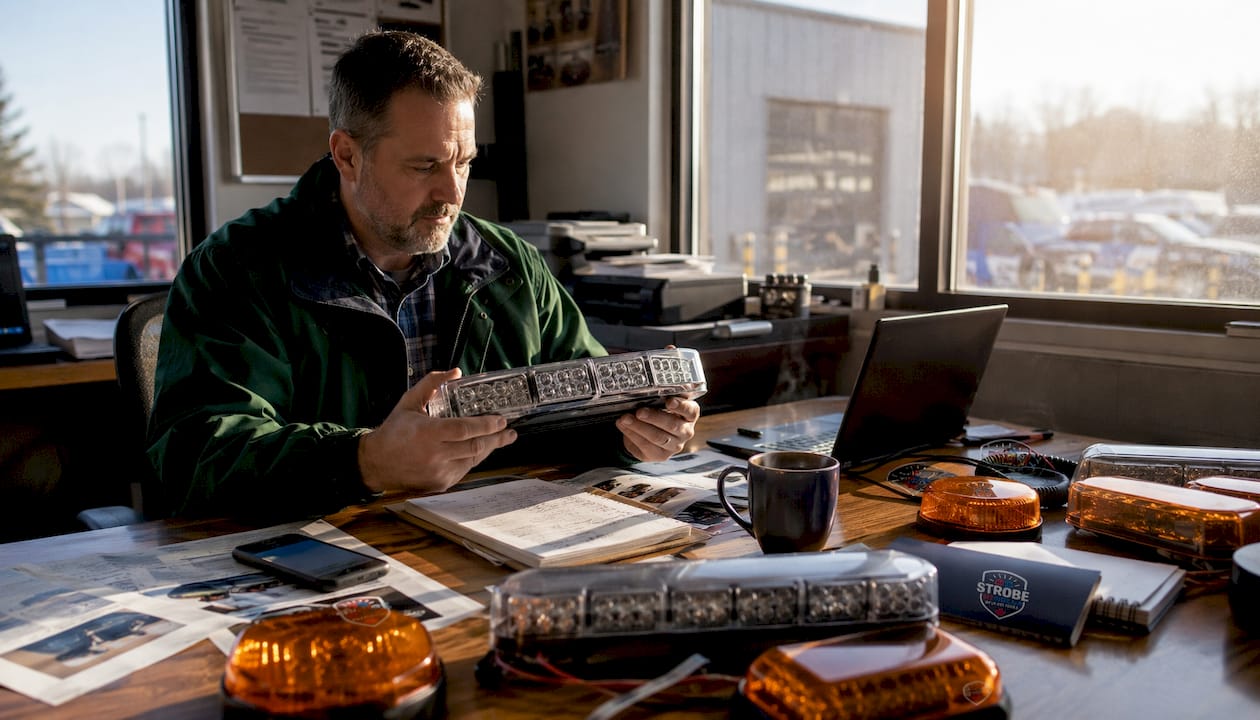
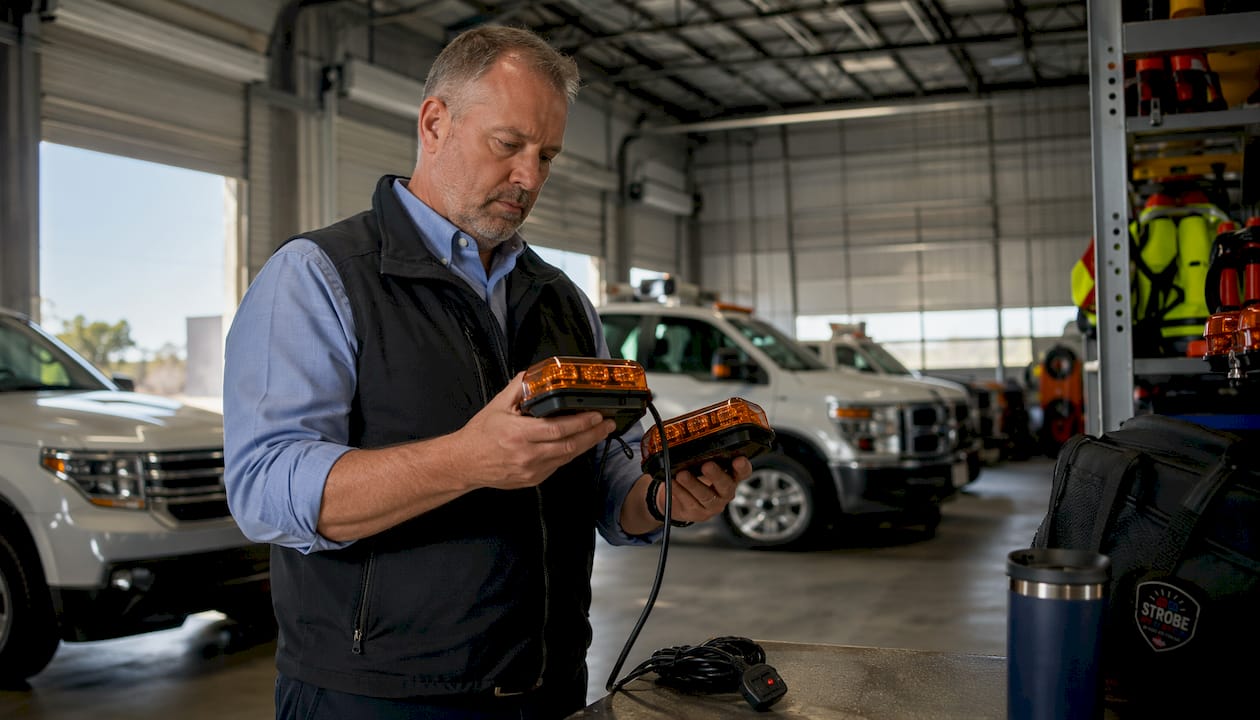
For most Canadian tow operators and fleet managers, the Fleet Bar Mini Duo – Class 1 SAE LED Mini Light Bar from Strobe My Ride is the right starting point. It delivers Class 1 intensity in a compact footprint, suits highway-speed tow and utility work, and ships with Canadian support and warranty coverage. Before you activate any amber warning light on a public highway, though, you must verify your provincial rules. Authority over flashing amber lamps sits with each province, not the federal government.
Quick shortlist for Canadian buyers:
- Fleet Bar Mini Duo — Class 1 SAE LED mini light bar; best for tow trucks, roadside assistance, and highway-speed fleet use
- Signal Bar Mini-Lite — compact amber LED mini light bar; suited to light-duty utility, pilot car, and municipal work
Legal caveat: Provincial statutes govern when and where amber warning lights may be activated. Alberta’s Vehicle Equipment Regulation sets specific allowances for tow trucks and service vehicles. British Columbia’s Commercial Vehicle Safety & Enforcement (CVSE) requires a permit for most flashing amber lamp applications. Ontario operators must satisfy Book 7 requirements. Confirm your jurisdiction’s rules before fitting any amber strobe light to a vehicle operated on public roads. The SAE J845 (omnidirectional) and SAE J595 (directional) standards define the intensity classes referenced throughout this guide.
Table of Contents
- What specs do Strobe My Ride’s compact amber mini light bars offer?
- How do you pick the right mini amber light bar for your vehicle?
- What are the provincial rules for amber warning lights in Canada?
- How do you mount and wire a mini light bar correctly?
- What do SAE class, candela, and flash patterns actually mean?
- Why Strobe My Ride’s mini amber light bars suit Canadian fleets
- Key takeaways
- Ready to order your mini amber light bar from Strobe My Ride
- Primary sources and further reading
What specs do Strobe My Ride’s compact amber mini light bars offer?
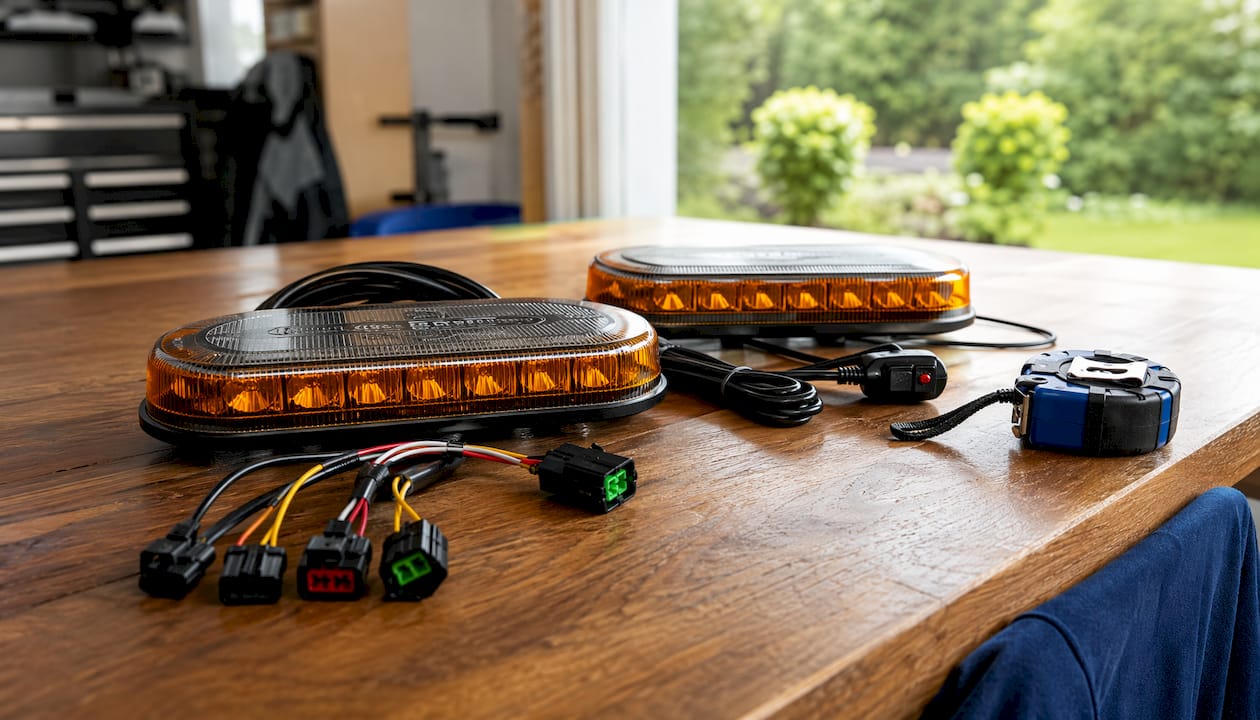
The two core SMR mini amber models cover most Canadian operators’ needs. Here is how they compare.
| Spec | Fleet Bar Mini Duo | Signal Bar Mini-Lite |
|---|---|---|
| Length | Not publicly listed | Not publicly listed |
| Mounting type | Permanent / low-profile | Permanent / magnetic |
| SAE class | Class 1 | Not publicly listed |
| Voltage | 12 V / 24 V | 12 V |
| Current draw | Not publicly listed | Not publicly listed |
| Flash patterns | Multiple | Multiple |
| Warranty | Canadian warranty included | Canadian warranty included |
| Canadian shipping | Yes | Yes |
| Best use case | Tow, highway fleet, roadside | Pilot car, utility, light-duty |
Mini amber LED light bars typically come in lengths of 10", 13", 16", and 24", covering everything from a compact pickup-mounted utility bar to a full-width tow truck roof bar. Mounting options across the SMR range include:
- Permanent roof mount — most secure; preferred for tow trucks and fleet vehicles with dedicated upfitting
- Magnetic mount — fast to deploy and remove; suited to pilot cars, inspection vehicles, and temporary use
- Low-profile / flush mount — minimal wind drag; common on service vans and municipal light-duty trucks
Strobe My Ride backs its products with Canadian warranty coverage and ships from within Canada, so you are not waiting weeks for cross-border delivery or chasing a foreign returns process when something needs attention.
How do you pick the right mini amber light bar for your vehicle?
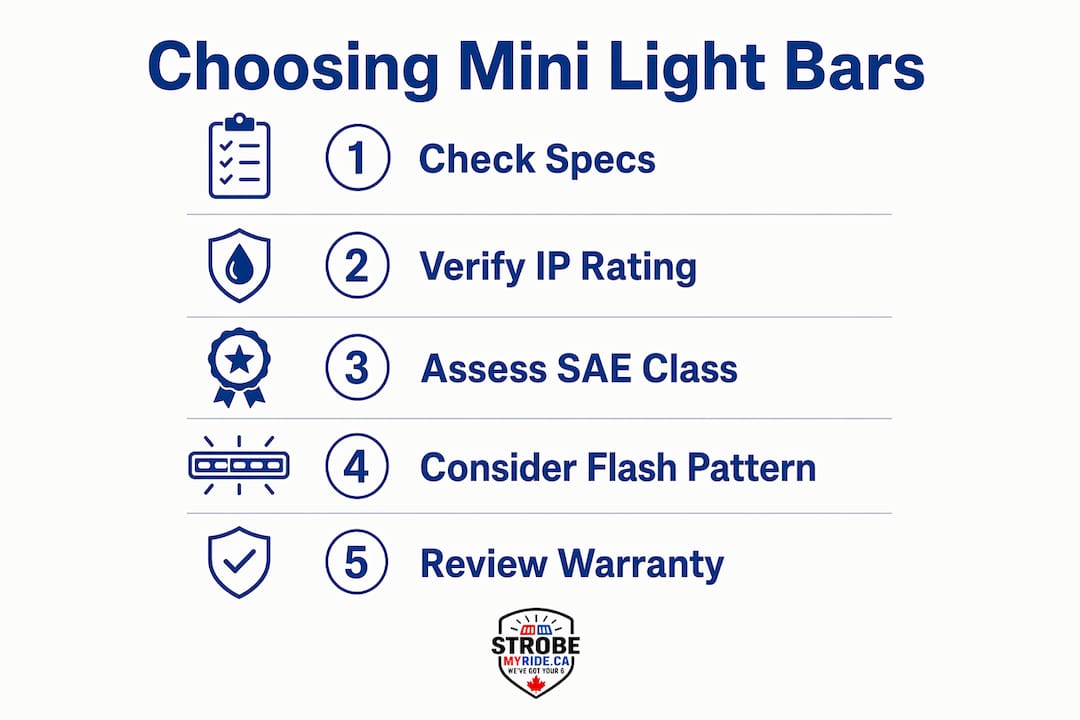
The wrong light bar is not just a wasted purchase. On a highway tow or a snow-removal run, under-specified lighting is a genuine safety gap. Work through this checklist before you buy.
Decisive buying criteria:
- SAE class and intensity — Class 1 for highway-speed environments; Class 2 for municipal or slower-traffic work; Class 3 for indoor or very low-ambient settings. The SAE class measures optical output, not build quality.
- Optical coverage — omnidirectional (SAE J845) for rooftop applications where all-around visibility matters; directional (SAE J595) for grille or rear-facing warning use
- Mounting compatibility — confirm the bar’s mounting footprint matches your roof rack, cab profile, or magnetic surface area
- Power draw and voltage — verify 12 V or 24 V compatibility with your vehicle’s electrical system; check current draw against your available circuit capacity
- Ingress protection (IP) rating — Canadian winters demand a sealed unit; look for IP67 or better for road-spray and freeze-thaw resilience
- Flash pattern variety — multiple patterns (double-flash, wig-wag, single-strobe) let you match the pattern to the situation and provincial guidance
- Warranty and Canadian support — a supplier with in-country support saves time when you need a replacement or technical answer fast
Questions to ask before you order:
- Is this bar classified to SAE J845 or SAE J595, and what is its SAE class (1, 2, or 3)?
- What is the current draw at steady flash, and is it compatible with my vehicle’s fuse panel?
- Does the unit carry a confirmed IP rating for weather resistance?
- Is there a Canadian warranty and a domestic returns policy?
- Are mounting hardware and wiring harness included, or ordered separately?
Red flags to watch for: missing candela or intensity specifications; no stated IP rating; ambiguous or unverified SAE class labelling; no Canadian support contact or warranty documentation.
What are the provincial rules for amber warning lights in Canada?
Provincial rules vary considerably, and no single national standard governs when a flashing amber emergency light may be activated on a public road. The authority sits with each province’s vehicle equipment legislation and, in some cases, with a permitting body.
Province-by-province summary:
- Alberta — The Vehicle Equipment Regulation permits tow trucks and service vehicles to display flashing amber lamps when assisting a disabled vehicle. Visibility distances and mounting heights are specified. Amber lamps must be used only when performing authorised tasks; they do not confer right-of-way.
- British Columbia — BC CVSE requires a permit for most flashing amber lamp applications. The CVSE guidance defines “official vehicle” status, lists eligible vehicle types, and makes clear that flashing amber lamps do not imply increased worker safety on their own. Operators must apply through CVSE and maintain a policy of vehicle use.
- Ontario — Operators must satisfy the requirements set out in Book 7 of Ontario’s highway traffic framework. Permitted vehicle classes and activation conditions are defined there; confirm current requirements directly with the Ministry of Transportation Ontario.
- Nova Scotia — The Vehicle Warning Lights Regulations under the Motor Vehicle Act specify that flashing or revolving yellow or amber lights must show only yellow or amber in all directions, and list the vehicle categories permitted to display them.
The common thread across provinces: amber is generally allowed for tow, pilot-car, and maintenance vehicles, but only when the vehicle is stationary or actively performing authorised work. Amber does not grant right-of-way or replace standard traffic-control measures.
Pro Tip: Before applying for a BC CVSE permit or operating under an Alberta allowance, prepare a written policy of vehicle use. Document activation conditions, driver training records, and any signage or cones deployed alongside the amber light. CVSE guidance explicitly states that amber lamps should be integrated into a broader traffic-control plan, not treated as a standalone safety measure.
For a plain-language overview of provincial warning light rules, Strobe My Ride maintains a dedicated compliance reference page.
This article is general information, not legal advice. Confirm current rules with your provincial regulator or a qualified compliance professional before operating amber warning lights on public roads.
How do you mount and wire a mini light bar correctly?
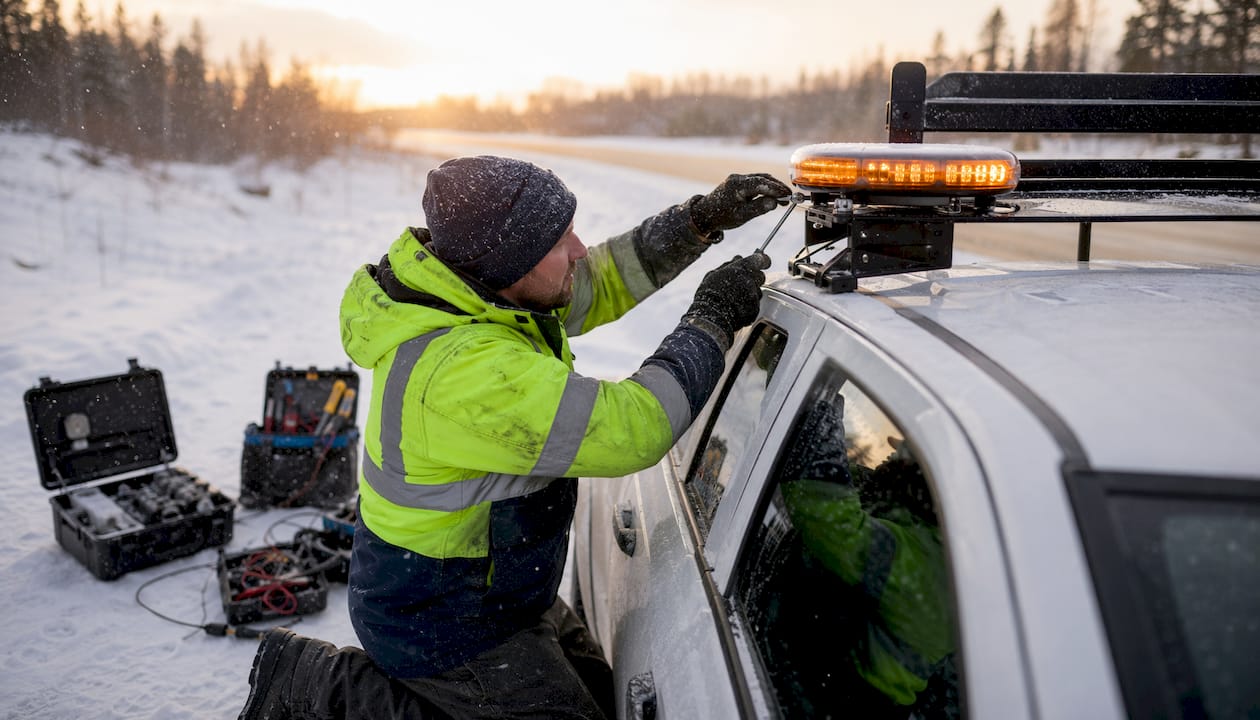
Getting the mounting and wiring right the first time prevents failures in the field, especially in Canadian winter conditions where vibration, moisture, and temperature swings stress every connection.
Common mounting methods and where each fits:
- Permanent roof mount — bolted through the roof skin or to a rack; best for dedicated tow and fleet vehicles; most vibration-resistant
- Magnetic mount — attaches to any steel surface; fast to swap between vehicles; not suitable for aluminium or fibreglass roofs without a steel plate
- Low-profile / flush mount — adhesive or screw-fixed; minimal height above roofline; good for service vans where clearance matters
- Grille or bumper mount — used for directional (SAE J595) forward-facing warning; common on pilot cars and snow-removal equipment
Step-by-step installation checklist:
- Clean and degrease the mounting surface; remove any wax, rust, or debris that would compromise adhesion or fastener grip.
- Mark and drill mounting holes to the bar’s template; use stainless-steel hardware to prevent corrosion.
- Apply a bead of self-levelling sealant around any roof penetration before tightening fasteners.
- Route the wiring harness away from heat sources and moving parts; use loom or split conduit through the cab.
- Connect to a switched 12 V or 24 V circuit (confirm your bar’s voltage requirement); size the fuse to the bar’s rated current draw plus a 20% safety margin.
- Ground the negative lead to a clean, bare-metal chassis point; a poor ground is the most common cause of flickering or intermittent operation.
- Test all flash patterns before closing up the installation; confirm the bar is visible from the required angles.
Wiring reference:
| Parameter | Typical 12 V mini bar | Typical 24 V mini bar |
|---|---|---|
| Supply voltage | 10–16 V | 12 V or 24 V |
| Recommended fuse | Per manufacturer spec | Per manufacturer spec |
| Circuit type | Switched ignition or dedicated toggle | Switched ignition or dedicated toggle |
| Ground | Chassis bare metal | Chassis bare metal |
Fuse sizing and current draw figures vary by model; always use the manufacturer’s stated current draw when sizing circuit protection. For the Fleet Bar Mini Duo and Signal Bar Mini-Lite, refer to the product pages for confirmed electrical specifications.
Pro Tip: In Canadian winters, use dielectric grease on every connector before sealing. Wrap exposed connectors in self-amalgamating tape, and add a drip loop in the wiring run before it enters the cab so water cannot track along the wire into the connector. Strain relief at the bar’s pigtail prevents the most common point of failure on vibrating vehicles.
For a full compliance and install guide, Strobe My Ride’s resource library covers vehicle-specific wiring considerations.
What do SAE class, candela, and flash patterns actually mean?
SAE class is the most misunderstood specification in warning lighting. It measures optical intensity output, not build quality, weather resistance, or lifespan.
SAE J845 covers omnidirectional optical warning devices — lights that must be visible from all horizontal directions, typically rooftop bars and beacons. SAE J595 covers directional devices, where photonic energy is concentrated toward a specific approach angle, such as a grille-mounted forward-facing strobe. Both standards define class-based intensity thresholds and test procedures.
| SAE class | Intensity level | Typical use case |
|---|---|---|
| Class 1 | Highest output | Highway-speed tow, roadside assistance, high-ambient daylight |
| Class 2 | Mid-range output | Municipal work, slower-traffic environments, urban fleet |
| Class 3 | Lower output | Indoor use, parking lots, very low-ambient settings |
Class 1 provides the greatest candela output for long-range visibility, making it the right choice for highway tow and roadside work where approaching traffic may be travelling at high speeds. Class 2 suits municipal maintenance and urban utility work. Class 3 is rarely the right choice for on-road Canadian applications.
Flash patterns matter more than many buyers expect. A double-flash pattern creates a distinctive rhythm that the human eye picks up faster than a single steady strobe. Wig-wag alternates left and right heads, drawing attention to the width of a stopped vehicle. Multiple available patterns let you adapt to the situation and, where provincial guidance specifies a pattern type, comply with that requirement. A bar with only one or two patterns limits your options.
Build quality often determines longevity more than raw candela. A properly sealed mid-class bar with an IP67 rating and solid thermal management can outlast a poorly built Class 1 unit through several Canadian winters. Freeze-thaw cycling, road salt, and vibration degrade unsealed housings quickly. When evaluating any compact amber warning light for fleet use, check the IP rating and thermal design alongside the SAE class.
Pro Tip: For all-day fleet operation, calculate your total current draw across all warning lights on the vehicle and confirm the alternator and battery can sustain it. A Class 1 bar running eight hours a day on a tow truck adds up. Choosing a bar with efficient LED drivers reduces heat build-up and extends lamp life in sustained-use applications.
For guidance on fleet warning light durability in Canadian conditions, Strobe My Ride’s blog covers IP ratings, thermal management, and real-world fleet considerations.
Why Strobe My Ride’s mini amber light bars suit Canadian fleets
Strobe My Ride is a Canadian-owned supplier purpose-built for the operators who work on and around Canadian roads. The product line covers tow trucks, roadside assistance, snow removal, pilot cars, municipal fleets, volunteer fire departments, and utility crews. That focus means the mini light bar range is sized, rated, and supported for the conditions and vehicle types Canadian operators actually run.
What sets the SMR offering apart for Canadian buyers:
- SAE-rated options, including Class 1 where highway-speed visibility is required
- Sizes and mounting configurations matched to common Canadian fleet vehicles
- Plug-and-play wiring options that reduce installation time for fleet upfitting
- Canadian warranty coverage with domestic support contact, not a foreign returns process
- Fast Canadian shipping, so replacement units arrive when you need them
Practical fit for common Canadian use cases:
- Tow operators — the Fleet Bar Mini Duo’s Class 1 rating and compact profile suit both cab-over and conventional tow trucks where roof clearance is a factor
- Pilot car operators — the Signal Bar Mini-Lite’s magnetic mount option allows fast deployment and removal between assignments
- Municipal and utility fleets — multiple flash patterns and low-profile mounting options suit service vans and light trucks operating in urban environments
- Snow removal contractors — permanent roof-mount configurations with sealed housings hold up to the salt, vibration, and temperature extremes of a Canadian winter season
For operators choosing a Canadian warning lights supplier, domestic support and verified specifications matter as much as the price on the product page.
Key takeaways
The Fleet Bar Mini Duo is the strongest starting point for most Canadian operators: Class 1 SAE intensity, Canadian warranty and shipping, and a compact form factor that fits tow, utility, and fleet vehicles.
| Point | Details |
|---|---|
| Recommended model | The Fleet Bar Mini Duo delivers Class 1 SAE intensity in a compact form for tow and highway fleet use. |
| Essential technical check | Confirm SAE class, IP rating, and current draw before purchase to match your vehicle and use case. |
| Provincial compliance | Amber warning light rules vary by province; verify Alberta, BC, Ontario, or Nova Scotia rules before activating. |
| Build quality over raw output | A sealed, IP-rated bar with solid thermal management outlasts a poorly built Class 1 unit in Canadian winters. |
| Strobe My Ride | Strobe My Ride offers SAE-rated mini amber light bars with Canadian warranty, support, and fast domestic shipping. |
Ready to order your mini amber light bar from Strobe My Ride
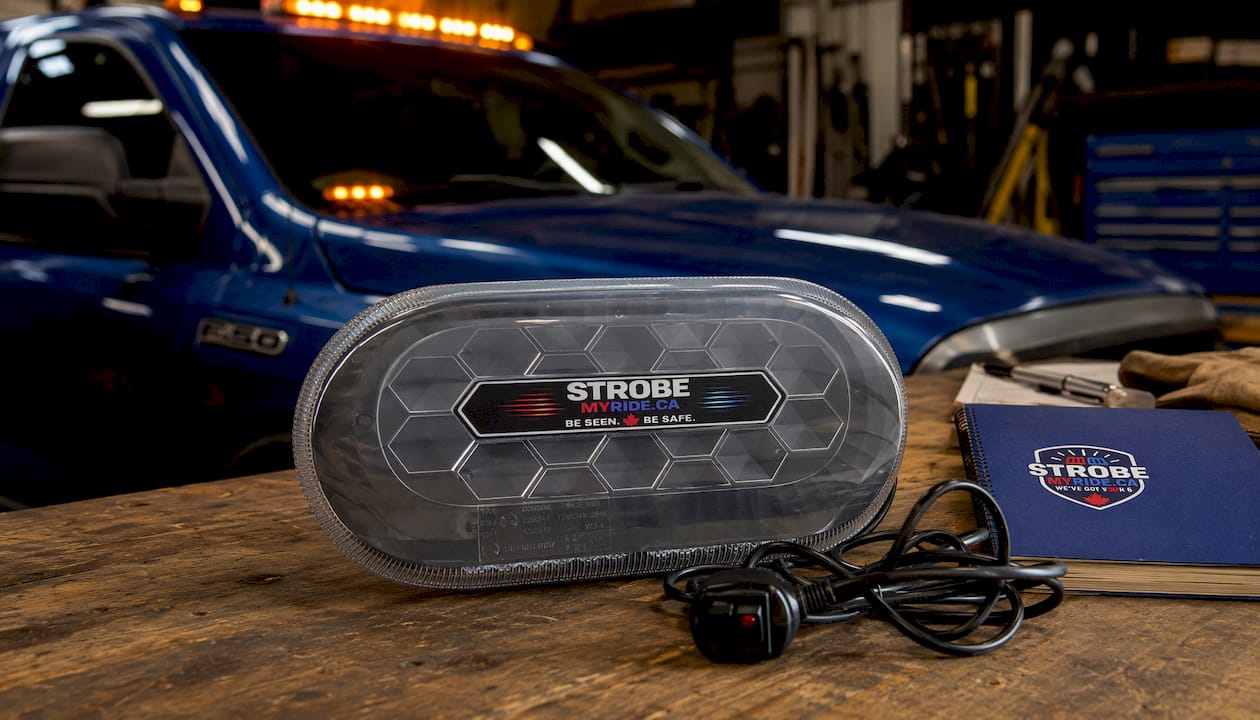
Strobe My Ride stocks the Fleet Bar Mini Duo and Signal Bar Mini-Lite for direct online purchase, with fast shipping across Canada and no cross-border delays. Both models come backed by Canadian warranty coverage and technical support from a team that knows tow, fleet, and utility applications. If you are outfitting a single vehicle or ordering for a fleet, the product pages carry full specifications so you can confirm fit before you buy.
Order the Fleet Bar Mini Duo directly from the product page, or browse the full mini light bars collection to compare sizes and mounting options. For technical questions, compliance queries, or bulk fleet orders, contact Strobe My Ride’s support team through the website.
Primary sources and further reading
Use these sources to verify legal requirements and technical standards for your jurisdiction before purchasing or activating amber warning lights.
Provincial and regulatory sources:
- BC CVSE Flashing Amber Lamp permit and device information — permit criteria, eligible vehicle types, and policy of vehicle use requirements
- Alberta Vehicle Equipment Regulation (via PSS Canada) — tow truck and service vehicle allowances, visibility distances, mounting requirements
- Nova Scotia Vehicle Warning Lights Regulations — permitted vehicle categories and colour requirements for flashing amber lamps
- Transport Canada Motor Vehicle Safety Regulations (C.R.C., c. 1038) — federal lighting equipment standards including TSD 108
- Ontario Book 7 plain-language guide — SMR plain-language summary of Ontario warning light requirements
Technical standards:
- SAE J845 — Optical Warning Devices for Authorized Emergency, Maintenance, and Service Vehicles — omnidirectional device standard and class intensity thresholds
- SAE warning light class explained — plain-language breakdown of Class 1, 2, and 3 differences
When contacting your provincial enforcement body, ask specifically: which vehicle categories are eligible for a flashing amber lamp permit in your jurisdiction, what activation conditions apply, and whether a policy of vehicle use document is required. Strobe My Ride’s warning light regulations page provides a Canadian overview as a starting reference, but always confirm current rules with the primary provincial source.
Recommended
- Mini Light Bars Canada | Strobe My Ride – Strobe My Ride
- Mini Light Bars Canada | Compact LED Warning Light Bars For Trucks – Strobe My Ride
- Amber strobe lights for Canadian professional vehicles: 2026 guide | Strobe My Ride – Strobe My Ride
- Fleet Warning Light Buying Guide for Canada | Strobe My Ride – Strobe My Ride