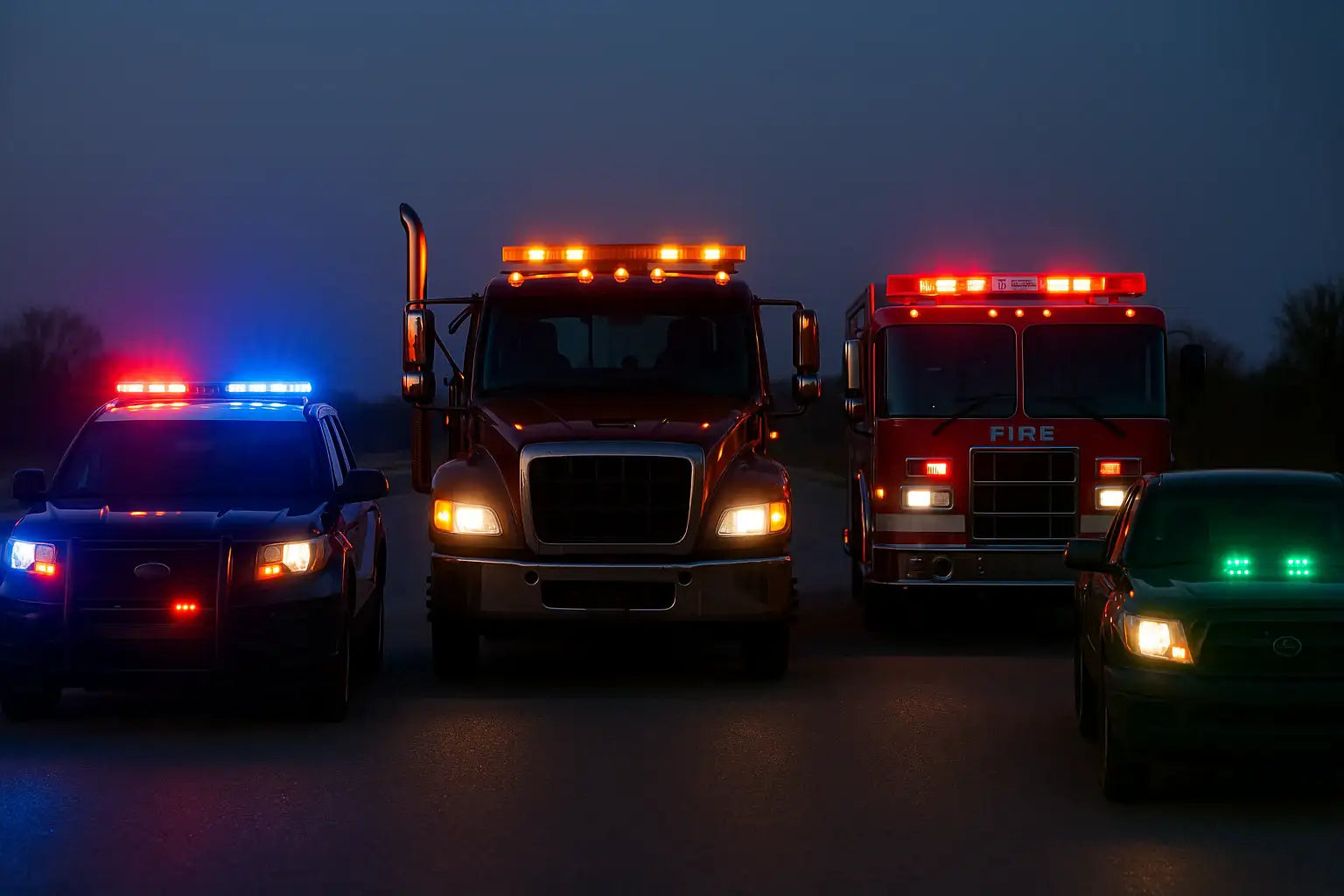

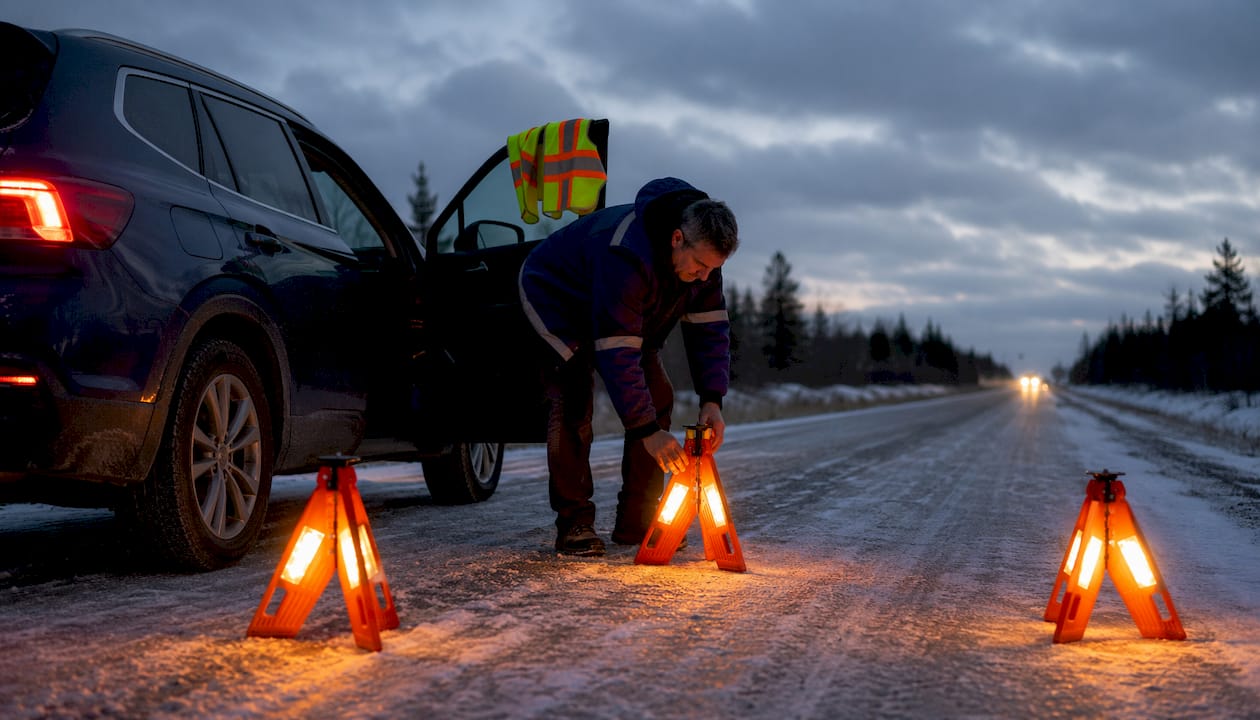
The Signal Flare 360, SignalArrow Rapid Deploy, and SMR Rapid Cone from Strobe My Ride are the strongest LED roadside emergency lights available to Canadian drivers and fleet operators right now. They cover the three core needs: sustained 360° visibility, directional traffic control, and a combined cone-plus-light solution that meets Ontario’s placement requirements for commercial vehicles. If you work on or near Canadian roads, these are the products worth comparing first.
| Product | Type | Light Modes | Power | Durability | Mounting | Best For |
|---|---|---|---|---|---|---|
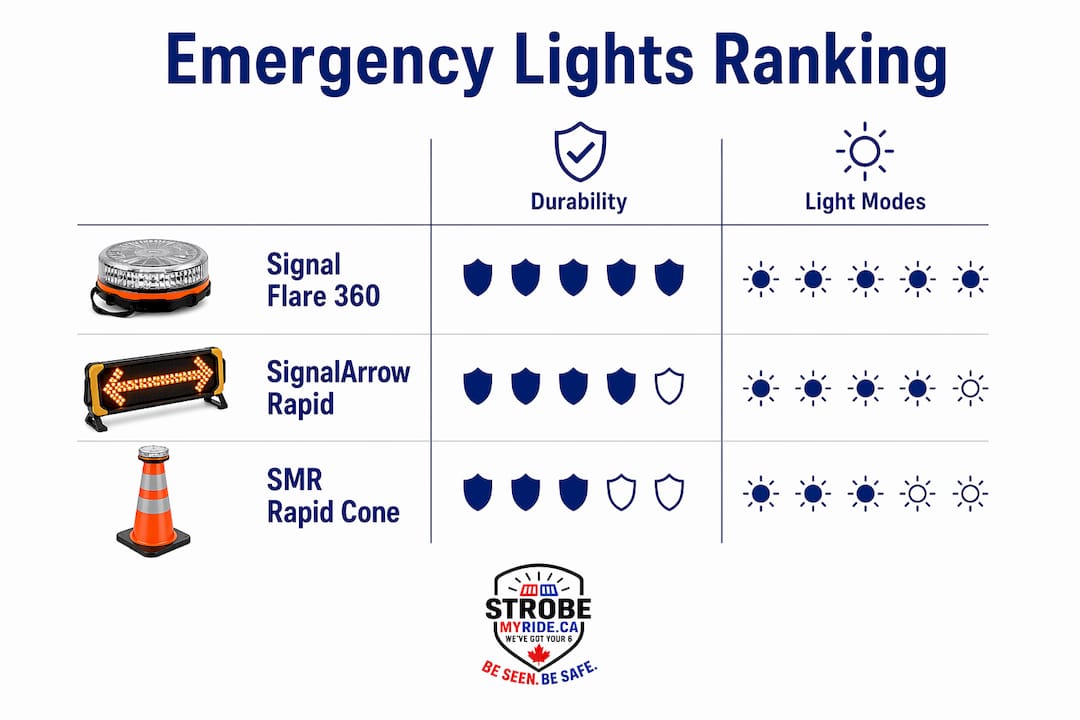
| Signal Flare 360 | LED emergency flare | Multiple flash modes, 360° | Rechargeable | Waterproof | Magnetic base, hook | Multi-mode visibility, solo operators |
| SignalArrow Rapid Deploy | Foldable LED arrow | Directional arrow, flash | Rechargeable | Weatherproof | Foldable stand | Lane guidance, traffic control |
| SMR Rapid Cone | Cone + LED combo | 360° flare + arrow modes | Rechargeable | Crushproof, waterproof | Integrated cone base | Full scene setup, commercial fleets |
| Quad Color Emergency Warning Lights | Multi-colour warning light | Quad colour flash modes | Rechargeable | Weatherproof | Magnetic base | Multi-role emergency signalling |
| LED road flares (general) | Portable LED flare | Steady/flash | Battery or rechargeable | Varies | Magnetic or hook | General breakdown visibility |
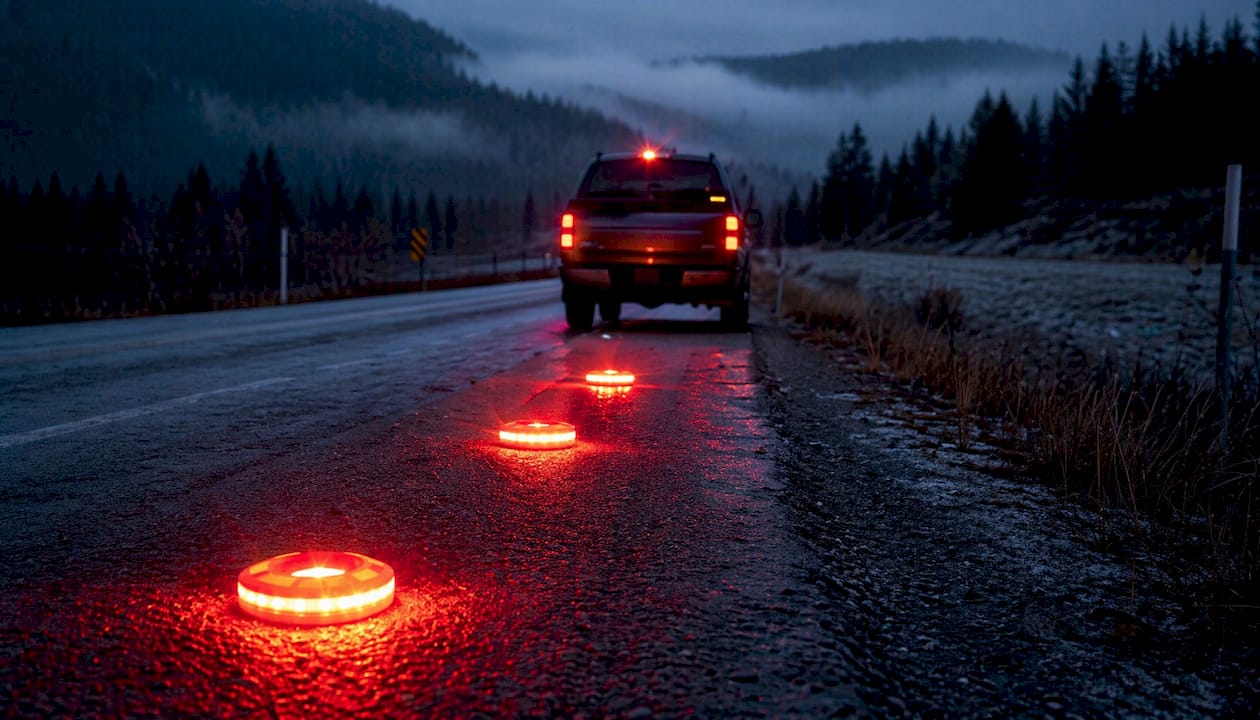
Ontario’s MTO Truck Handbook requires warning devices placed 30 metres front and rear of any immobilised commercial vehicle during limited visibility. The Signal Flare 360 and SMR Rapid Cone are built precisely for that scenario.
How do these LED roadside emergency lights compare?
The products above serve distinct roles, and choosing the wrong one for your situation costs you both safety and compliance.
The Signal Flare 360 is the workhorse for solo operators and passenger vehicle drivers. Its 360° flash pattern means approaching traffic sees it from any angle, and the rechargeable battery removes the frustration of dead disposable flares at the worst possible moment. Multiple flash modes let you match the output to conditions, from a slow pulse in moderate rain to a rapid strobe in near-zero visibility.
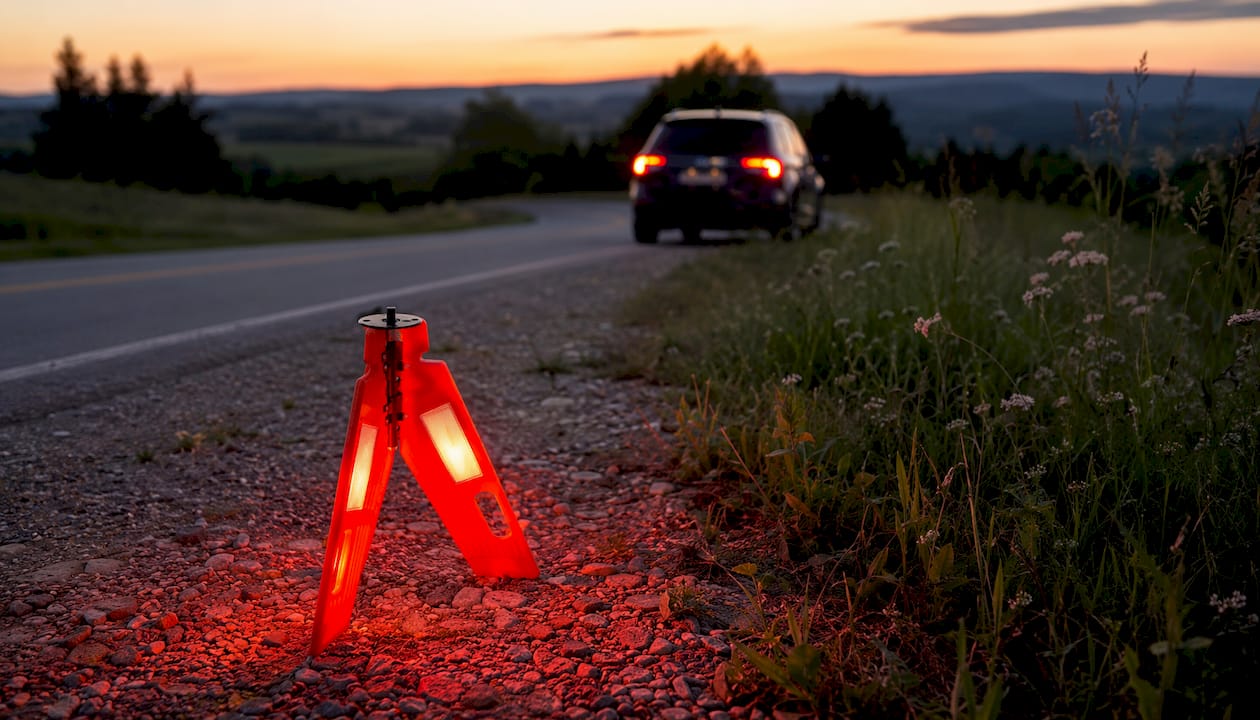
The SignalArrow Rapid Deploy solves a different problem. When you need drivers to move left or right around your scene, a flare tells them there is a hazard. A directional LED arrow tells them exactly where to go. Tow operators and roadside assistance crews who regularly set up on busy highways will find the foldable design deploys in seconds and collapses flat for storage.
The SMR Rapid Cone combines both functions into one unit. The folding cone base provides the physical barrier that drivers instinctively respect, while the integrated SignalFlare 360 and SignalArrow lights handle visibility and direction simultaneously. For fleet operators who need to meet the 30-metre placement rule with a single product per position, the Rapid Cone is the most practical choice.
Quad Color Emergency Warning Lights add flexibility for multi-role vehicles. The ability to cycle through colours makes them useful across different operational contexts, from roadside assistance to construction site perimeters.
Key differences at a glance:
- Signal Flare 360: best standalone flare for sustained, multi-mode 360° visibility
- SignalArrow Rapid Deploy: the only product here purpose-built for directional lane guidance
- SMR Rapid Cone: combines cone, flare, and arrow in one deployable unit for full scene control
- Quad Color Emergency Warning Lights: suited to operators who need colour-switching capability across different roles
- General LED road flares: adequate for basic breakdown visibility; rechargeable variants are strongly preferred for Canadian conditions
How to choose the right roadside emergency lights in Canada
The right product depends on your role, your vehicle, and the roads you work on. These are the criteria that actually matter:
- Visibility distance: Ontario requires warning devices visible from at least 150 metres during limited visibility. Confirm any product you buy meets or exceeds that threshold.
- Battery life: Devices must produce warning lights for at least eight hours under Ontario’s MTO requirements. Rechargeable LED flares with confirmed runtime ratings are the reliable choice here.
- Weather resistance: Canadian winters mean ice, sleet, and road spray. Waterproof and crushproof ratings are not optional for anything left on a highway shoulder.
- Mounting options: Magnetic bases work on most vehicle panels for quick deployment. Hook mounts and integrated cone bases suit ground placement on asphalt or gravel.
- Ease of deployment: A light you cannot set up quickly in the dark, in the cold, with gloves on, is a liability. Foldable designs like the SignalArrow and SMR Rapid Cone are built with that reality in mind.
- Directional capability: If you regularly redirect traffic around a scene, a plain flare is not enough. Add a directional LED arrow to your kit.
Pro Tip: Rechargeable LED flares are the better long-term choice for Canadian roadside conditions. Disposable chemical flares degrade in cold storage, create fire risk near fuel leaks, and generate hazardous waste. A rechargeable unit stored in your cab stays ready year-round and poses no ignition risk.
For fleet operators, the fleet warning light buying guide from Strobe My Ride covers how to standardise kit across multiple vehicles and match products to specific vehicle classes.
Canadian regulations and best practices for roadside warning lights
Ontario’s rules for commercial vehicles are the most detailed in the country and set a practical benchmark for all drivers.
The MTO Truck Handbook defines limited visibility as any condition where people or vehicles are not clearly visible at 150 metres. That includes the half-hour before sunset through the half-hour after sunrise, plus fog, snow, and rain. During those conditions, a commercial vehicle that cannot be moved off the roadway in a speed zone above 60 km/h must have warning devices set approximately 30 metres to both the front and rear.
Visibility requirement: Warning devices must produce light visible from a sufficient distance for a sustained period suitable for emergency situations.
Best practices for placement and use:
- Turn on hazard flashers immediately upon stopping, before exiting the vehicle
- Place warning devices at 30 metres front and rear as soon as it is safe to do so
- Use caution when placing any flare near a fuel leak or spilled flammable material; LED flares carry no ignition risk, which is a practical advantage over chemical alternatives
- Place an additional warning device before any hill, curve, or obstruction within 150 metres that blocks the view of your vehicle
- Keep warning devices deployed until the vehicle is moved or professional assistance arrives
Amber flashing lights are a separate category worth understanding. British Columbia’s CVSE guidance makes clear that amber lamps identify hazards but carry no implied guarantee of safety for workers nearby. Operators using amber warning lights on vehicles must back them with a formal policy of vehicle use. The light signals a hazard; the policy and the placement protect the worker.
For tow operators and roadside service vehicles, Strobe My Ride’s guide on emergency lights for tow trucks covers provincial requirements in more detail, including how Ontario’s rules interact with federal lighting standards under Technical Standards Document No. 108.
Strobe My Ride has the portable safety lighting you need
When you need portable LED safety lighting that ships fast within Canada and comes backed by real technical support, Strobe My Ride is the direct route.
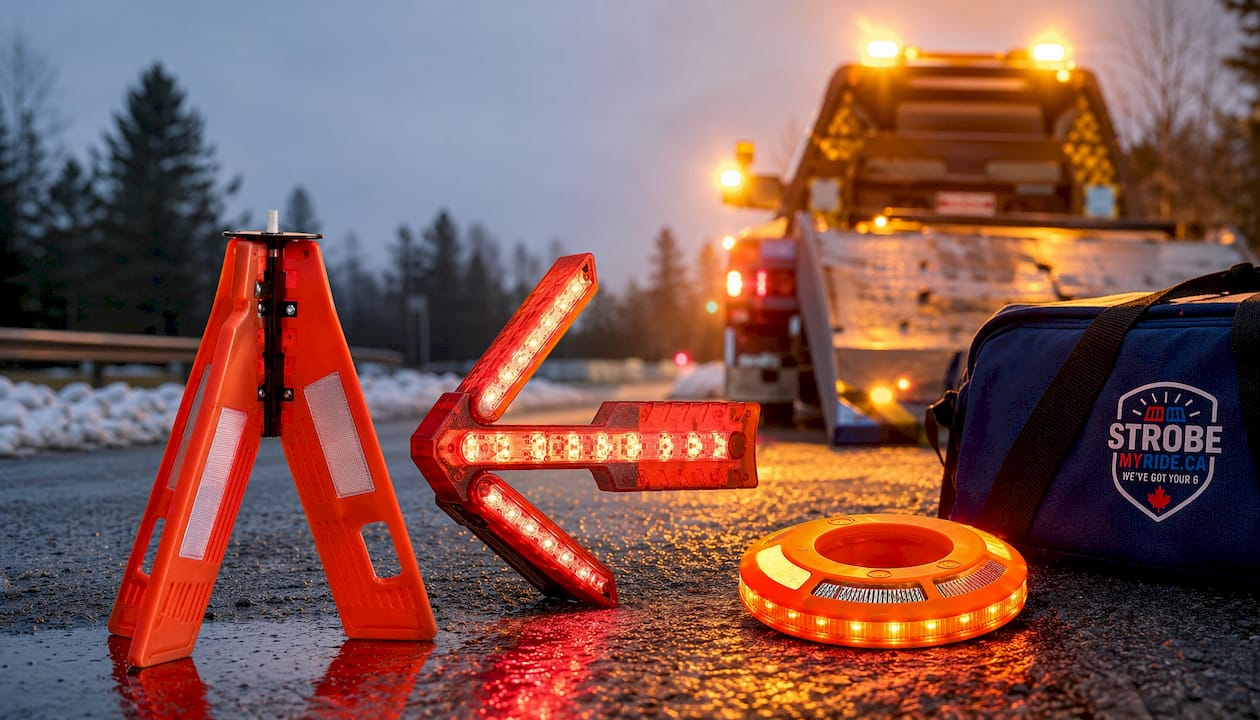
The Signal Flare 360, SignalArrow Rapid Deploy, and SMR Rapid Cone are all available now through Strobe My Ride’s online store, with fast Canadian shipping and industry-leading warranty coverage. Whether you are outfitting a single vehicle or standardising a commercial fleet, Strobe My Ride carries the products and the expertise to get it right. Browse the full range of portable safety lighting or go straight to the LED directional arrow if traffic control is your priority.
Key takeaways
The most effective roadside emergency lighting setup for Canadian conditions combines a 360° rechargeable LED flare, a directional arrow, and a physical cone, deployed at least 30 metres front and rear of any immobilised vehicle during limited visibility.
| Point | Details |
|---|---|
| Ontario placement rule | Warning devices must be placed at 30 metres in front and behind any immobilised commercial vehicle during limited visibility as required by Ontario. |
| Visibility standard | Devices must be visible from at least 150 metres and sustain output for at least eight hours, in line with Ontario regulations. |
| Rechargeable over disposable | Rechargeable LED flares work in cold storage, carry no ignition risk, and meet runtime requirements reliably. |
| Amber lights need a policy | Amber flashing lamps signal a hazard but do not protect workers; a formal policy of vehicle use is required alongside them. |
| Strobe My Ride | Supplies the Signal Flare 360, SignalArrow Rapid Deploy, and SMR Rapid Cone with fast Canadian shipping and warranty support. |
Recommended
- Emergency Lights That Work When Roads Get Worst | Strobe My Ride – Strobe My Ride
- Vehicle lighting troubleshooting tips: your 2026 Canadian guide | Strobe My Ride – Strobe My Ride
- Vehicle emergency lighting installation near me: 2026 guide | Strobe My Ride – Strobe My Ride
- Vehicle Emergency Lights: Canada Compliance and Install Guide | Strobe My Ride – Strobe My Ride