


For most Canadian tow trucks, the right lighting package starts with an amber 360° roof lightbar, backed by roof-mounted beacons and deck or surface mounts that meet Transport Canada TSD/CMVSS 108 photometric requirements. Strobe My Ride’s Patrol Bar Quad series, available in 47", 50" Slim, and 60" configurations, is the standout choice here — and it carries something no other tow lightbar offers: integrated stop/tail/turn functionality built directly into the bar.
For a fast shortlist, these five products cover most Canadian tow operations:
- Patrol Bar Quad (47", 50" Slim, or 60") — amber 360° roof lightbar with integrated stop/tail/turn
- Fleet Beacon HD-Duo Heavy-Duty Beacon — high-photometry roof beacon for heavy tow and rotators
- Fleet SM Stealth Smoked Lens Surface Mount — rear and deck-facing warning with low profile
- Signal Beacon-Lite 360 — compact 360° roof beacon for tight-clearance cabs
- Patrol Dash Duo Dash Mount Strobe — operator-facing dash indication
Two compliance facts drive every purchase decision in Canada. Ontario’s Highway Traffic Amendment Act (Bill 38) requires at least one top-mounted intermittent amber lamp visible from all directions for a minimum of 100 metres, activated only during active recovery or assistance. Nationally, TSD/CMVSS 108 sets photometric thresholds suppliers must meet, with two compliance paths: lens area or luminous intensity. Always request the test report.
Key takeaways
The strongest tow truck lighting package for most Canadian operations combines an amber 360° roof lightbar with integrated stop/tail/turn, high-photometry beacons, and rear-facing surface mounts that meet TSD/CMVSS 108 photometric requirements and Ontario’s 100 m visibility rule.
| Point | Details |
|---|---|
| Roof lightbar first | A 360° amber roof lightbar is the primary warning device; the Patrol Bar Quad’s stop/tail/turn integration is unique in its class. |
| Ontario 100 m rule | Bill 38 requires a top-mounted amber lamp visible from all directions for at least 100 m, active only during recovery. |
| Request the test report | TSD 108 has two compliance paths; always ask for the photometric report before purchasing. |
| Verify provincial rules | Alberta’s blue-light pilot has expired; Quebec green-light use requires authorisation. Confirm current rules before ordering. |
| Strobe My Ride | Strobe My Ride supplies the full Patrol Bar Quad lineup and all eight featured products with Canadian shipping and support. |
Table of Contents
- What are the best tow truck lights you can buy in Canada right now?
- How do you choose the right tow truck warning lights?
- What are Canada’s lighting rules for tow trucks by province?
- How should you mount and wire tow truck lights for maximum visibility?
- Which specs actually matter, and how do you maintain tow lights?
- What lighting setup does each type of tow truck need?
- What does a tow truck lighting procurement checklist look like?
- Strobe My Ride: Canadian tow lighting, ready to ship
- Sources
What are the best tow truck lights you can buy in Canada right now?
Patrol Bar Quad (47", 50" Slim, and 60")
The Patrol Bar Quad is Strobe My Ride’s flagship tow lightbar, and the stop/tail/turn integration sets it apart from every competing bar on the market. Rear-facing LEDs tie directly into your vehicle’s brake, tail, and turn circuits, eliminating the need for a separate rear light cluster on the tow bar. That matters for flatbeds and wheel-lifts where rear visibility is a compliance and safety priority. Choose the 47" for mid-size rigs, the 50" Slim for low-profile roof installs, and the 60" for heavy tow and rotator applications where maximum lens coverage is the goal.
The Patrol Bar Quad’s integrated stop/tail/turn means your tow bar functions as a legal rear lighting assembly, not just a warning light. That single feature can simplify your wiring harness and satisfy rear-lamp requirements in one installation.
Fleet Beacon HD-Duo Heavy-Duty Beacon
The Fleet Beacon HD-Duo is built for 24/7 fleet use on heavy tow trucks and rotators. Its high photometry output and rugged housing make it the right choice when you need redundant 360° coverage alongside a roof lightbar, or when a single high-output beacon is the primary warning device on a heavy rig.
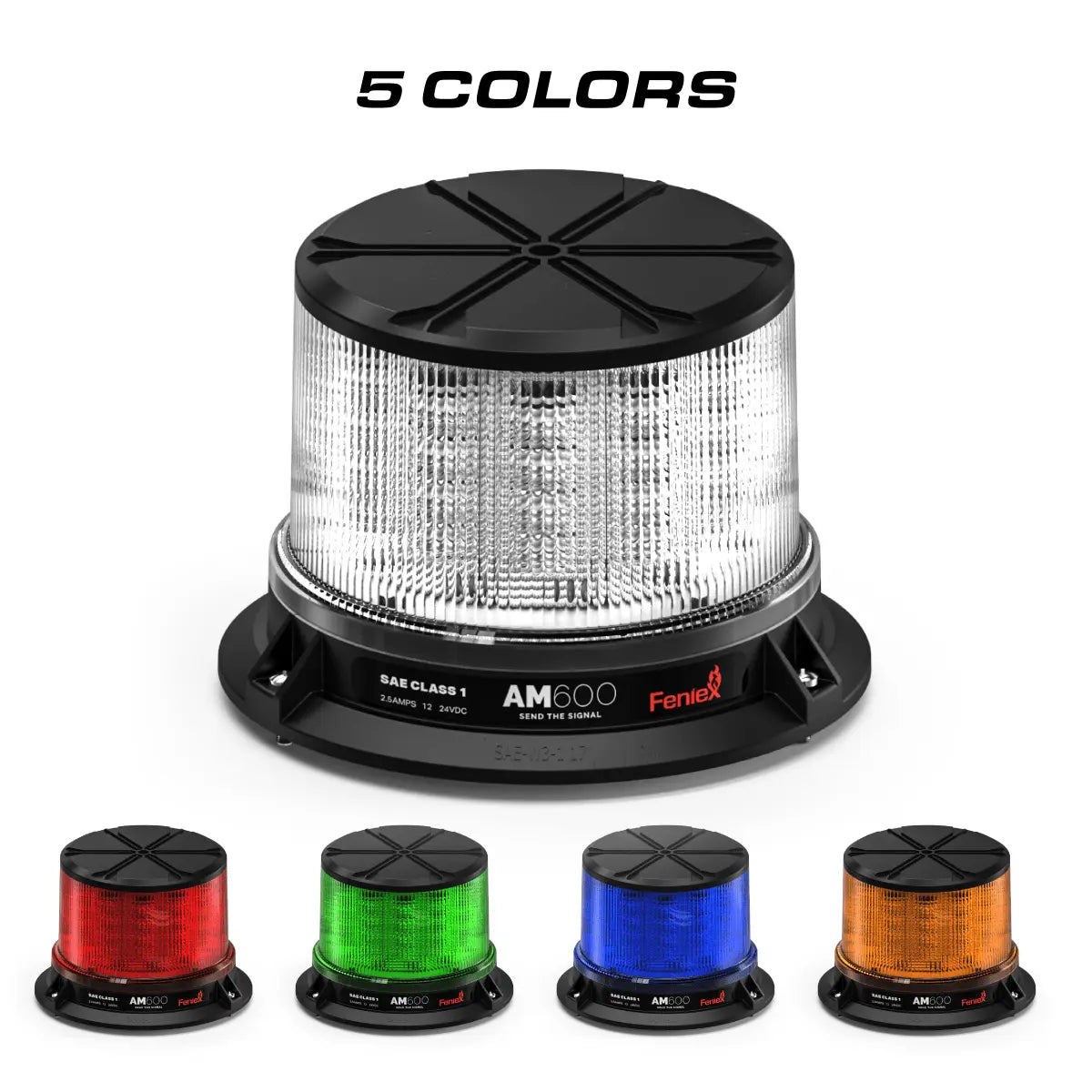
Fleet Beacon Mini (Amber/White Duo)
The Fleet Beacon Mini pairs amber warning output with a white work-light function in a compact footprint. It suits smaller trucks, administrative support vehicles, and any install where roof clearance is limited. The dual-colour function means one unit handles both roadside warning and scene illumination.
Patrol Beam Dual Force Quad lightbar and Fleet SM Stealth surface mount
For flatbeds and wheel-lifts, pairing the Patrol Beam Dual Force Quad deck-mounted lightbar with the Fleet SM Stealth surface mount covers both scene lighting and rear-facing warning in one clean package. The Patrol Beam Dual Force Quad delivers high lumen output for worksite illumination; the Fleet SM Stealth’s smoked lens keeps the profile low while providing integrated stop/tail/turn capability when wired correctly.
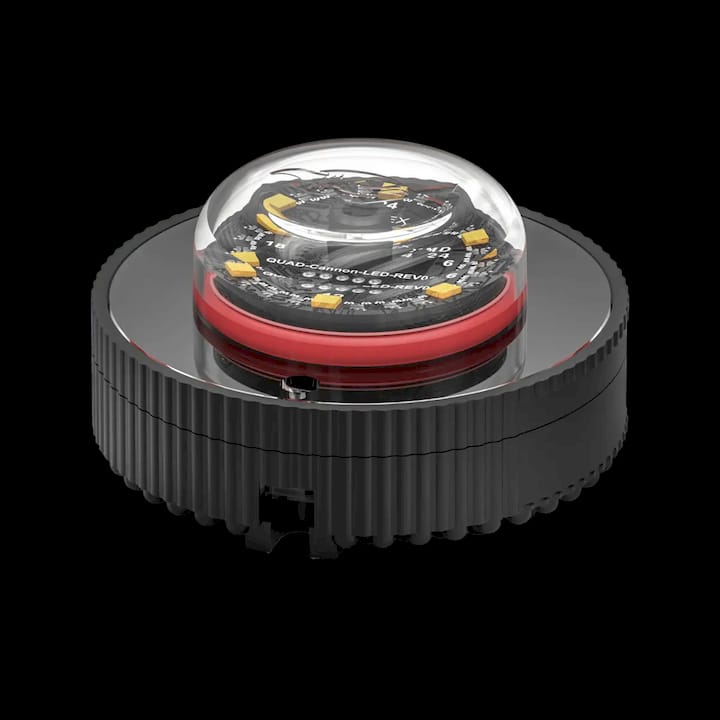
Patrol Dash Duo and Fire Dash Mini Responder
The Patrol Dash Duo gives operators a visible in-cab indication that warning lights are active, a simple but often-overlooked safety step. The Fire Dash Mini Responder is a green dash light for operators in jurisdictions that permit green or green-plus-amber combinations under authorisation, such as Quebec under article 226.2 of the provincial Highway Safety Code.
Pro Tip: Request the photometric test report for any product before purchasing. TSD 108 gives suppliers two compliance paths — lens area or luminous intensity — and knowing which path a product uses tells you whether it genuinely meets the standard for your application.
How do you choose the right tow truck warning lights?
Start with three questions: What does your province require? What photometry does the product claim, and can the supplier prove it? Where will the light mount, and does that location achieve 360° visibility?
Primary decision criteria:
- Photometry and visibility distance — Ontario mandates 100 m minimum; higher-output products provide a safety margin on high-speed roads
- Colour and provincial permit — amber is the standard across Canada; blue, green, and white combinations require specific provincial authorisation
- Mounting location — roof-mounted units achieve 360° coverage; deck and surface mounts handle rear and side-facing warning
- Flash patterns and synchronisation — multiple units on one vehicle must synchronise to avoid confusing or contradictory patterns
- IP rating and durability — IP67 or higher is the practical minimum for Canadian road conditions
- Warranty and Canadian support — confirm parts availability and whether the supplier has Canadian repair or replacement support
Questions to ask any supplier:
- Which TSD 108 compliance path does this product use — lens area or luminous intensity?
- Can you provide the photometric test report?
- What is the IP rating, and what operating temperature range is it rated for?
- Does the warranty cover replacement parts shipped within Canada?
- Does this product integrate with stop/tail/turn circuits?
Red flags: no photometric data available, SAE or TSD claims without a test report, warranty terms that require return shipping outside Canada, and no documentation of stop/tail/turn integration for rear-facing units.
Industry safety guidance is clear that lighting is one component of a traffic management plan. For night work or long-duration roadside tasks, cones, signs, flaggers, and arrow boards are required alongside your warning lights.
Pro Tip: On high-speed roadways, prioritise a roof-mounted 360° lightbar over low-profile surface mounts as your primary warning device. A higher mounting position increases visible distance significantly, especially for approaching drivers in adverse weather.
What are Canada’s lighting rules for tow trucks by province?
Federal baseline: TSD/CMVSS 108
Transport Canada’s TSD 108 sets photometric requirements, aiming tolerances, and lamp function definitions for vehicles sold and operated in Canada. Suppliers must meet either a lens area or luminous intensity threshold. When you buy a warning light, ask which path the product uses and request the supporting test data. The TP14116 federal guidance adds location and quantity requirements for tail lamps, stop lamps, side markers, clearance lamps, and identification lamps on trucks and trailers.
Ontario
If you work on roads in Ontario, Bill 38 of the Highway Traffic Amendment Act requires at least one top-mounted intermittent amber lamp, visible from all directions for a minimum of 100 metres. Activation is restricted to active recovery or assistance tasks. Ontario’s Towing and Storage Safety and Enforcement Act, 2021 also places a direct duty on operators to keep equipment inspected and maintained to prescribed standards. See Strobe My Ride’s Ontario tow truck lighting guide for province-specific product notes.
Alberta
Alberta issued a Registrar’s Exemption pilot allowing tow trucks to use blue flashing lamps in addition to amber, under strict conditions: blue must be used alongside amber, the unit must be roof-mounted, and it must be controlled from the cab. The Alberta pilot bulletin notes the pilot expired July 1, 2023. Verify current provincial authorisation status before specifying any blue-plus-amber combination for an Alberta fleet.
Quebec
Quebec’s Highway Safety Code, article 226.2, permits certain flashing green lights for authorised persons, including tow-truck operators under regulated conditions. Authorisation is required; confirm current technical standards with the provincial authority before ordering green-lamp products.
Provincial rules change. Always verify the current order or regulation for your specific jurisdiction before purchasing non-standard colour combinations. A product that was permitted under a pilot may not be authorised today.
Pro Tip: Name the province in your procurement spec sheet and attach the relevant statute or ministry bulletin. This protects you during roadside inspections and fleet audits.
How should you mount and wire tow truck lights for maximum visibility?
Mounting locations and heights
Roof-mounted lightbars and beacons should sit as high as the vehicle geometry allows, centred on the roof for balanced 360° coverage. Deck-mounted units face rearward and should be positioned at the highest practical point on the deck structure. Surface mounts for side warning go on the widest point of the body, unobstructed by toolboxes or equipment.
Installation checklist:
- Confirm the unit is visible from all required directions at the target distance (100 m minimum in Ontario)
- Mount with corrosion-resistant hardware; use a sealed grommet at every wiring entry point
- Orient the lens face perpendicular to the direction of travel for maximum forward and rearward throw
- Verify aiming tolerances against TSD guidance after mounting; re-check after any impact or body repair
- Label all circuits in the cab with the corresponding light function
Wiring best practices
Run each warning light circuit on a dedicated fused line. Use an in-cab controller with visible indicators so the operator always knows which lights are active. Hardwired installations are more reliable for permanent fleet vehicles; plug-and-play connectors suit temporary or rotational installs but require regular inspection for corrosion.
Pro Tip: When running multiple units, use a dedicated flash controller with synchronised outputs. Unsynchronised patterns from two or more units can create confusing or legally non-compliant flash sequences. A single controller with split-zone outputs solves this cleanly.
Which specs actually matter, and how do you maintain tow lights?
IP67 is the practical minimum for Canadian tow operations. It means the unit survives temporary immersion and is fully dust-sealed — relevant for winter road spray, pressure washing, and recovery work in wet conditions. IP68 or IP69K ratings offer additional protection for units mounted low on the deck or exposed to high-pressure wash.
Operating temperature range matters in Canada. Look for units rated to at least -40°C for reliable cold-start performance in northern operations.
Photometry figures — candela output and visible distance — should come from a test report, not marketing copy. Under TSD 108, suppliers choose between lens area and luminous intensity compliance paths; the test report tells you which one applies and what the measured output is.
Maintenance schedule:
- Weekly — visual check for cracked lenses, loose mounts, and corrosion at connectors
- Monthly — full electrical function test; check all flash patterns and stop/tail/turn integration
- Seasonally — clean lenses, inspect wiring harness for chafing, re-torque mounting hardware
- Annually — full photometric verification after any major impact; replace any unit that no longer meets the 100 m visibility standard
| Spec | Minimum recommended | Notes |
|---|---|---|
| IP rating | IP67 | IP68/IP69K for deck-mounted or low-profile units |
| Operating temperature | -40°C to +60°C | Critical for Canadian winters |
| Photometry compliance | TSD 108 test report required | Lens area or luminous intensity path |
| Visibility distance | 100 m (Ontario minimum) | Higher output recommended for highway work |
| Warranty | Minimum 1 year, Canadian parts support | Confirm replacement availability |
What lighting setup does each type of tow truck need?
Flatbed recovery
- Patrol Bar Quad (47" or 50" Slim) on the roof for 360° amber warning and integrated stop/tail/turn
- Fleet SM Stealth surface mounts on the rear deck corners for rearward warning
- Patrol Beam Dual Force Quad deck-mounted for scene and worksite illumination
- Wiring note: tie the Patrol Bar Quad’s stop/tail/turn outputs directly to the vehicle’s brake and turn circuits
Wheel-lift
- Patrol Bar Quad (47") or Signal Beacon-Lite 360 on the roof
- Signal Vector surface mounts for rear and side-facing warning
- Patrol Dash Duo for operator indication
- Keep the rear-facing surface mounts clear of the wheel-lift mechanism at all lift positions
Heavy tow and rotator
- Patrol Bar Quad 60" on the roof for maximum lens coverage
- Fleet Beacon HD-Duo as a secondary roof beacon for redundant 360° output
- Fleet SM Stealth units on the rear of the tow bar, wired for stop/tail/turn
- Patrol Beam Dual Force Quad for scene lighting during recovery operations
- Redundancy is the priority: two independent warning circuits so a single failure does not leave the rig dark
Administrative and support vehicles
- Fleet Beacon Mini (Amber/White Duo) for combined warning and work-light function
- Patrol Dash Duo for in-cab indication
- Fire Dash Mini Responder where provincial authorisation permits green dash use
Pro Tip: Match the lightbar length to your cab width. A bar that overhangs the roofline creates a snagging hazard and may not meet mounting requirements. The 50" Slim is the most versatile fit across mid-size and full-size tow truck cabs.
What does a tow truck lighting procurement checklist look like?
Before you issue an RFQ or place an order, confirm these items in writing with your supplier:
- Photometric test report (TSD 108 compliance path: lens area or luminous intensity)
- IP rating and operating temperature range
- Warranty terms and Canadian parts/replacement support
- Installation diagram showing mounting location, wiring schematic, and stop/tail/turn integration
- Province-specific notes if ordering for Ontario, Alberta, or Quebec fleets
Ballpark price ranges (Canadian dollars, approximate):
- Roof lightbar (Patrol Bar Quad series) — mid-to-upper range for commercial-grade tow bars with stop/tail/turn integration; lead time is typically standard stock for common configurations
- Heavy-duty beacon (Fleet Beacon HD-Duo) — mid-range; usually in stock for fast Canadian shipping
- Surface mount (Fleet SM Stealth, Signal Vector) — entry-to-mid range; plug-and-play options available
- Dash light (Patrol Dash Duo, Fire Dash Mini Responder) — entry range; fastest lead time
Custom colours, MTO/DOT flash pattern configurations, or special-order sizes add lead time. Winter is the peak installation season for tow fleets; order early to avoid delays. See Strobe My Ride’s pricing and installation page for current availability.
Pro Tip: Order one spare beacon or surface mount module per vehicle when you kit out a fleet. A single failed unit during a busy winter shift costs far more in downtime than the cost of a spare on the shelf.
Strobe My Ride: Canadian tow lighting, ready to ship
Tow operators across Canada need lights that are compliant, proven, and available fast. Strobe My Ride supplies the complete lineup covered in this article, from the Patrol Bar Quad series with its unique stop/tail/turn integration to the Fleet Beacon HD-Duo, Signal Beacon-Lite 360, and Fleet SM Stealth surface mount, all with fast Canadian shipping and direct technical support.
Every product ships from Canada, with warranty support handled domestically. No cross-border delays, no grey-market uncertainty on compliance documentation. If you are speccing a single truck or outfitting a fleet, Strobe My Ride’s team can match you to the right configuration for your province and vehicle class. Browse the full tow truck warning lights Canada collection or contact Strobe My Ride directly to get a product recommendation and lead-time confirmation before you order.
Sources
These primary sources support the legal and technical claims in this article. Keep them on file for procurement audits and roadside inspections.
- Bill 38, Highway Traffic Amendment Act (Roadside Assistance Vehicles), 2012 - Legislative Assembly of Ontario
- S6 Vehicle requirements (TSD 108) - Transport Canada (TSD 108 revised r8 PDF)
- Truck Blue Light Pilot Project - Alberta Registrars Exemption bulletin
- OHS responsibilities and industry-supported safe work practices for the towing and recovery industry - B.C. industry guidance
Keep a copy of the relevant provincial statute and your product’s photometric test report in the vehicle or fleet file. If you are ever questioned at a roadside inspection or fleet audit, these two documents answer most compliance questions immediately.
Recommended
- Tow truck light bar guide for Canadian operators | Strobe My Ride – Strobe My Ride
- Tow Truck Lights Ontario | LED Warning Lights – Strobe My Ride – Strobe My Ride
- Vehicle strobe lights for Canadian professionals: 2026 guide | Strobe My Ride – Strobe My Ride
- Tow Truck Safety Lighting That Works | Strobe My Ride – Strobe My Ride


