


Wig wag lights alternate a vehicle’s headlamps so that only one side illuminates at a time, creating a high-visibility attention signal. In Canada, their use is generally restricted to authorised emergency vehicles and designated work vehicles under provincial Highway Traffic Acts and Ontario regulation 070484. If you manage an authorised fleet, the practical next step is to select a CMVSS-aware, plug-and-play OEM module from the ZW series and confirm your provincial rules before installation. If your vehicle is not authorised, do not install a wig wag system.
Key takeaways
Wig wag lights are legally restricted to authorised emergency and designated work vehicles in Canada; confirm provincial authorisation before purchasing any headlight flasher module.
| Point | Details |
|---|---|
| Confirm legal authorisation first | Check your provincial Highway Traffic Act and obtain written fleet authorisation before buying or installing. |
| Match the module to the vehicle | Provide VIN, model year, and headlamp type; OEM plug-and-play modules preserve factory diagnostics on late-model platforms. |
| Use a certified upfitter when required | Vehicles under warranty or with ADAS need professional installation with documented compliance records. |
| Train operators on correct use | Activate only on authorised duty, use low beams to limit glare, and log activation times in vehicle records. |
| Strobe My Ride ZW series | The ZW-MFD2, ZW-FSD, and ZW-GMLCv2 are Canada-available plug-and-play modules with Canadian support and warranty. |
Table of Contents
- What are wig wag lights and how do they flash?
- Canadian legal status: what CMVSS 108 and provincial rules require
- What types of wig wag solutions are available?
- What should you check before buying a wig wag system?
- Canada-ready OEM modules: the Strobe My Ride ZW series
- Installation: DIY vs. professional upfitting
- Safe operation: flash rates, glare, and operator procedures
- Strobe My Ride: plug-and-play wig wag modules with Canadian support
- Sources
What are wig wag lights and how do they flash?
A wig wag light system uses a timing circuit or electronic module to alternate power between a vehicle’s left and right headlamps. Only one lamp is active at any moment, producing a side-to-side flashing pattern that is visually distinct from a steady burn or a simultaneous strobe. The term “wig wag” is informal; the recognised industry term is alternating headlamp flasher or headlamp modulator, depending on the configuration.
Key technical characteristics:
- Alternating output: left and right headlamps fire in sequence, never simultaneously during the alternating phase.
- Typical flash rate: classic relay-based units run at approximately 110 flashes per minute, lighting each lamp for roughly half a second.
- Pattern combinations: many modules blend alternating flashes with brief simultaneous bursts to vary the signal.
- Beam selection: most systems operate on low beams to reduce glare; some support high/low beam switching within the pattern.
A practical example: a volunteer firefighter responding in a privately owned vehicle that is provincially authorised may activate a headlight wig wag module to alert oncoming traffic before reaching the scene. The alternating flash is immediately recognisable as an emergency signal rather than a lamp fault.
Canadian legal status: what CMVSS 108 and provincial rules require
This is where most buyers need to slow down. Federal and provincial rules operate on two separate tracks, and both apply.
Federal standard — CMVSS 108 / TSD-108
All lighting equipment installed on Canadian vehicles must comply with CMVSS 108 / TSD-108, which governs installation, performance, and location of lamps and retroreflective devices. Any modification that interferes with factory lighting compliance can make a vehicle non-compliant for on-highway use. The Motor Vehicle Safety Regulations (C.R.C., c. 1038) list CMVSS 108 and its related technical standards documents as binding references for vehicle lamps and warning devices. Mounting location also matters: Transport Canada’s federal lighting equipment location requirements for trucks, buses, and MPVs clarify where lighting may be positioned, which affects whether a wig wag installation meets federal location rules.
Provincial law — Highway Traffic Acts and municipal bylaws
Provincial Highway Traffic Acts control who may use alternating headlamp flashers on public roads. Permitted vehicle classes, authorised colours, and activation conditions vary by province. Nova Scotia’s Vehicle Warning Lights Regulations under the Motor Vehicle Act, for example, specify permitted colours and vehicle categories for flashing lights, including distinctions between amber work-vehicle lights and red/blue emergency displays. Alberta’s vehicle equipment regulation similarly sets location, colour, and mounting height rules that affect headlamp modifications.
Regulatory risk: Unauthorised use of wig wag signal lights can result in fines, orders to remove equipment, and potential gaps in commercial insurance coverage. Before purchasing any headlight flasher module, confirm your vehicle class is authorised in your province and obtain written documentation of that authorisation. When in doubt, consult a certified upfitter or your provincial transport ministry.
Practical compliance steps before you buy:
- Identify your vehicle class and confirm it is listed as an authorised category in your province’s Highway Traffic Act or equivalent regulation.
- Verify permitted colours for your vehicle type and jurisdiction.
- Check whether your municipality imposes additional restrictions beyond provincial rules.
- Obtain fleet or operator authorisation in writing.
- Keep all documentation on the vehicle.
What types of wig wag solutions are available?
Three broad solution types cover most fleet and vocational applications. Each has a different installation profile, compatibility range, and risk level.
| Solution type | How it works | Voltage | Best fit | Key trade-off |
|---|---|---|---|---|
| OEM / OBD2 plug-and-play module | Interfaces with vehicle electronics via OEM harness or OBD2 port; no headlamp wiring spliced | 12 V (most) | Late-model GM, Ford, and other supported OEMs | Requires confirmed vehicle compatibility |
| Relay-based hardwired controller | Solid-state timing circuit drives electromechanical relays rated for headlamp current contacts to alternate lamp power | 12 V or 24 V | Older vehicles, heavy-duty trucks, non-CAN platforms | More wiring; relay contacts need periodic inspection |
| External strobe / LED warning kit | Separate LED or strobe units mounted independently; does not alter OEM headlamps | 12 V or 24 V | Vehicles where headlamp modification is not permitted or practical | Does not produce a true headlamp wig wag effect |
Modern vehicles with CAN bus or advanced driver-assistance systems (ADAS) are sensitive to headlamp circuit modifications. Hardwired relay kits that splice directly into OEM headlamp wiring can trigger fault codes, disable ADAS features, or void factory warranties on late-model platforms. OEM plug-and-play modules are designed to communicate with the vehicle network in ways that preserve factory diagnostics and avoid permanent harness splices.
Pro Tip: For any fleet vehicle still under manufacturer warranty or equipped with ADAS, prefer an OEM plug-and-play headlight wig wag module. It reduces warranty risk and keeps factory diagnostics intact.
Relay-based units remain the right choice for older or heavy-duty platforms where OEM modules are not available. Professional-grade relay flashers pair solid-state timing electronics with electromechanical relays sized for headlamp current, providing reliable timing without large heat sinks.
What should you check before buying a wig wag system?
Work through this checklist before placing an order. Missing any item creates compliance or installation risk.
- Vehicle compatibility: confirm make, model, year, and factory headlamp type (halogen, HID, LED). OEM modules are vehicle-specific.
- Voltage: verify 12 V or 24 V system; heavy trucks and some transit vehicles run 24 V.
- Control method: decide between OBD2/OEM plug-and-play and hardwired relay based on vehicle age and warranty status.
- Flash patterns and adjustability: confirm the module offers the pattern count and rate adjustment your operational environment requires.
- IP/weatherproof rating: any module mounted in an exposed location needs an appropriate ingress protection rating.
- Current draw and fuse sizing: request the manufacturer’s stated amp draw and recommended fuse size; verify against your vehicle’s fuse panel capacity.
- SAE and CMVSS references: ask for documentation of SAE standard references (J595 or J845 as applicable) and any CMVSS-relevant markings. Transport Canada’s safety standards page lists the SAE standards Canadian regulations adopt for warning lamps.
- Warranty and Canadian support: confirm warranty terms and that technical support is available in Canada.
- Installer availability: identify a certified upfitter before ordering, especially for vehicles under warranty.
Red flags to watch for: no electrical specifications listed, no IP rating stated, vague compatibility claims (“fits most vehicles”), and no Canadian warranty or support contact.
For fleet procurement, standardise on a tested and documented module per vehicle family. Record the module part number, installation date, installer name, and fuse configuration for each vehicle in your compliance file. Reliable fleet operators also benefit from reviewing a fleet lighting compliance guide before finalising their procurement decision.
Canada-ready OEM modules: the Strobe My Ride ZW series
For authorised fleets seeking plug-and-play headlamp flasher solutions, Strobe My Ride carries three ZWAGZ-family modules that cover the most common OEM applications in Canada.
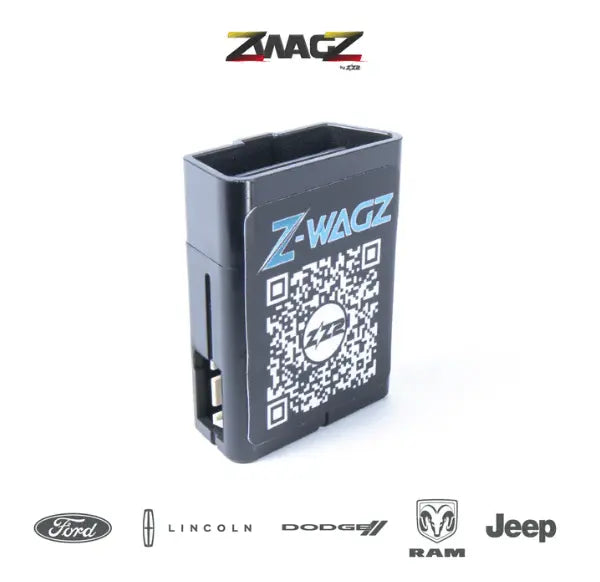
ZW-MFD2 OBD2 Flash Module connects via the vehicle’s OBD2 port, making it the least invasive option for supported late-model GM platforms. No headlamp harness splicing is required. It suits municipal fleets and volunteer fire departments running current-generation GM trucks or SUVs where preserving factory diagnostics is a priority.
ZW-FSD is a ZWAGZ-family flasher module variant suited to additional OEM applications beyond the MFD2’s primary GM focus. Tow operators and roadside assistance fleets with mixed OEM lineups will find it a practical complement to the MFD2 when their vehicle mix extends beyond a single platform.
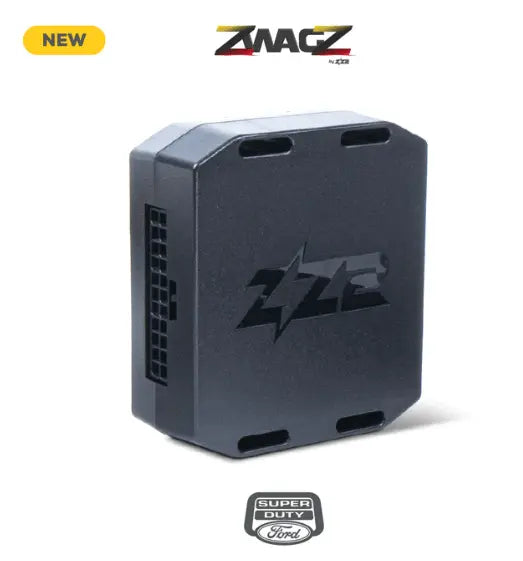
ZW-GMLCv2 is a harnessed module designed for headlamp control on specific GM and other supported platforms where a harnessed install is required rather than an OBD2 connection. It suits utility fleets and construction operators whose vehicles need a more integrated connection.
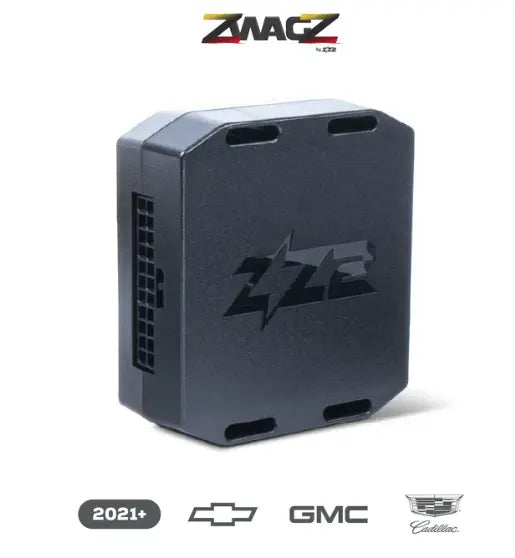
For all three modules, provide your VIN, model year, and factory headlamp type when requesting a compatibility check. Where headlamp modification is not the right fit — for example, on a vehicle where only auxiliary warning lights are needed — Strobe My Ride’s emergency vehicle lighting range offers SAE-rated surface mounts, light bars, and beacons as standalone warning solutions. Confirm your provincial authorisation before ordering any module.
Installation: DIY vs. professional upfitting
The right installation path depends on your vehicle, your warranty status, and your compliance obligations.
DIY installation is practical for older vehicles without CAN bus systems and for operators with solid electrical knowledge. A plug-and-play OBD2 module on a supported platform can typically be installed in one to three hours. Hardwired relay kits on older trucks may take three to six hours depending on routing and mounting complexity. That said, DIY on a modern CAN vehicle carries real risk: an incorrect splice can trigger persistent fault codes or disable safety systems.
Professional upfitting is the recommended path for any vehicle under manufacturer warranty, any vehicle with ADAS, and any installation where compliance documentation is required. A certified upfitter will test the installation, size fuses correctly, verify grounding, and provide a written record of the work. For installation pricing and certified upfitter options in Canada, Strobe My Ride maintains a current resource. Fleet visibility and safety also depend on complementary systems; fleet operators managing multiple vehicles often find that pairing a wig wag module with durable, well-maintained vehicle components across the fleet reduces overall downtime, a principle that extends to everything from lighting to wiper reliability under demanding conditions.
Installer checklist for any wig wag light installation:
- Verify fuse sizing against the module’s stated current draw before powering up.
- Confirm secure mechanical mounting with no movement under vibration.
- Check all ground connections with a multimeter before closing the circuit.
- Preserve factory connectors where possible; document any splices made.
- Run a full functional test across all flash patterns.
- Record the installation: date, installer, part number, fuse size, and any deviations from the manufacturer’s diagram.
- Retain a copy of the compliance authorisation on the vehicle.
Safe operation: flash rates, glare, and operator procedures
A wig wag system that is installed correctly can still create hazards if operated incorrectly.
Glare and beam selection are the most common operational risks. Alternating high-beam flashes can cause temporary visual impairment for oncoming drivers. Low beams are the appropriate default for most wig wag applications; high-beam patterns should only be used where specifically authorised and where road geometry makes oncoming glare unlikely. Mounting angle also matters: a module aimed too high amplifies glare even on low beams.
Flash rate and duty cycle affect how the signal reads to other road users. A consistent rate at approximately 110 FPM reads as an intentional warning. An erratic or very slow rate can be mistaken for a lamp fault. Adjustability is a practical advantage when operating in different environments, such as a high-ambient-light highway versus a residential street at night.
Operator training should cover:
- When to activate: only during authorised duty, never for personal use or to signal frustration in traffic.
- Scene management: deactivate the system once the scene is secured and the vehicle is stationary in a safe position, to avoid disorienting other responders.
- Dispatch communication: log activation and deactivation times in vehicle records.
- Equipment checks: confirm the system functions correctly at the start of each shift.
- Disabling procedure: document a clear process for disabling the equipment when the vehicle is not on authorised duty, and train all operators on it.
For a broader look at emergency vehicle lighting compliance practices in Canada, Strobe My Ride’s compliance guide covers the full regulatory picture for authorised fleets.
Strobe My Ride: plug-and-play wig wag modules with Canadian support
Canadian fleets authorised to run wig wag light systems get a direct path to the right module with Strobe My Ride. The ZW-MFD2, ZW-FSD, and ZW-GMLCv2 cover the most common OEM platforms in Canada, ship quickly from within the country, and come backed by industry warranties and Canadian technical support.
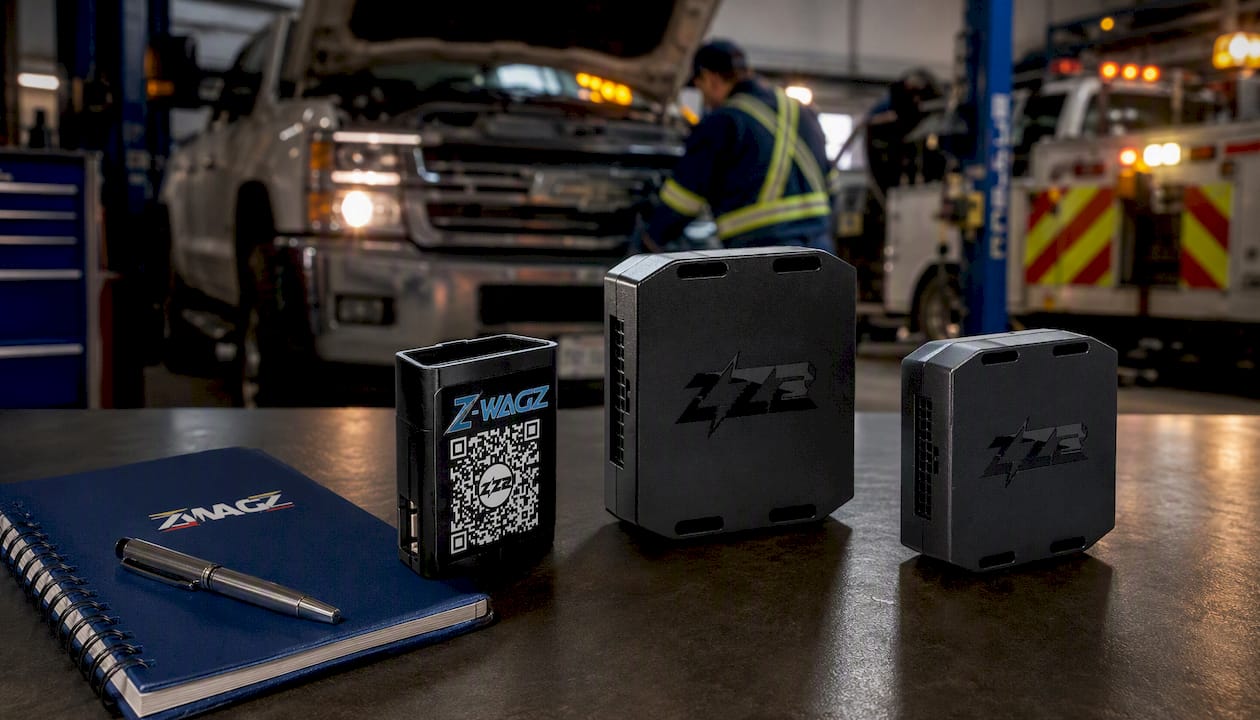
To confirm compatibility, have your VIN, model year, and factory headlamp type ready, then contact Strobe My Ride directly. The team can match your vehicle to the correct module, provide an installation diagram, and connect you with a certified upfitter if you need professional installation. Municipal fleets and larger operators can request a written quote that includes compatibility confirmation, fuse specifications, and warranty terms. Visit the ZW-MFD2 product page to start your compatibility check or reach out to Strobe My Ride for a written installation plan.
Sources
- Ontario regulation 070484
- CMVSS 108 / TSD‑108 (Transport Canada PDF)
- Vehicle Warning Lights Regulations — Motor Vehicle Act (Nova Scotia)
Recommended
- Fleet Lighting Compliance Guide for Canada | Strobe My Ride – Strobe My Ride
- Fleet Warning Light Buying Guide for Canada | Strobe My Ride – Strobe My Ride
- Vehicle lighting troubleshooting tips: your 2026 Canadian guide | Strobe My Ride – Strobe My Ride
- Amber strobe lights for Canadian professional vehicles: 2026 guide | Strobe My Ride – Strobe My Ride


