


For most buyers, the Fleet Beacon HD-Duo is the best overall emergency light bar from Strobe My Ride, delivering heavy-duty output, dual-colour capability, and the rugged build that tow operators, municipal crews, and fleet managers depend on. For value, the Fleet Beacon Mini (Amber/White Duo) punches well above its compact size with reliable amber/white output and a warranty that protects the investment. Fleets running mixed or heavy-duty vehicles should look at the Patrol Beam Dual Force Quad, a high-output off-road style light bar built for demanding scene lighting and search tasks.
Quick verdict:
- Best overall: Fleet Beacon HD-Duo — heavy-duty output, dual-colour, fleet-proven
- Best value: Fleet Beacon Mini (Amber/White Duo) — compact, reliable, budget-friendly
- Best for fleets and utility: Patrol Beam Dual Force Quad — high-output, multi-role, built for demanding conditions
Key takeaways
The Fleet Beacon HD-Duo is the strongest all-round pick for professional use, combining heavy-duty output, dual-colour capability, and the build quality that demanding fleet applications require.
| Point | Details |
|---|---|
| Best overall pick | The Fleet Beacon HD-Duo delivers heavy-duty dual-colour output suited to tow, plow, and municipal fleets. |
| Key spec to verify | Always confirm IP rating, peak candela, and voltage compatibility before purchasing any warning light. |
| Legal requirement | Flashing colours other than standard amber often require provincial authorisation; verify your jurisdiction before installing. |
| SAE standards matter | Products referencing J845, J595, or J2498 give you a verifiable performance baseline, not just a marketing claim. |
| Strobe My Ride | Canadian supplier offering fleet pricing, warranty support, and compliance resources for all Patrol, Signal, and Fleet series models. |
Table of Contents
- Best emergency light bars from Strobe My Ride: model profiles
- How to read light bar specifications
- Compliance and permitted colours: what you need to know before you buy
- Installation basics, mounting options, and maintenance
- How to choose the right emergency warning light
- Why Strobe My Ride is a trusted Canadian supplier
- Strobe My Ride’s top picks are ready to ship across Canada
- Sources
Best emergency light bars from Strobe My Ride: model profiles
Six models cover the full range of professional needs, from compact surface mounts to heavy-duty beacons. Here is what each one does best.
Fleet Beacon HD-Duo — heavy-duty beacon
The HD-Duo is built for tow trucks, snow plows, and municipal vehicles that need maximum visibility in all weather. Its dual-colour output (typically amber and white) covers wide-angle omnidirectional warning, and the heavy-duty housing handles the vibration and temperature swings that destroy cheaper units.
- Mounting: permanent roof or rack mount
- Voltage: 12V/24V compatible
- IP rating: weatherproof construction for outdoor duty
- Best for: tow, plow, municipal, and heavy fleet
View the Fleet Beacon HD-Duo
Fleet Beacon Mini (Amber/White Duo)
A compact amber/white beacon that fits service vans, utility trucks, and roadside assistance vehicles where roof space is limited. The dual-colour output gives operators flexibility, and the low-profile design reduces wind noise and drag.
- Mounting: surface mount, low-profile
- Voltage: 12V
- Best for: service vehicles, roadside assistance, utility fleets needing discreet signalling
Patrol Beam Dual Force Quad — LED off-road light bar
The Dual Force Quad is the high-output choice for operators who need both warning visibility and scene illumination. Its quad-LED array delivers serious forward throw, making it the right call for search tasks, off-road recovery, and any role where you need to light up a work zone, not just warn traffic.
- Mounting: roof or roll bar mount
- Voltage: 12V/24V
- Best for: search and rescue, off-road recovery, heavy tow, scene lighting
View the Patrol Beam Dual Force Quad
Fleet SM Stealth — smoked lens surface mount
The Stealth is the go-to for unmarked or low-profile vehicles. The smoked lens keeps the unit nearly invisible when off, and the surface-mount design means no roof penetrations and a clean install on sedans, SUVs, or light trucks.
- Mounting: surface mount (adhesive or screw)
- Voltage: 12V
- Best for: unmarked vehicles, volunteer responders, pilot cars
View the Fleet SM Stealth
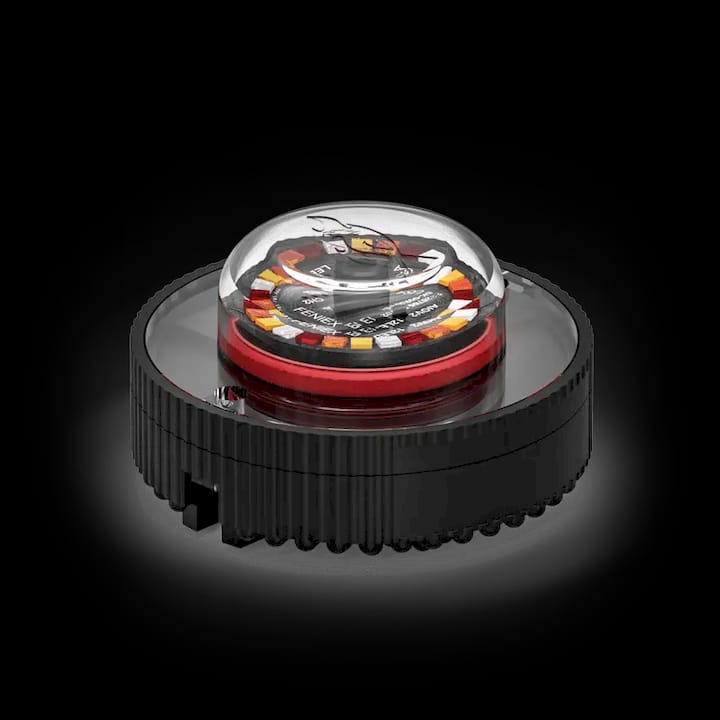
Signal Beacon-Lite 360
A 360° beacon designed for compact and removable applications. It suits short-duty cycles, utility vehicles, and operators who need a portable warning light they can move between vehicles.
- Mounting: magnetic or surface mount
- Voltage: 12V
- Best for: utility, construction, short-duty or multi-vehicle operations
View the Signal Beacon-Lite 360
Signal Vector — surface mount
The Signal Vector is a linear surface-mount warning light for low-profile roof or rear-deck applications. It works well on multi-role or unmarked vehicles where a full-length bar is impractical, and its directional output focuses the warning where it matters most.
- Mounting: surface mount
- Voltage: 12V
- Best for: multi-role vehicles, rear-deck warning, unmarked or secondary fleet units
All Strobe My Ride models ship from Canada with industry warranty coverage and access to installation guides and technical support. Fleet pricing and custom configurations are available on request.
How to read light bar specifications
Buying an emergency warning light on price alone is one of the most common mistakes fleet managers make. The spec sheet tells you whether a unit will actually perform on the road, or fail at the worst possible moment.
LED vs older lamp types
LED warning lights have largely replaced halogen and strobe-tube units in professional applications, and for good reason. LEDs draw significantly less current, tolerate vibration far better than glass-envelope lamps, and maintain consistent output over a much longer service life. For vehicles running lights through a full shift, that duty-cycle advantage matters. A halogen beacon that runs hot and dims after a few hours is a liability; a well-built LED unit holds its output.
Candela vs lumen: which number matters?
Lumen measures total light output in all directions. Candela measures intensity in a specific direction. For warning lights, candela is the number that counts. A high-lumen device that scatters light in every direction may be less effective as a warning signal than a lower-lumen device with focused, high-candela output aimed at oncoming traffic. When comparing products, look for peak candela figures, not just lumen ratings, and check whether the figure is measured at the beam centre or averaged across the coverage arc.
Coverage patterns: omnidirectional vs directional
Omnidirectional devices (beacons, 360° units) warn traffic approaching from any angle. SAE J845 sets the performance requirements for these devices. Directional units focus output in a defined arc, typically forward or rearward, and are governed by SAE J595. Arrow boards and traffic advisors fall into the directional category. Mounting height amplifies both types: every additional metre of height extends the visible range, which is why full-length roof bars outperform dash-mounted units for highway work.
Flash patterns and controllers
Multiple programmable flash patterns give multi-role vehicles the flexibility to match the warning signal to the situation. A tow truck at a highway breakdown needs a different pattern than a snow plow on a municipal route. Look for units with a reliable, weatherproof controller and clearly documented pattern counts. Firmware-updateable controllers are a genuine advantage for fleets, since they allow pattern changes without replacing hardware.
Power requirements
Most light bars run on 12V, but heavy equipment and some European-spec trucks operate at 24V. Mixing voltages destroys LEDs quickly. Dual-voltage units (12V/24V) remove that risk for mixed fleets. Beyond nominal voltage, check inrush current: some LED arrays draw a spike at startup that can trip a fuse or stress an aging alternator. A fused, relay-switched supply is the correct installation for any professional-grade warning light.
| Spec category | What to look for in a professional-grade unit |
|---|---|
| IP rating | IP67 or higher for plow/off-road |
| Peak candela | Varies by device class; check against SAE J845 or J595 thresholds |
| Flash patterns | 15+ patterns typical for multi-role; controller must be weatherproof |
| Voltage | 12V standard; 12V/24V dual for mixed fleets |
| Warranty | 1–3 years from a Canadian supplier with documented support |
SAE J2498 sets system-level minimum performance requirements for the full warning light system, not just individual devices. Buyers validating a complete vehicle upfit should reference J2498 alongside J845 and J595.
Pro Tip: When writing a fleet procurement specification, describe the function you need (omnidirectional amber warning, minimum IP67, 12V/24V dual-voltage, 15+ flash patterns) rather than naming a single brand. This keeps the tender competitive and ensures any awarded product actually meets your operational requirements. A requirements-first procurement approach also reduces single-supplier dependency.
Compliance and permitted colours: what you need to know before you buy
Flashing or rotating lights are regulated in every Canadian province, and buying the wrong colour or installing a light without the required authorisation can result in confiscation and fines, regardless of how the product is marketed.
SAE standards: what they cover
The three SAE recommended practices most relevant to Canadian buyers are:
- SAE J845: Design guidelines and performance requirements for omnidirectional and selective-coverage optical warning devices (beacons, 360° units).
- SAE J595: Design guidelines and test procedures for directional flashing optical warning devices (arrow boards, directional bars).
- SAE J2498: System-level minimum performance and test procedures for the complete warning light system on an emergency vehicle.
SAE standards are maintained by an ongoing Emergency Warning Lights and Devices Standards Committee, so they reflect current best practice. Meeting these standards is a baseline expectation for professional-grade equipment, not a marketing claim.
Provincial rules: three examples
Provincial rules vary significantly. Amber is the most broadly permitted colour for non-emergency service vehicles, but red, blue, and green each carry specific restrictions.
Quebec (SAAQ): Flashing or rotating lights require authorisation from the SAAQ for most non-emergency uses. The SAAQ lists vehicle categories permitted to use specific colours, and peace officers may confiscate lights installed without the required authorisation. Operators must obtain written authorisation before installing any flashing light other than standard hazard flashers. See the SAAQ guidance on flashing and rotating lights for the current list of authorised vehicle categories.
British Columbia: The BC Motor Vehicle Act defines “emergency light” and specifies when emergency lights and sirens may be used by authorised peace officers and other authorised drivers. Using emergency lighting outside those authorised circumstances is an offence under the Act.
Ontario: O. Reg. 484/07 lists the vehicle types permitted to carry flashing red, green, or blue lights and prescribes the conditions for their use. Volunteer medical responders, certain officers, and specific municipal roles are named explicitly. Amber warning lights for service and utility vehicles are addressed separately under the Highway Traffic Act.
Nova Scotia’s motor vehicle lighting regulations set out permitted flashing colours and conditions, including specific rules for green and amber lights and the circumstances under which red is permitted for ambulances.
Practical steps before you install:
- Identify your vehicle class and role, then check your province’s motor vehicle act or ministry of transportation guidance for permitted colours and any authorisation requirement.
- If authorisation is required, obtain it in writing before the light is installed.
- Keep the written authorisation and the original product documentation in the vehicle at all times.
- For amber lights on service and utility vehicles, verify whether your province requires a specific mounting position or minimum candela output.
For a plain-language summary of Canadian warning light regulations by colour and province, Strobe My Ride’s compliance page is a practical starting point before you consult the primary source for your jurisdiction.
Pro Tip: Keep a copy of the installation record, the product’s SAE compliance documentation, and any provincial authorisation together in a single vehicle file. This speeds roadside inspections and supports any warranty claim that requires proof of correct installation.
Installation basics, mounting options, and maintenance
Getting the light bar on the vehicle correctly is as important as choosing the right unit. A poorly mounted or wired light bar will fail early, void its warranty, and may create a safety hazard.
Mounting options
Roof through-bolt mount is the most secure option for permanent installations on work trucks and emergency vehicles. It requires drilling, a weatherproof grommet at each penetration, and a clean interior cable run. Expect a few hours for a straightforward install on a pickup or SUV, and more time for a van or cab-over.
Surface mount (adhesive or screw-down) suits lower-profile units like the Fleet SM Stealth and Signal Vector. No roof penetration is needed, which makes it the right call for leased vehicles or operators who move lights between units. Install time is typically under an hour for a single unit.
Magnetic or removable mount works for the Signal Beacon-Lite 360 and similar compact beacons. It is the fastest option to deploy and redeploy, but it is not appropriate for highway speeds or sustained high-vibration use.
Wiring checklist
- Confirm the supply voltage matches the unit’s rated input (12V or 12V/24V dual).
- Run a dedicated fused circuit from the battery or fuse panel — never tap an existing circuit.
- Install a relay between the fuse and the light bar to protect the switch and controller.
- Wire the supply through an ignition-switched circuit or a dedicated panel switch so the light cannot be left on accidentally.
- Use the correct wire gauge for the run length and current draw; undersized wire causes voltage drop and heat.
- Ground the unit to a clean, bare-metal chassis point — not to a body panel or painted surface.
- Secure all wiring with grommets at any panel penetration and use strain relief at the connector.
Maintenance checklist
- Monthly: Wipe lenses with a soft cloth and mild soap; inspect for cracks or UV hazing that reduce output.
- Monthly: Check all connectors for corrosion or looseness; apply dielectric grease to exposed pins.
- Quarterly: Torque-check all mounting hardware; vibration loosens fasteners over time.
- Quarterly: Test all flash patterns and confirm the controller responds correctly.
- Annually: Inspect roof penetration seals (if applicable) for cracking or shrinkage; reseal as needed.
- As needed: Check for firmware updates on programmable controllers; update to access new patterns or fix known issues.
- Fleet planning: Keep one spare controller and a set of spare connectors per vehicle class to minimise downtime.
Pro Tip: At roof penetrations, use a self-levelling lap sealant rated for automotive use and apply it to both the grommet base and the cable exit point. Run the wiring harness with a drip loop inside the roof cavity so any water that enters the penetration drains away from the connector rather than tracking down the wire into the cab.
For more detailed guidance, Strobe My Ride’s compliance and installation guide covers Canadian-specific wiring and mounting requirements.
How to choose the right emergency warning light
Use this checklist during vendor calls, procurement evaluations, or when comparing short-listed models.
Decision flow
- Define the vehicle role: tow, plow, municipal, volunteer responder, roadside assistance, pilot car, utility. The role determines required colours, coverage pattern, and duty cycle.
- Confirm mounting constraints: roof length, available mounting points, whether roof penetrations are permitted (leased or shared vehicles).
- Check electrical compatibility: 12V or 24V system; available amperage on the circuit; whether a relay and dedicated fuse are already in place.
- Identify regulatory constraints: required colour, authorisation status, any provincial minimum-performance requirement.
- Match duty cycle to build quality: a light running 10 hours a day on a highway plow needs a higher IP rating and more robust housing than a light used occasionally on a service van.
Red flags to avoid
- No IP or vibration rating listed anywhere in the product documentation
- Voltage specification missing or listed only as “12V” with no tolerance range
- Flash patterns described vaguely (“multiple modes”) with no documented count or pattern names
- No local (Canadian) support, warranty service, or spare parts availability
- Unusually low price with generic or unverifiable specifications
Overseas products with no Canadian support infrastructure often look attractive on price. The real cost of overseas emergency lighting includes warranty gaps, shipping delays for replacements, and the risk of non-compliance with Canadian standards.
Matching features to use cases
| Use case | Key feature priorities |
|---|---|
| Tow truck | High candela, omnidirectional amber, 12V/24V, IP67+, heavy-duty mount |
| Snow plow / municipal | Amber + white combo, 24V support, high IP, programmable patterns |
| Volunteer responder | Red or green (province-dependent), compact, surface or magnetic mount |
| Roadside assistance | Amber, low-profile, surface mount, portable option useful |
| Pilot car | Amber, 360° coverage, compact, removable mount |
Questions to ask your supplier
- What is the warranty period and what does it cover (parts, labour, shipping)?
- Are spare parts (controllers, connectors, optics) stocked in Canada?
- What is the lead time for a replacement unit if one fails in the field?
- Can you provide SAE compliance documentation for this specific model?
- Is installation support or an upfitter network available in my region?
For municipal fleet lighting requirements, Strobe My Ride’s fleet guide covers procurement considerations specific to municipal buyers.
Why Strobe My Ride is a trusted Canadian supplier
Strobe My Ride is a Canadian-owned supplier focused exclusively on professional emergency and work vehicle lighting. That focus matters when you need accurate compliance guidance, fast parts availability, and support from people who understand the Canadian regulatory environment.
What buyers get with Strobe My Ride:
- Canadian shipping: orders ship from within Canada, which means faster delivery and no cross-border customs delays for fleet restocking.
- Industry warranties: all products carry documented warranty coverage; terms are available on each product page.
- Technical support: the team provides pre-sale guidance on model selection, voltage compatibility, and mounting options, as well as post-sale installation support.
- Compliance resources: the Strobe My Ride site includes a Canadian emergency warning light standards guide, a SAE J595 vs J845 explainer, and a warning light regulations page that summarises provincial colour rules.
- Installation guides: step-by-step installation documentation is available for all major product lines.
- Fleet and custom configurations: fleet pricing and custom flash pattern programming (including MTO/DOT-specific patterns) are available for volume buyers.
For buyers who need a complete vehicle lighting solution rather than a single unit, Strobe My Ride’s emergency vehicle lighting guide covers system-level planning from beacon selection through to traffic advisors and scene lights.
Contact Strobe My Ride directly for fleet quotes, custom configurations, or to confirm which model is the right fit for your vehicle class and provincial requirements.
Strobe My Ride’s top picks are ready to ship across Canada
When you need professional-grade LED warning lights backed by Canadian support and real warranty coverage, Strobe My Ride’s Patrol, Signal, and Fleet series cover every use case from compact surface mounts to heavy-duty beacon systems.
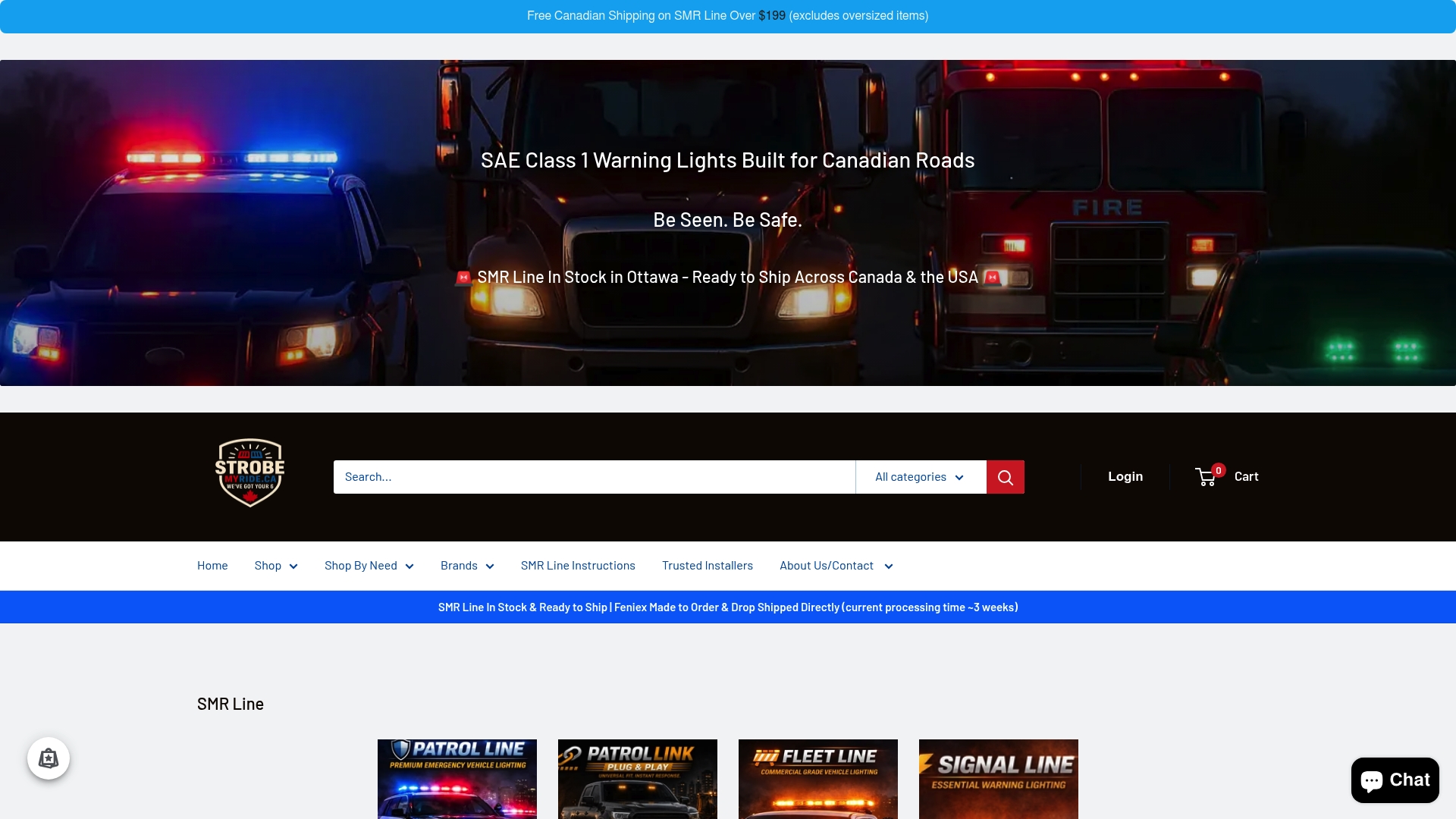
Single units ship fast for operators who need a replacement or an upgrade today. Fleet pricing is available for volume orders, and Strobe My Ride’s upfitter network can support installation across Canada. Whether you are outfitting a single tow truck or standardising lights across a municipal fleet, the right model is in stock and ready to go.
Browse the full range of emergency warning lights or go straight to the best sellers collection to see the most popular models. For fleet enquiries and custom configurations, contact Strobe My Ride directly through the product pages.
Sources
- J845_201902: Optical Warning Devices for Authorized Emergency, Maintenance, and Service Vehicles - Recommended Practice
- J595_200811: Directional Flashing Optical Warning Devices for Authorized Emergency, Maintenance, and Service Vehicles - Recommended Practice
- Minimum Performance of the Warning Light System Used on Emergency Vehicles, SAE Standard J2498_201611
- In a Vehicle With Flashing or Rotating Lights - SAAQ
- Motor Vehicle Act (BC) — emergency equipment provisions
- O. Reg. 484/07: LAMPS - USE OF FLASHING RED, GREEN OR BLUE LIGHTS (Ontario)
Recommended
- Emergency Lights That Work When Roads Get Worst | Strobe My Ride – Strobe My Ride
- Top 3 Providers of Police Lights for Car 2026 | Strobe My Ride – Strobe My Ride
- Top 6 Amber Light Bar Options 2026 | Strobe My Ride – Strobe My Ride
- Vehicle emergency lighting installation near me: 2026 guide | Strobe My Ride – Strobe My Ride


