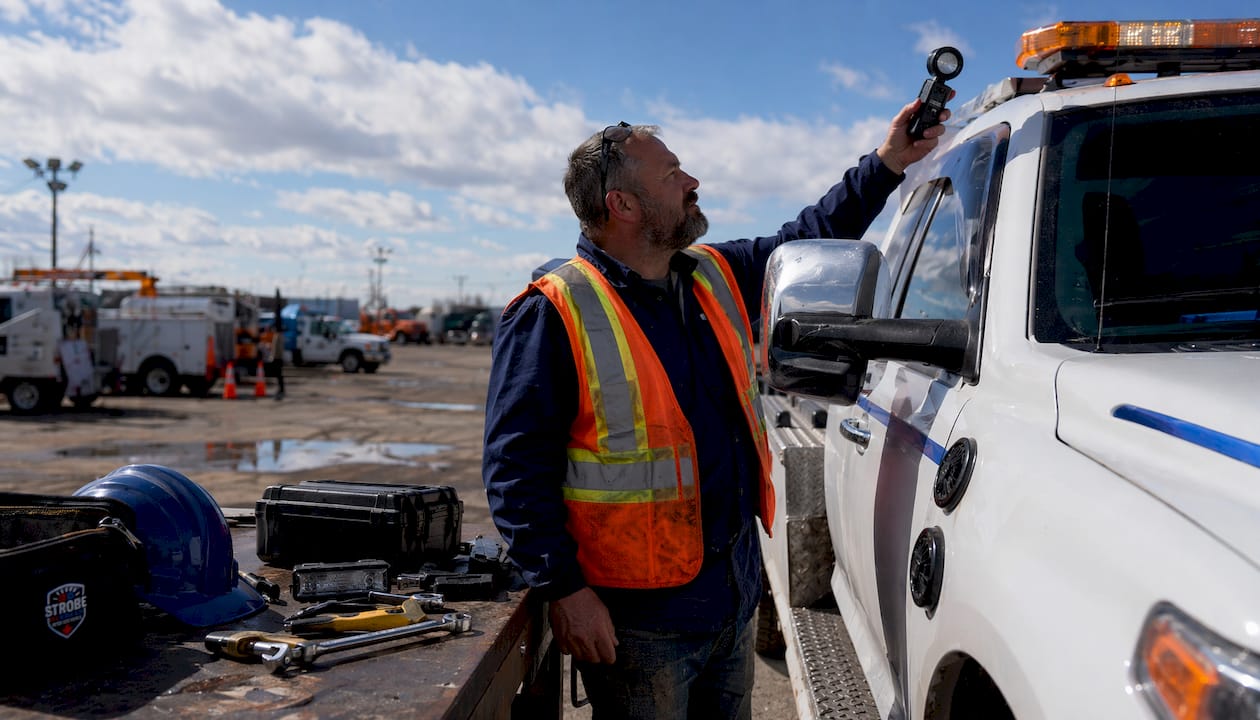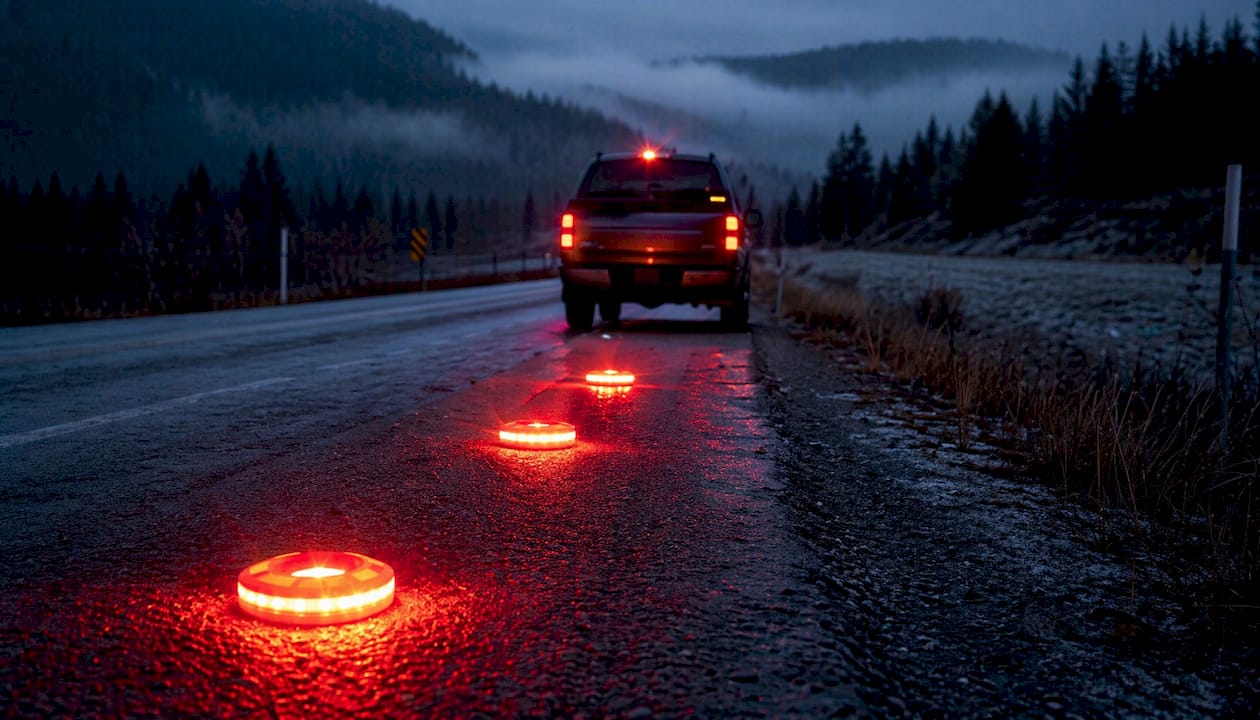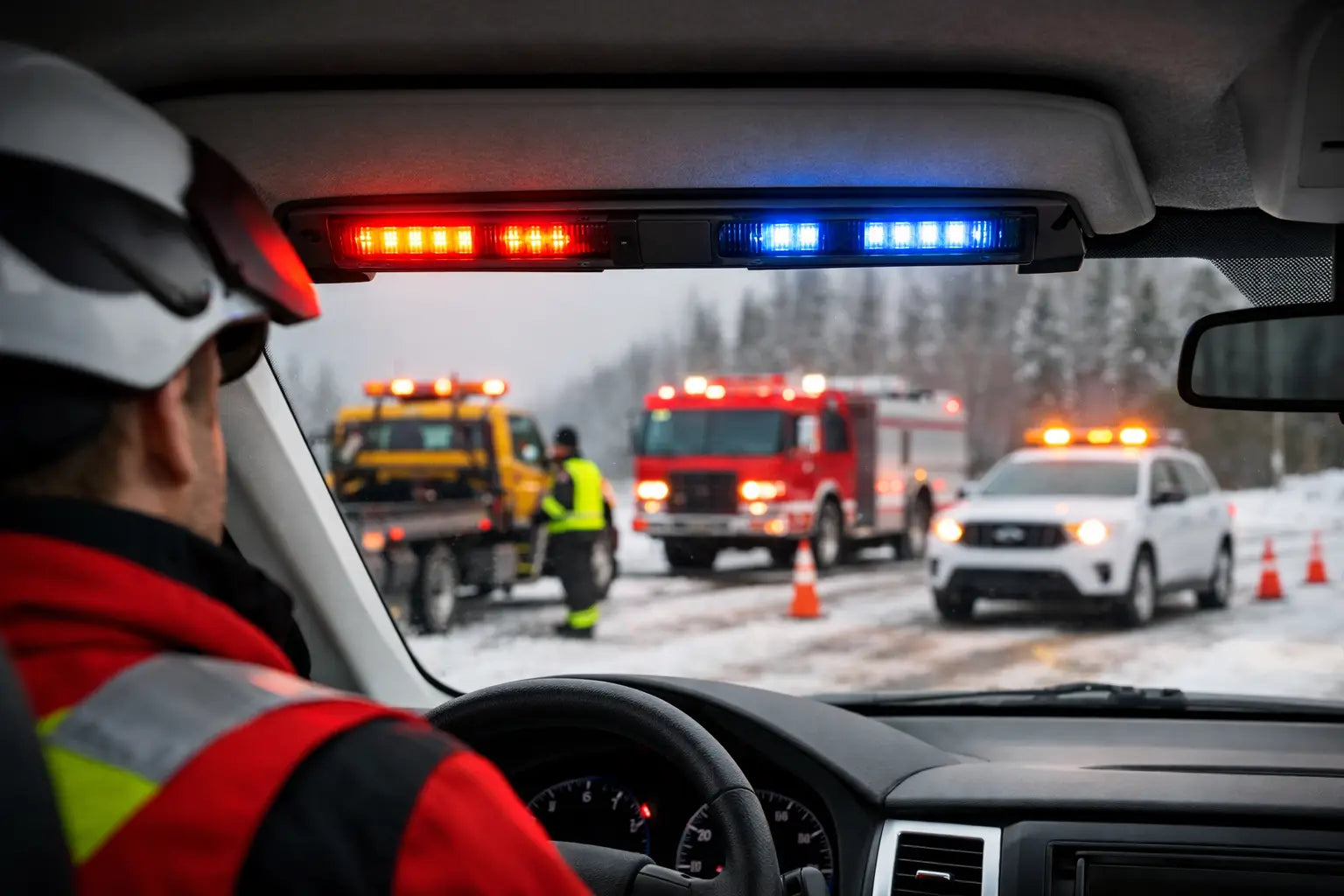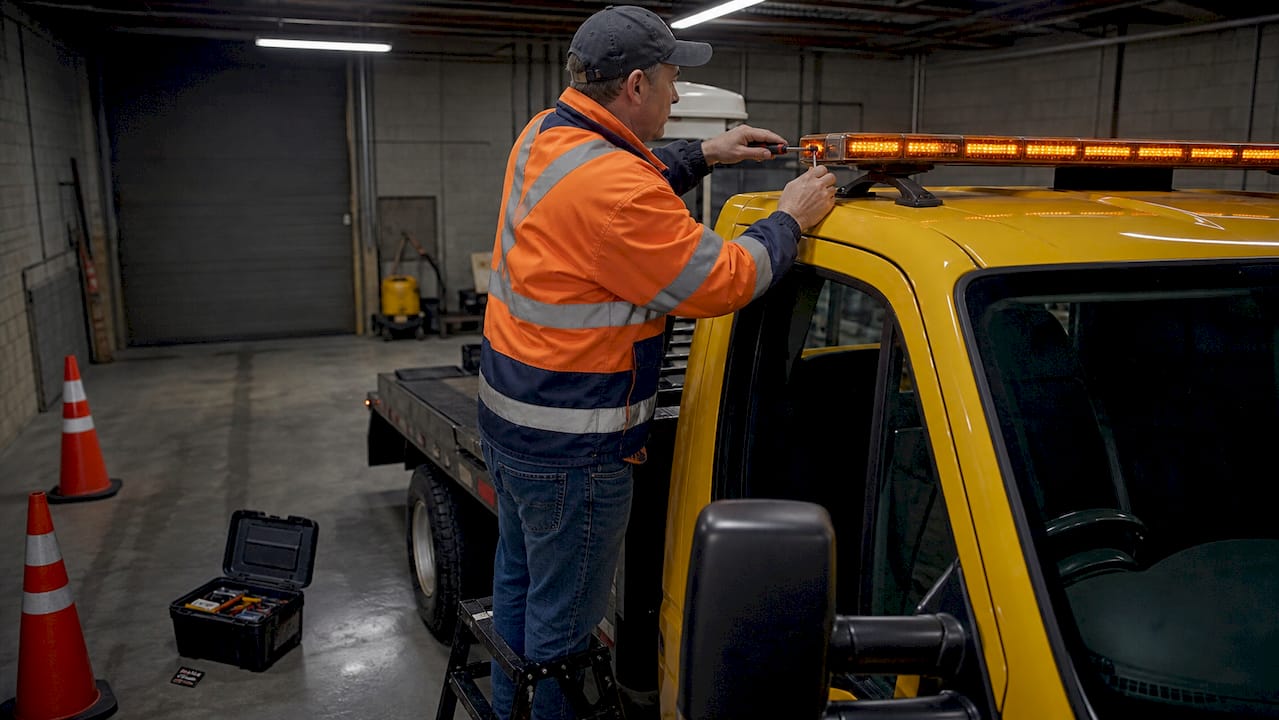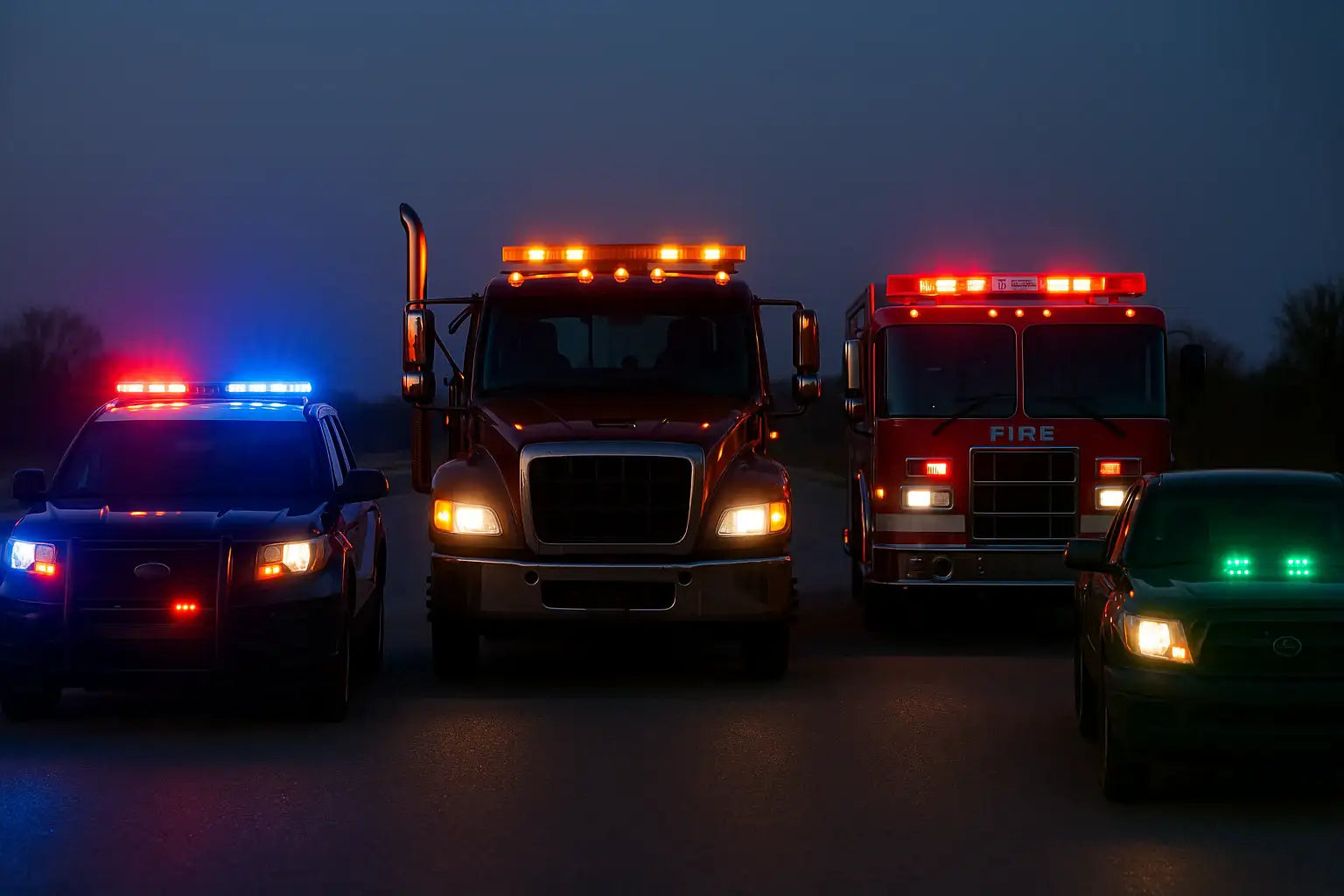

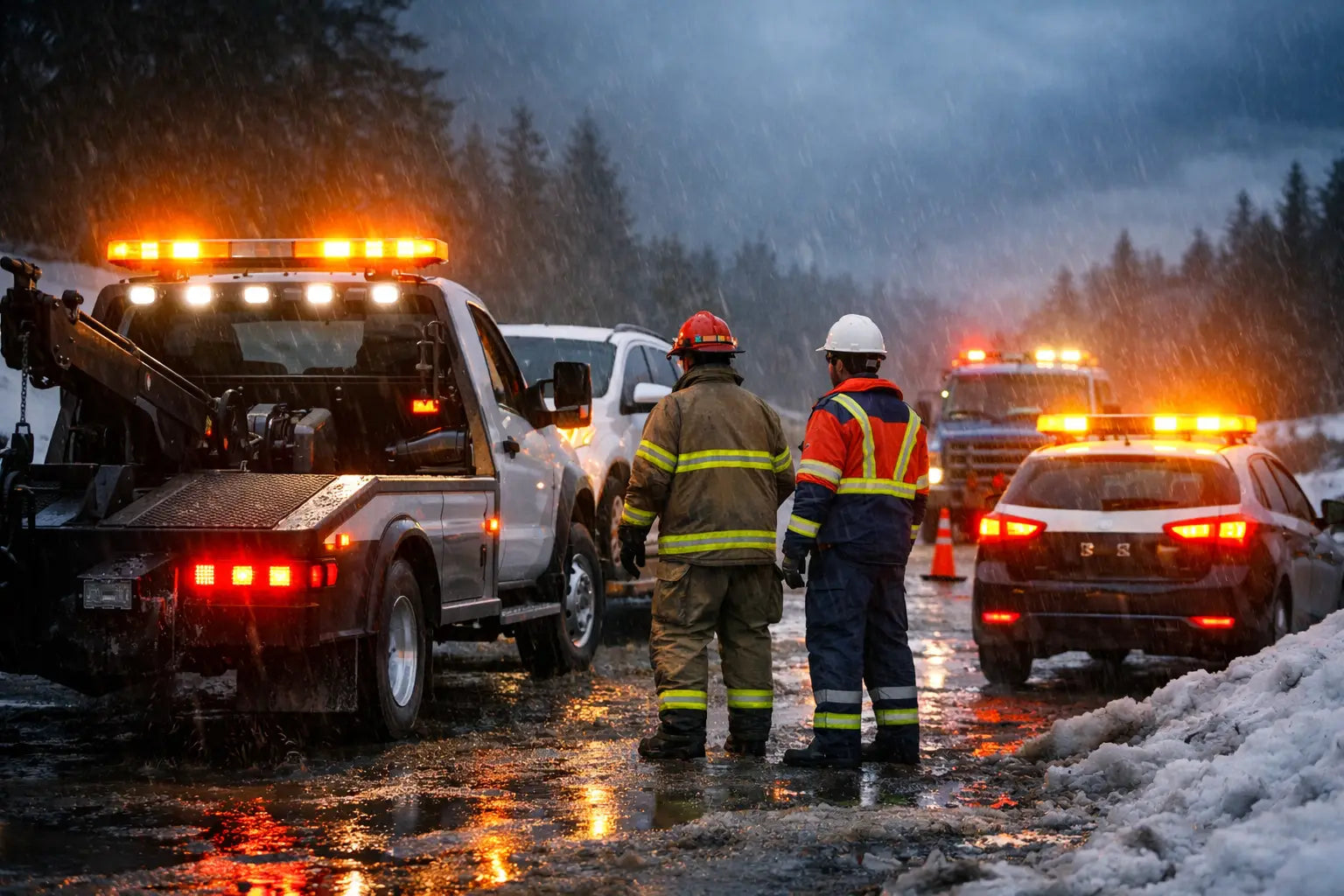
A stopped vehicle on the shoulder at 2 a.m. in rain, snow spray or blowing dust is not a normal vehicle anymore. It is a hazard that drivers may not recognize until they are far too close. Emergency lights give approaching traffic an early visual cue that something different is happening ahead, but only when the system is selected, mounted and used for the actual job.
That distinction matters. A small amber beacon may be suitable for a property maintenance pickup working at low speed in a parking lot. The same light may be inadequate for a tow truck loading on a dark highway shoulder beside 100 km/h traffic. More flash patterns do not automatically mean better warning. More LEDs do not make up for poor mounting location. Field conditions, vehicle position, ambient light and the work being performed all affect whether a warning system does its job.
Emergency Lights Are Part of a Visibility System
Professional warning lighting should be treated as one layer in a larger roadside safety plan. It works alongside high-visibility apparel, traffic control, vehicle positioning, cones or channelizers, scene lighting, communication and sound work procedures. The goal is not to make a vehicle look busy. The goal is to help road users identify the vehicle, understand that a work or emergency activity is underway, and begin responding early enough to reduce their speed and increase clearance.
On highway calls, warning lights must compete with headlamps, street lighting, reflective signs, wet pavement and visual clutter from other traffic. At night, an overly intense light aimed poorly can create glare at close range. In daylight, a low-output light can disappear against sun glare or a bright sky. This is why a lighting package needs both reach and useful off-axis visibility, not simply a bright-looking centre point when viewed in a shop.
For fleet buyers, the practical question is: what does the operator need to communicate from the roadside? A tow operator needs to warn traffic while approaching, loading and departing. A utility crew may need 360-degree warning while parked in a work zone, plus white scene lighting around the truck. A pilot car may need clear rear-facing direction and high-mounted visibility over escort loads. Each application has different exposure and different priorities.
Start With the Risk, Not the Lightbar
The best specifications begin with an operational review. Consider where the vehicle works, how long it is exposed, typical travel speeds around the scene, day versus night operation, seasonal weather and whether the vehicle is moving, parked or partially blocking a lane.
A municipal plow working through a snowstorm needs warning lights that remain noticeable through snow accumulation and road spray. A roadside assistance vehicle needs effective rear and side warning when its operator is working near passing traffic. A volunteer firefighter responding to a call may need a system suited to the vehicle's authorized role and local requirements, not a generic collection of dashboard lights.
Vehicle shape matters too. A lightbar mounted high on a roof gives broad all-round visibility, but may not be practical on every vehicle. Surface-mount lights can fill blind spots around service bodies, toolboxes, rear doors and fenders. Hideaway lights can add warning at factory lamp locations, although they require careful installation and may not be the right choice for every modern vehicle lighting assembly. Dash and visor lights can be useful for front warning where permanent exterior mounting is not possible, but windshield angle, tint, reflections and rear visibility limit what they can do.
A good package usually combines light types rather than asking one product to cover every angle. For example, a work truck may use a roof-mounted warning bar for 360-degree attention, rear surface mounts for stronger rear identification, and dedicated scene lights for task lighting. Warning lighting tells drivers to pay attention. Scene lighting helps workers see what they are doing. They are related, but they are not interchangeable.
Choose Output and Coverage for the Environment
SAE-rated lighting gives buyers a meaningful reference point when comparing professional-grade products. Standards such as SAE J595, SAE J845 and SAE J2498 are relevant to warning-light performance and emergency vehicle lighting systems. They help distinguish purpose-built warning equipment from lights that merely flash.
For high-speed, high-exposure work, SAE Class 1 equipment is commonly considered where strong warning performance is required. Class 2 equipment may suit lower-speed or lower-risk applications, depending on the vehicle role and local requirements. The appropriate choice depends on the operation. A Class 1 lightbar may be justified for a highway tow unit, while it could be unnecessary for a small vehicle operating only within a controlled yard.
Do not treat an SAE marking as a blanket answer to regulatory questions. Lighting colour, placement, mode of operation and vehicle authorization can vary by province, municipality and operating role. Transport Canada requirements, provincial highway traffic legislation, contract specifications and fleet policy may all affect the final installation. Verify the rules that apply to your vehicle before purchasing or installing equipment.
Flash Patterns Need Discipline
The ability to select multiple flash patterns is useful, but random pattern selection is a common fleet mistake. Alternating patterns, steady-burn modes and directional functions all have a purpose. The operator should not need to cycle through 20 patterns at the roadside to find a workable setting.
For most fleets, standardizing a small number of modes improves consistency. One warning mode for travel or approach, one mode for parked roadside work, and a rear directional mode where appropriate is often more practical than unlimited customization. Controls should be simple enough to operate with gloves, in darkness and under stress.
Rear-facing traffic advisors deserve particular attention. A directional arrow can help guide traffic away from a stopped vehicle or lane closure, but it is not a substitute for an approved traffic control plan, trained traffic control personnel or proper channelization. Used incorrectly, it can create confusion. Used as part of a planned work zone setup, it gives drivers a clearer visual instruction than a general warning flash alone.
Avoid running every light at full intensity in every direction all the time. At a close roadside scene, excessive forward-facing flash can distract approaching drivers or make it harder for workers and responders to communicate. Many professional systems allow separate front, side and rear control for this reason. The right output is the output that is noticeable without needlessly adding glare.
Installation Is Where Good Equipment Can Fail
A professional light can still perform poorly if it is mounted behind obstructions, wired with undersized cable or connected to a weak grounding point. Installation quality affects reliability, flash synchronization, water resistance and serviceability.
Before drilling or wiring, map the vehicle. Check roof load limits, airbag zones, rear door movement, ladder racks, antenna placement, camera views and body seams. On service bodies, identify where lights will remain visible with compartments open. On pickup trucks, make sure rear warning is not blocked by a tailgate, load or towing equipment.
Use properly sized wire, circuit protection and sealed connections. Route wiring away from heat, sharp edges, moving components and areas exposed to constant abrasion. A clean install should be serviceable years later, not just functional on delivery day. Label switches and fuse locations. Keep wiring diagrams with the fleet file. When a unit is down on a winter callout, a technician should be able to diagnose it without guessing.
Controllers are worth specifying for multi-light packages. They reduce switch clutter, support programmed modes and make it easier to apply a consistent operating layout across a fleet. For larger operations, that consistency reduces training time and helps operators move between units without relearning controls.
Buy for Uptime, Not the Lowest Cart Total
Warning lights live hard lives. They face vibration, salt, pressure washing, branch strikes, temperature swings and long hours of operation. A low initial price can become expensive when housings crack, lenses haze, wiring fails or a vehicle is pulled from service for repairs.
Compare equipment on more than advertised brightness. Look at SAE rating where needed, housing construction, lens material, ingress protection, mounting hardware, cable quality, warranty support and availability of replacement parts. Consider whether the supplier stocks the product domestically and can support the equipment after installation. A No-BS Warranty has value only when the supplier can actually stand behind it.
For Canadian fleets, weather resistance and service support are not minor details. Equipment built for real work should tolerate the conditions your crews face, from salted urban roads to remote winter callouts. This does not mean every vehicle needs the most expensive package. It means the package should match the cost of failure in that vehicle's role.
A Better Question Before You Buy Emergency Lights
Instead of asking, “What is the brightest light you have?” ask, “What does this vehicle need road users to see, from which direction, in its worst working conditions?” That question leads to better decisions about lightbar size, SAE class, colour, control layout, rear directional warning and installation method.
At Strobe My Ride, that is the standard worth applying: specify for the work, install for reliability and train operators to use the system with purpose. The light is only one part of the scene, but when visibility matters most, it needs to work without excuses.