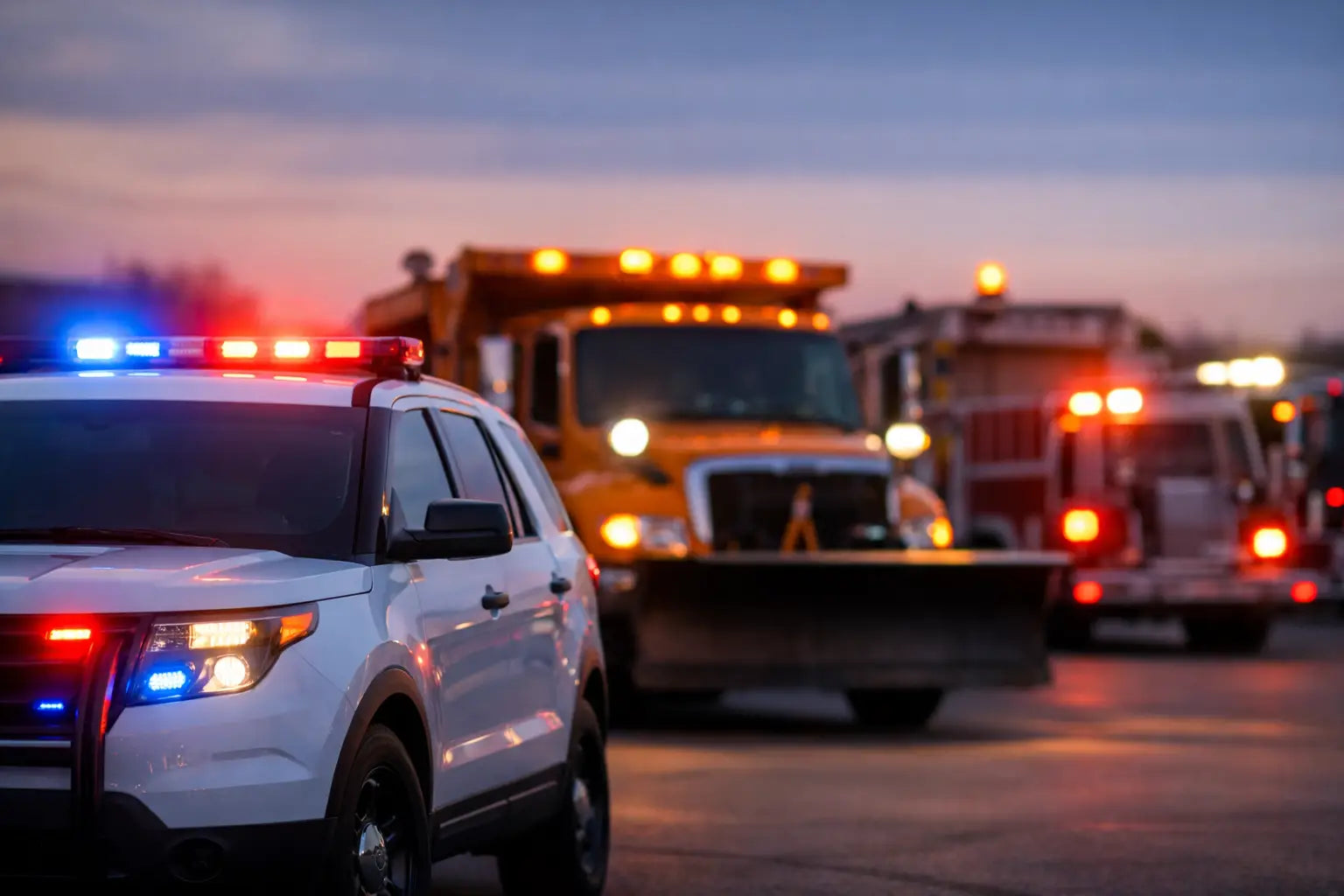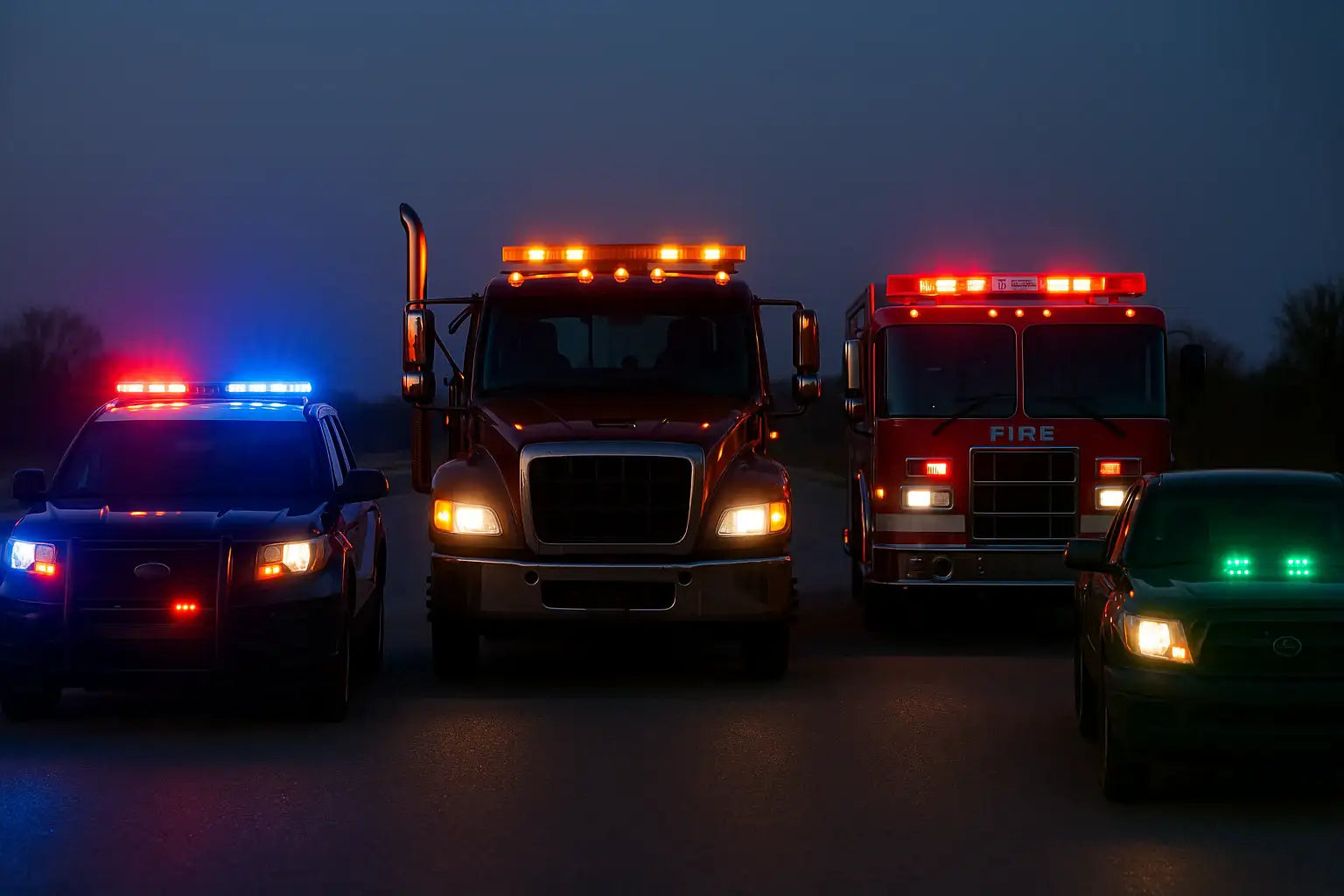


A warning light that looks bright in a product photo can still fail where it counts - on a snowy shoulder, in blowing dust, or at the edge of live traffic. That is why a proper fleet warning light buying guide starts with the job, not the catalogue. If you run work trucks, municipal vehicles, tow units, plows, roadside service rigs, or volunteer response vehicles, the right setup is about visibility, compliance, and staying in service.
What this fleet warning light buying guide should help you avoid
Most bad lighting purchases come from one of two mistakes. The first is buying too little light for the environment. The second is buying the wrong style of light for the vehicle and expecting one product to do every job.
A half-ton pickup doing occasional lane-side work does not need the same package as a tow truck loading on a dark highway. A city fleet van working in urban traffic has different needs than a rural roads unit dealing with snow, fog, and long sightlines. Good buying decisions come from matching warning coverage, mounting style, and duty cycle to real operating conditions.
Cheap imports usually miss on heat management, lens quality, sealing, wiring, and flash pattern control. They may work for a while in fair weather, then start taking on moisture, dropping LEDs, or failing when the truck is needed most. That is not a bargain. That is downtime.
Start with the vehicle's actual risk profile
Before you compare beacon lights, mini bars, or full-size light bars, look at where the vehicle works and how it is seen by others. A truck parked on the shoulder during daylight still needs strong off-axis visibility. A plow in heavy snow needs punch through glare and blowing precipitation. A service body working around blind corners may need rear warning and scene lighting, not just a roof beacon.
Think about four questions first. Is the vehicle moving or stationary during the work? Is the exposure mostly front, rear, or 360 degrees? Does the vehicle spend time on high-speed roads? And is the truck operating in all seasons, including freezing rain, road salt, and deep winter?
These answers shape everything else. They tell you whether a single amber beacon is enough, whether a mini bar makes more sense, or whether you need a full warning package with front, side, and rear coverage.
Know the main warning light types
Beacons and single-point warning lights
Beacons are often the cleanest answer for smaller fleets, pickup trucks, and utility units that need basic 360-degree warning. They are simple, effective, and easier on the budget than a full bar. For supervisors, inspectors, pilot vehicles, and general road crews, a quality Class 1 beacon can be exactly the right tool.
The trade-off is coverage and presence. A single beacon is not always enough for larger trucks, wider bodies, or work that regularly puts the vehicle broadside to traffic. It gives warning, but it may not give the command presence some roadside situations demand.
Mini bars and full-size light bars
Light bars give stronger 360-degree coverage and a bigger visual footprint. That matters on tow trucks, snow and ice units, municipal service trucks, and any fleet vehicle working around active traffic where early recognition is critical.
Mini bars work well when roof space is limited or when you want solid output without the height and cost of a full bar. Full-size bars usually make sense for larger vehicles or higher-risk applications. They offer better spread, more modules, and often more room for traffic advisor functions, alley lights, or takedowns.
Surface mounts, grille lights, and hideaways
These are the pieces that turn a basic setup into a real work package. Surface mounts on the rear of a body, grille lights in the front fascia, and hideaways in compatible housings can fill dead zones and improve directional visibility.
This is where many buyers either overspend or leave major gaps. If your truck gets approached from the rear while stopped, rear warning deserves real attention. If the vehicle is often entering traffic or approaching scenes head-on, front intersection lighting becomes more important.
Traffic advisors and scene lighting
Not every light is for warning. Traffic advisors help move drivers around the work zone. Scene lights help your crew see what they are doing once they arrive. They solve different problems, and they should not be treated as interchangeable.
A bright warning bar does not replace proper work lighting. Likewise, white scene lighting is not a substitute for amber warning. Fleets that understand that difference usually build safer, more useful packages.
Compliance matters, but so does interpretation
Any fleet warning light buying guide that skips compliance is not doing the job. In Canada, buyers need to pay attention to provincial rules, application-specific requirements, and recognized performance standards such as SAE classifications where relevant.
For many fleet buyers, Class 1 SAE-rated products are the right place to start because they are built to deliver serious output for real warning use. But compliance is not just about what the light can do in a lab. You also need to think about colour legality, flash pattern use, and where the vehicle operates.
A municipal unit, contractor truck, volunteer fire vehicle, and tow truck may all have different operating allowances depending on province and role. If you buy first and ask questions later, you can end up with equipment that creates problems during installation or operation. The smart move is to build around your actual use case, not around assumptions.
Durability is where real value shows up
Canadian fleets do not need pretty lights. They need lights that survive winter, vibration, washdowns, and long duty cycles. That means paying attention to housing materials, lens strength, IP ratings, mount security, cable quality, and how well the unit sheds water and manages heat.
Magnets are convenient, but they are not always the best long-term choice for active-duty vehicles. Permanent mounts take more effort up front, yet they usually provide better reliability for trucks that live on rough roads or spend their days at highway speed. Plug-and-play options can make a lot of sense for certain OEM applications because they cut install time and reduce wiring guesswork.
This is also where warranty matters. A low price means very little if the product fails in the first season and your vehicle goes dark waiting on parts. For fleet buyers, the best value usually comes from proven gear that installs cleanly, works hard, and stays working.
Brightness is not the only performance metric
Everyone asks how bright a light is. Fair question, but brightness alone does not tell you enough. Beam pattern, lens design, flash pattern programming, and viewing angles all affect real-world visibility.
A harsh flash pattern can create glare at close range or become fatiguing in certain environments. More intensity is not always better if it blinds nearby operators or reflects badly off snow, wet pavement, or reflective surfaces. Good warning systems balance punch with control.
That is why mixed setups often outperform a single oversized product. A roof bar handles long-range recognition. Surface mounts and rear lights cover approach angles. A traffic advisor adds direction. The result is better awareness, not just more LEDs.
Budget for the whole system, not just the main light
A lot of fleet buyers set a budget for a bar or beacon and forget the rest. Then the install starts and the real costs show up. Mounts, wiring, switches, controllers, flashers, vehicle-specific adapters, and labour all affect the final number.
Sometimes a cheaper light becomes the expensive option because it takes longer to wire, needs extra hardware, or does not integrate well with the truck. A better product with cleaner installation can save money over the life of the vehicle.
If you manage multiple units, standardizing your lighting packages can help even more. It simplifies installs, spare parts, operator training, and future replacements. That is not exciting, but it is how fleets keep moving.
A practical way to choose the right package
Start with the vehicle type and duty. Then define the minimum warning coverage it needs to work safely. From there, choose the mounting style that fits the truck and the service life you expect. Finally, confirm compliance, installation requirements, and whether the product is actually built for Canadian conditions.
For a general contractor pickup, that might mean a Class 1 beacon plus rear surface mounts. For a tow truck, it may mean a full bar, rear directional warning, and work lights. For a snow unit, you may need strong roof coverage, front warning that cuts through weather, and hardware that holds up to vibration and salt.
There is no one-size-fits-all answer, and that is the point. The best system is the one that matches risk, survives the environment, and keeps the vehicle visible without wasting budget on features the crew will never use.
At Strobe My Ride, that is how professional buyers should approach the shelf - not by chasing the cheapest light, but by choosing gear built for real work, real weather, and the people standing next to the truck when visibility matters most.